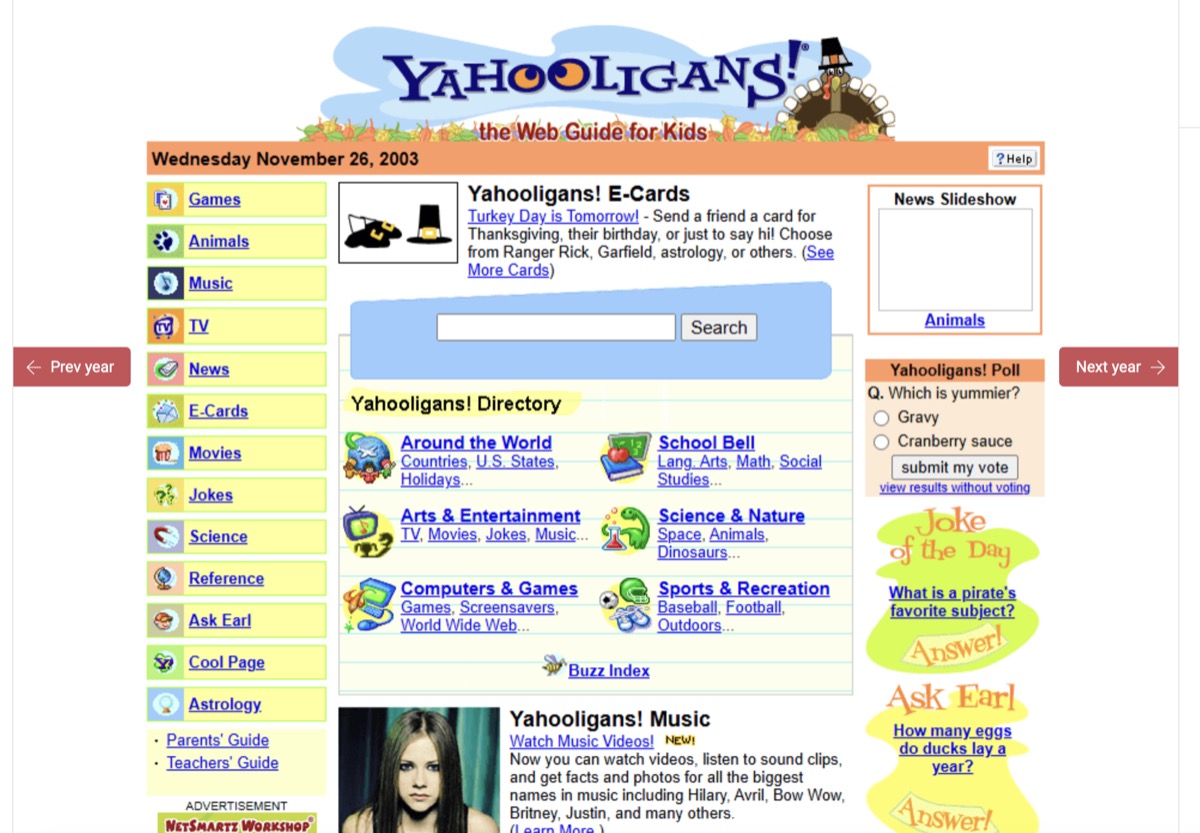
#Internet

43 items

Video thumbnail — I Play AddictingGames.com (First Time in 10+ Years)
Trends 2002–2010 peak

AddictingGames.com

The flash-game portal that gave "I'm bored" a URL. AddictingGames launched in 2002 as a constantly updated grid of free browser games, became one of the sites school IT departments most loved to block — and somehow outlived Flash itself.
Video thumbnail — msn messenger - TV Ad 1 - Australia 2004
Trends 1997–2007

AIM & MSN Messenger

The after-school ritual: logging on to a dial-up modem, scanning your buddy list, typing AIM away messages packed with song lyrics and veiled drama, and knowing your 12-year-old screen name would haunt you forever. AIM and MSN Messenger were the social nervous system of the '90s and 2000s — instant, informal, and utterly addictive.

Video thumbnail — Angelfire Hosting Review
Trends 1996–2000s

Angelfire

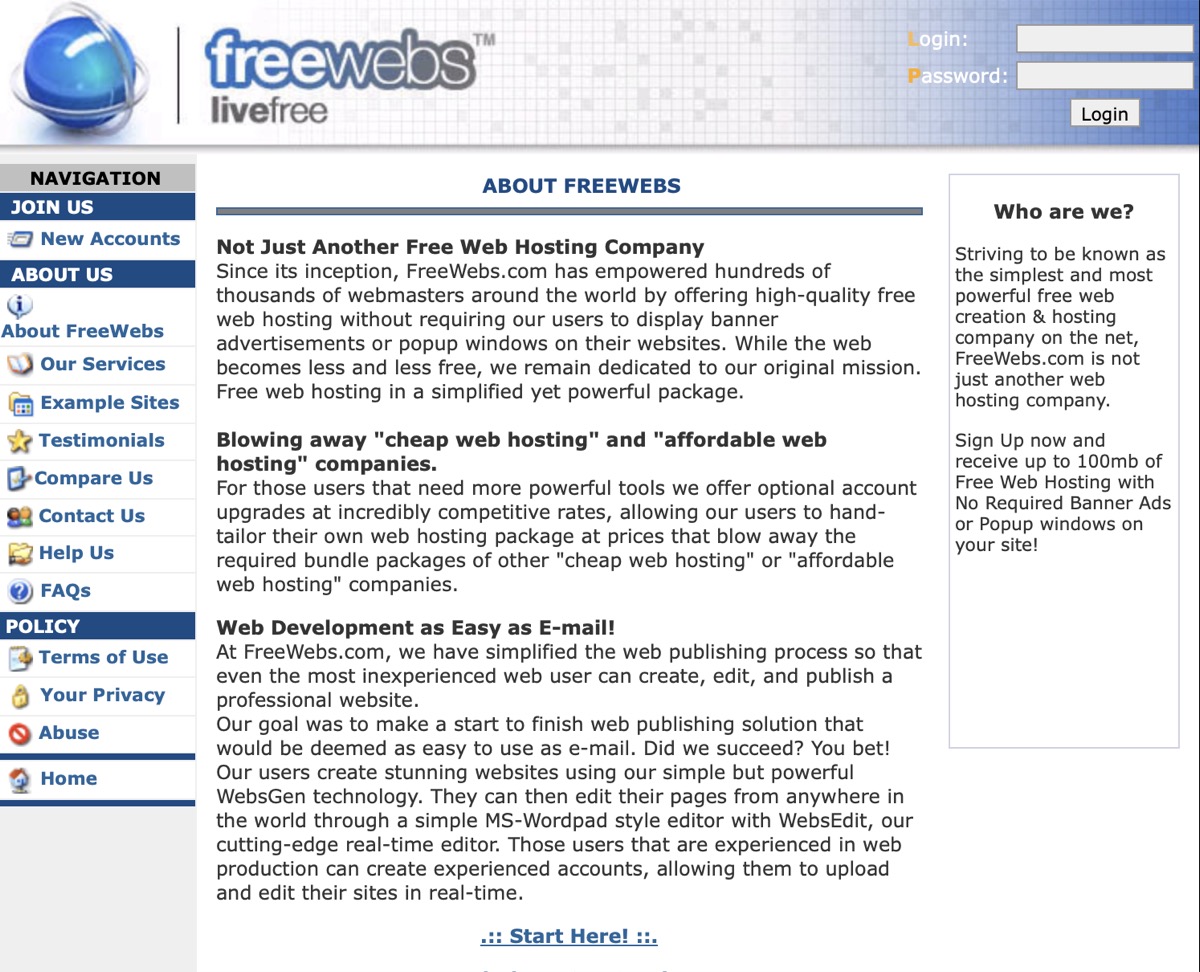
The free web host where the internet got weird and stayed that way. Angelfire grew into one of the "big three" free-hosting services of the late 90s, offering bare-bones page building for personal fan sites, rants, and niche collections—all with guestbooks, hit counters, and clashing backgrounds.

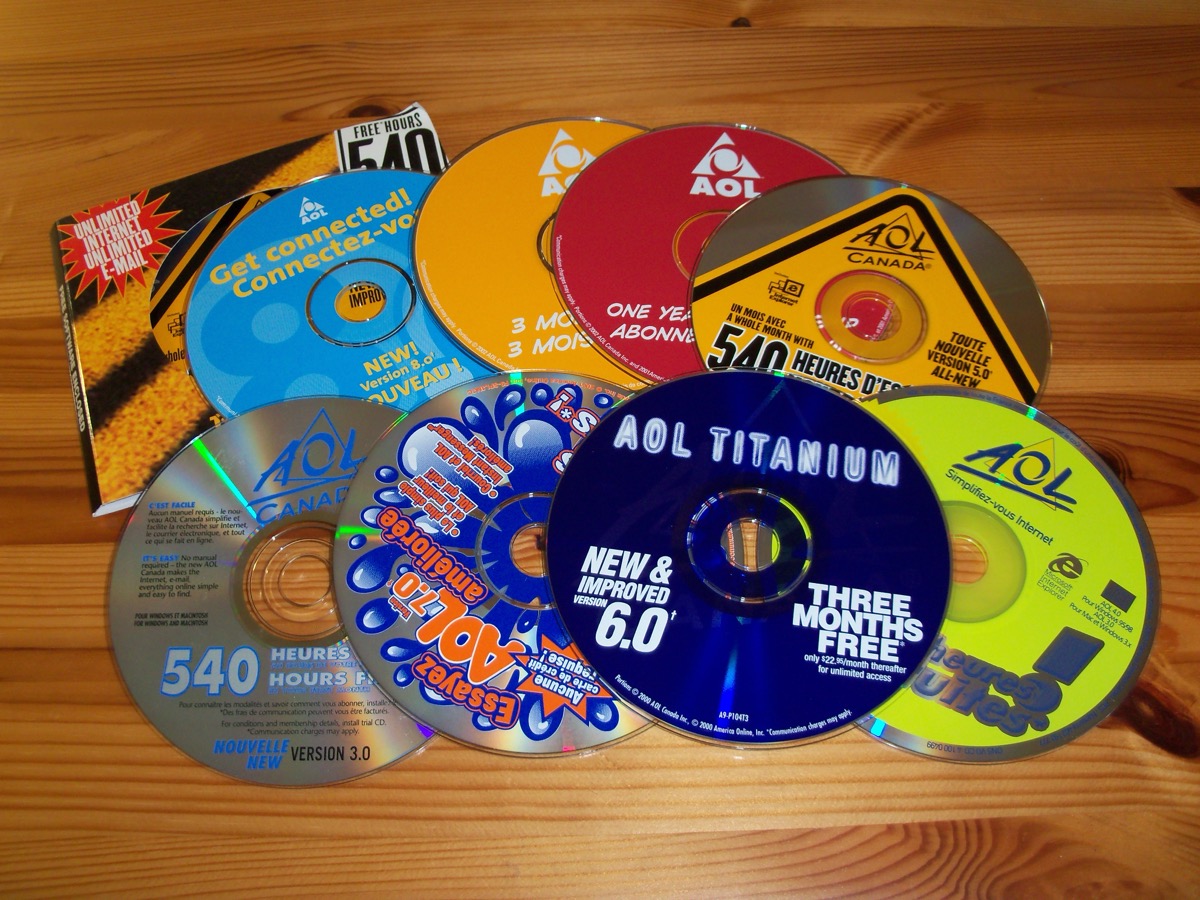
A pile of AOL free-trial promotional CDs
Trends 1993–2006

AOL Free-Trial CDs

AOL's marketing chief Jan Brandt carpet-bombed America with free-trial discs—in magazines, mailboxes, at Blockbuster and Best Buy, even in Omaha Steaks shipments. At peak saturation — by Brandt's own estimate — roughly half of all CDs manufactured worldwide bore the AOL logo, a $300 million marketing gambit that made the "You've Got Mail" sound the most iconic audio cue of the 1990s.

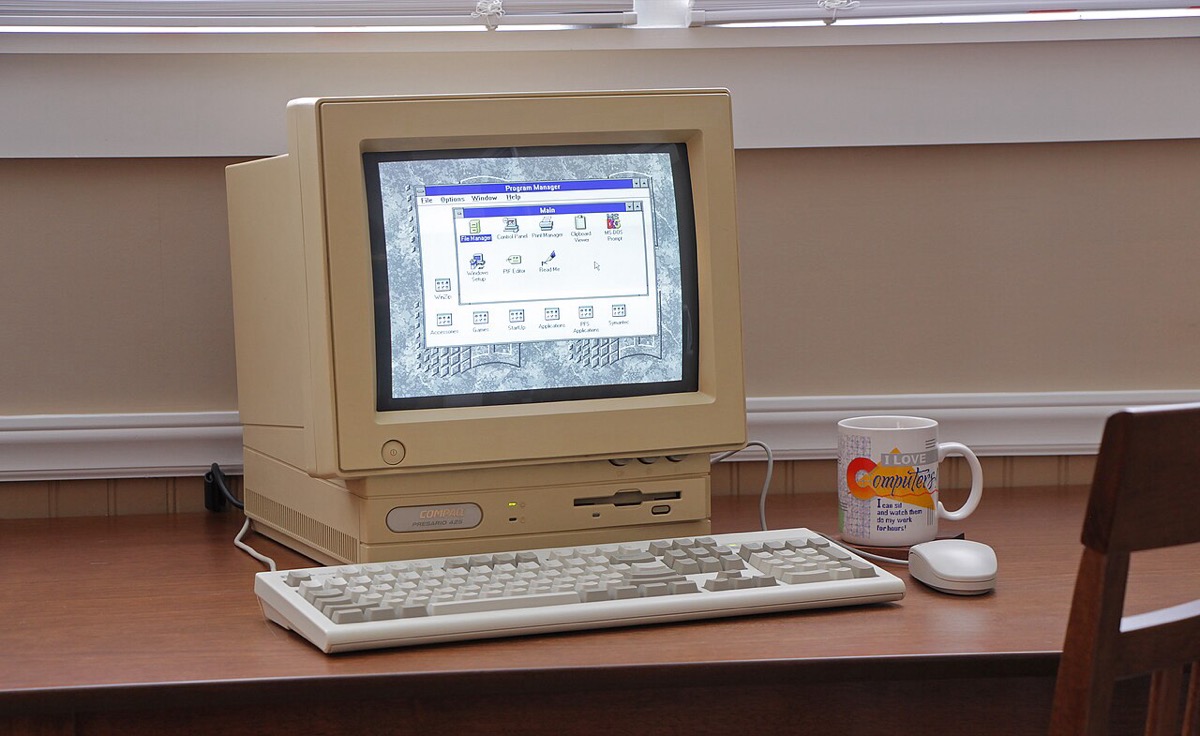
a mid-1990s beige desktop computer — the kind AOL chat rooms were visited on
Trends 1995–2001

AOL Private Chat Rooms

The hidden rooms where 90s internet culture actually lived. Capped at 23 people, joinable only if you knew the name, and greeted by universal "A/S/L?" — private rooms were where friendships, flirtations, and warez trades quietly thrived.

Video thumbnail — AOL Prog | Rampage Toolz
Trends 1994–1999

AOL Punters & Progs

Homemade Visual Basic programs that exploited and weaponized the AOL client. AOHell kicked off the era; "punters" crashed users offline; the scene thrived in secret warez rooms until AOL clamped down.

Video thumbnail — Early AOL Commercial (1995)
Tech 1993–2002 peak

AOL

The dial-up gateway that wired up America. AOL's "You've Got Mail" voice, aggressive free-trial CD carpet-bombing, and shift to unlimited $19.95/month pricing triggered the legendary busy-signal crisis — millions of Americans' first taste of the internet.

Video thumbnail — Asheron's Call Official Trailer (1999, Microsoft/Turbine)
Video Games 1999–2017

Asheron's Call

The cult favorite of the first big three MMORPGs — never EverQuest's equal in numbers, but beloved for what it dared. Asheron's Call ran through Microsoft's gaming service, its classless characters and famous monthly story updates drip-feeding new life into one seamless world that stayed open for over seventeen years.

Video thumbnail — Ask Jeeves (1999) - Television Commercial
Tech 1997–2006

Ask Jeeves

The search engine with a cartoon butler you asked full questions in plain English. Type "How tall is the Eiffel Tower?" and Jeeves would fetch the answer — a friendlier face on the early web.

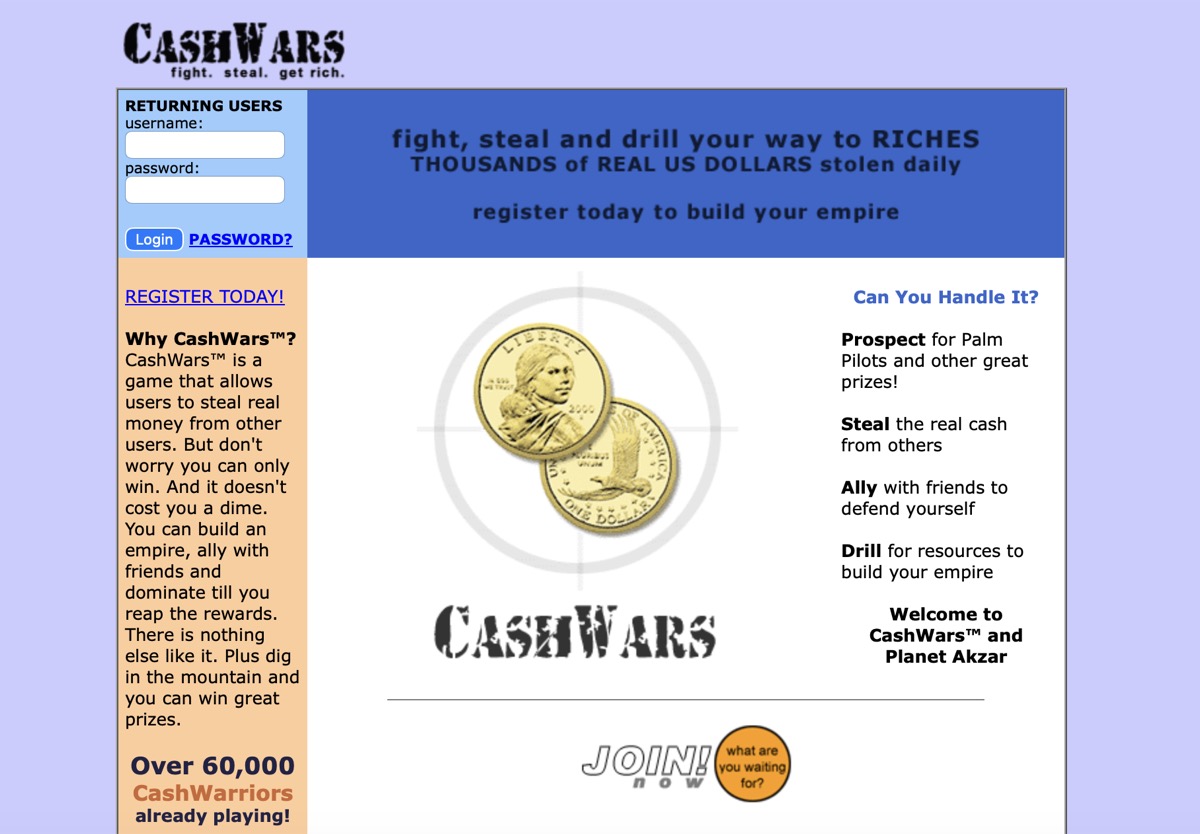
cashwars
Video Games 1999–2001

CashWars

A browser-based play-to-earn game where you built an empire in the fictional world of Akzar, drilled for oil barrels, raised stats by spending resources, and raided rival players — with the wild promise that you could cash out and receive a real cheque in the mail.

Placeholder graphic for 90s chain emails
Trends 1994–2005

Chain Emails

"FORWARD THIS TO 10 PEOPLE OR..." — the chain letter reborn at internet speed in 90s inboxes. Bad-luck threats, sick-kid legends, glurge poems, free-money hoaxes and virus panics, all forwarded with a wall of ">>>" quote marks and a hundred strangers' email addresses.

Video thumbnail — CompuServe Commercial 1996
Tech 1979–1998 peak

CompuServe

The online service before AOL was AOL. CompuServe numbered its users with octal digits, ran tight moderated forums instead of chaotic chat rooms, and invented the GIF. By 1995 it claimed 3 million subscribers — then AOL's cheap flat-rate marketing machine ran it over.

Video thumbnail — Dancing Baby Screensaver. 1996 (original music)
Trends 1996–1999

Dancing Baby

A 3D-rendered infant doing the cha-cha — arguably the first viral video-meme of the internet age. Born as a software demo in 1996 and spread through email chains like a digital chain letter, the "Ooga-Chaka baby" went fully mainstream when it started haunting Ally McBeal.

Video thumbnail — Dark Age of Camelot - DAoC Trailer 2001
Video Games 2001–2005

Dark Age of Camelot

A fantasy MMORPG that replaced chaotic open-world ganking with Realm vs. Realm warfare—three mythologically themed nations (Albion, Midgard, Hibernia) fighting over contested keeps and relics in structured, large-scale PvP.

the original YouTube 'Broadcast Yourself' logo (2005–2011)
Trends 2005–2009

Early YouTube

The video platform that made viral content a daily ritual. YouTube launched in 2005 as low-res, ad-free, and gloriously weird—a space where "Lazy Sunday," "Chocolate Rain," and "Charlie Bit My Finger" became the lingua franca of internet culture.

Video thumbnail — EverQuest: Original 1999 Launch Video
Video Games 1999–2004 peak

EverQuest

The first massively successful 3D MMORPG, a game that proved millions would live together in a virtual world. The world of Norrath, corpse runs, the brutal grind, and "EverCrack" addiction became the template for everything that followed.

the GeoCities logo — the black 'g' mascot over the blue-and-green wordmark
Trends 1995–2009

GeoCities

The free web hosting empire where the internet learned to be chaotic. GeoCities gave millions of people their first webpage, organized into themed neighborhoods, and established the visual language of under-construction GIFs, MIDI soundtracks, and blinking text that defined the early web.

Video thumbnail — Hackers Official Trailer #1 - Matthew Lillard Movie (1995) HD

Hackers

A young Angelina Jolie and Jonny Lee Miller rollerblade through a neon-drenched, absurdly rendered version of hacking where code is visualized as 3D graphics and 'Hack the planet!' became an unironic battle cry. Iain Softley's 1995 box-office flop became a beloved cult classic on the strength of its aesthetic audacity and a landmark electronic soundtrack.

Video thumbnail — The Hampster Dance website in 1999 in Netscape Navigator 4.04
Trends 1997–2000

The Hampster Dance

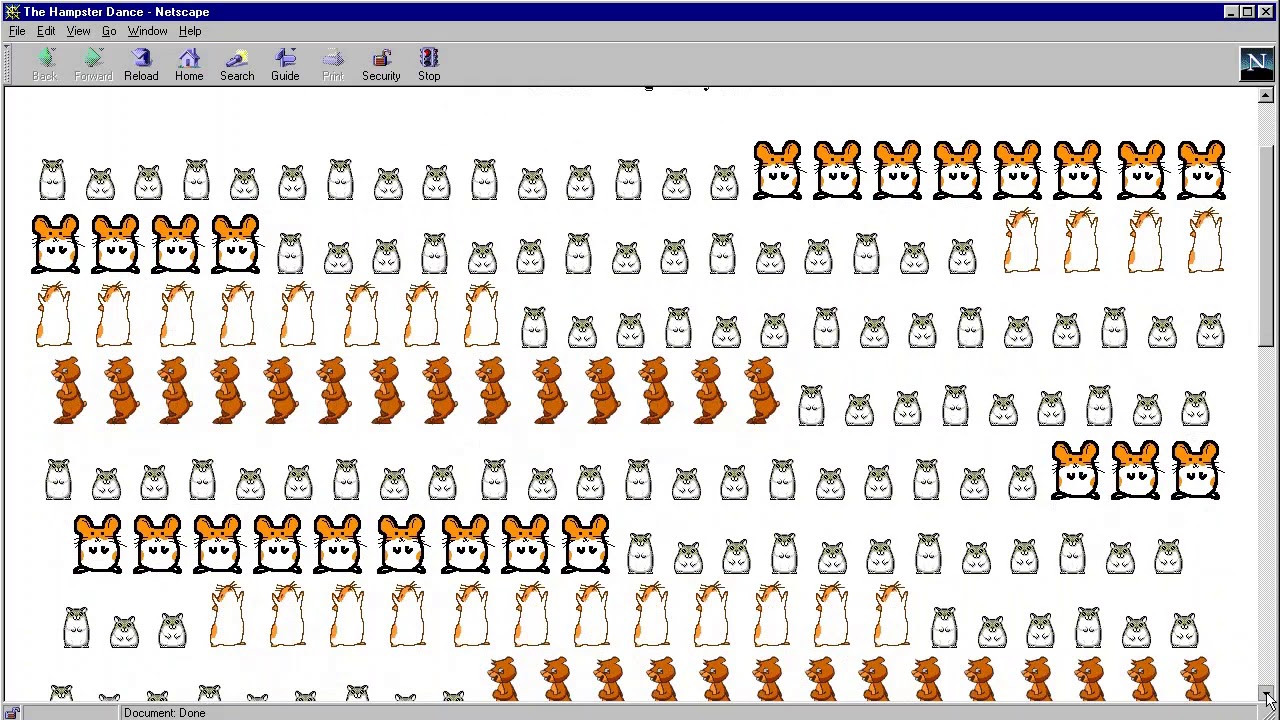
Four animated hamsters repeated ad nauseam, set to a sped-up Disney sample — one of the internet's first viral sensations. Created in 1997 by a Canadian art student as a GeoCities tribute to her pet hamster, The Hampster Dance puttered along unseen until a 1999 email chain sent it stratospheric, spawning hit songs, merch, and a permanent place in internet history.

Video thumbnail — Strong Bad Email #58 - Dragon
Trends 2000–2010 peak

Homestar Runner

The Flash cartoon empire that ran on merch and goodwill — no ads, ever. The Chapman brothers' site built its voice through Strong Bad's absurd email replies, one of which spawned Trogdor the Burninator, a scribbled one-armed dragon that became internet legend.

Video thumbnail — ICQ Uh Oh!
Tech 1996–2024

ICQ

The pioneering instant messenger with the green-flower icon, the random UIN number, and the unmistakable "Uh oh!" message alert. Launched in 1996, ICQ basically invented consumer IM before AIM and MSN took over.

Video thumbnail — Napster - Changing an Industry
Trends 1999–2010

LimeWire & Napster

The lawless era of free music: you queued up a download that would take three hours on dial-up, crossed your fingers it wasn't mislabeled, and hoped even harder it wasn't a virus. Napster and LimeWire were the P2P revolution that detonated the music industry, made kids into accidental outlaws, and eventually gave way to iTunes.

The mid-2000s MySpace logo: 'myspace.com — a place for friends' wordmark with the three-person silhouette icon
Trends 2003–2008

MySpace

MySpace launched in August 2003 and became the social network that swallowed the mid-2000s internet — where everyone's first friend was Tom. Top 8 rankings sparked drama, profile songs played on auto-load, and DIY HTML customization meant glitter graphics and autoplay music ruled. Bands broke careers there; it was the most-visited website in the US by 2006.

Video thumbnail — Netscape Navigator 1.0 in 1994
Tech 1994–2008

Netscape Navigator

The browser with the shooting-star "N" and the throbbing loading icon that, for millions, simply was the early web. Netscape dominated the mid-1990s before losing the browser war to Microsoft's bundled Internet Explorer.

Video thumbnail — Numa Numa
Trends 2004–2006

Numa Numa

One of the internet's first viral megahits: a webcam clip of a New Jersey teenager lip-syncing and flailing joyfully to a Moldovan pop song. Gary Brolsma's "Numa Numa Dance" spread to hundreds of millions of views — and it happened before YouTube even existed.

Video thumbnail — AllAdvantage Promo Video (2000)
Trends 1999–2001

Get Paid to Surf

The dot-com fantasy made real: companies would literally pay you to browse the web. Millions signed up for the Viewbar, watched ads while surfing, and actually got checks—until the ad market crashed and the dream evaporated in 2001.

The classic Skype cloud logo
Tech 2003–2025

Skype

The free app that made video-calling normal, with its blue logo and unmistakable ringtone bloop. Launched in 2003, Skype connected long-distance friends and family over early broadband — and became a verb before Microsoft bought it.

Video thumbnail — The Story Of SmarterChild - AOL/AIM
Tech 2001–2008

SmarterChild

A chatbot on your buddy list that never slept, always answered, and never quite cursed no matter how hard you tried. SmarterChild answered trivia, cracked jokes back, and proved millions of kids were ready to talk to an AI — they just didn't know that's what it was.

Video thumbnail — Ultima Online Cinematic Trailer
Video Games 1997–2003

Ultima Online

The MMO pioneer that proved persistent online worlds at scale were possible. Ultima Online's unrestricted player-versus-player combat, player housing, and emergent economies made it the first true virtual society — and the blueprint for every MMO that followed.

Video thumbnail — WOW! from CompuServe (1996)
Tech 1996–1997

WOW! by CompuServe

CompuServe's last-ditch answer to AOL — a brightly colored, family-friendly online service with a cartoon interface and unlimited hours for $17.95 a month. It crashed and burned in less than a year, but if you had it, you never forgot it.

the LiveJournal pencil logo and wordmark
Trends 1999–2008

Xanga & LiveJournal

The blogging platforms where a generation over-shared for the first time. LiveJournal and Xanga were where teenagers documented crushes, drama, and bad poetry in semi-public diaries before social networks centralized and monetized the same behavior.

Video thumbnail — Zombo.com flash intro in 1999
Trends 1999–present

Zombo.com

Welcome to Zombo.com. You can do anything at Zombo.com. Anything at all. The only limit is yourself. And then... nothing — the internet's greatest anti-website: pulsing dots, a silky voice making infinite promises, and a quarter-century of delivering absolutely none of them.
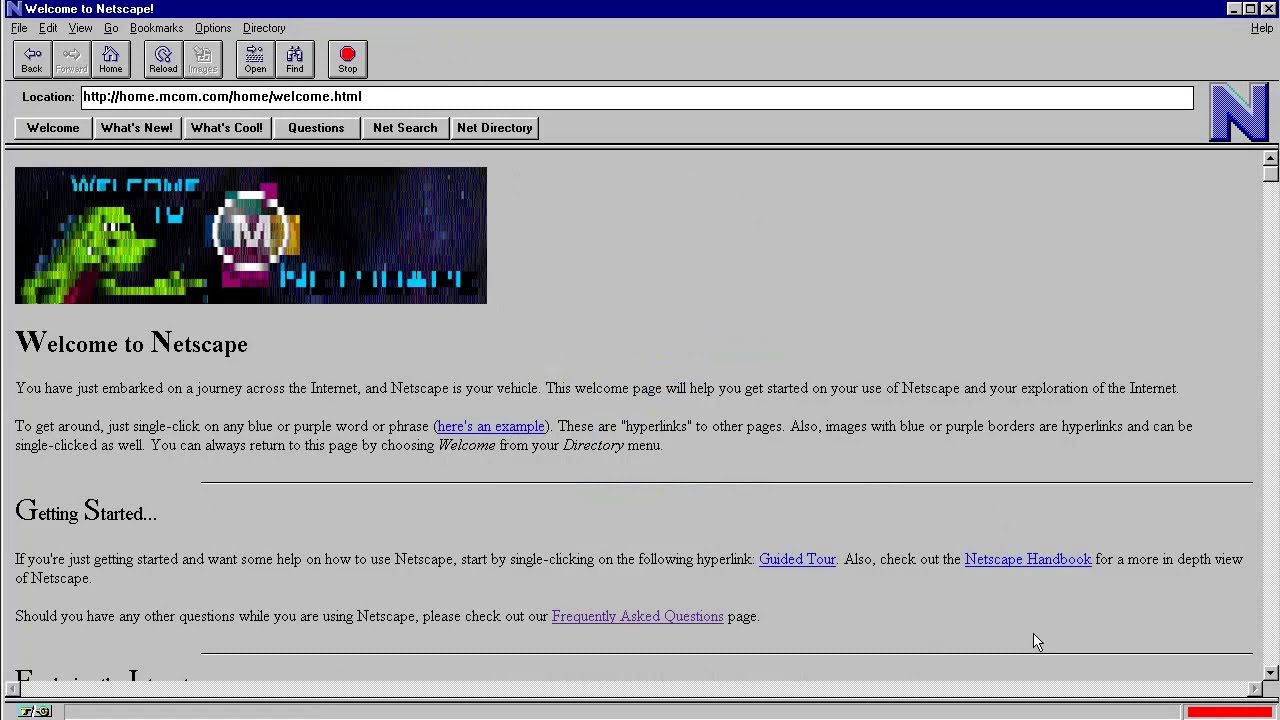

Video thumbnail — LGR Tech Tales — Bonzi Buddy: A Spyware's Tale
Tech 1999–2005

BonziBuddy

A purple gorilla who lived on your desktop, told you jokes, and quietly went through your business. BonziBuddy is the friendliest thing ever classified as adware by two antivirus companies. Half the internet remembers installing it on purpose.

netbus
Tech 1998–2002

NetBus

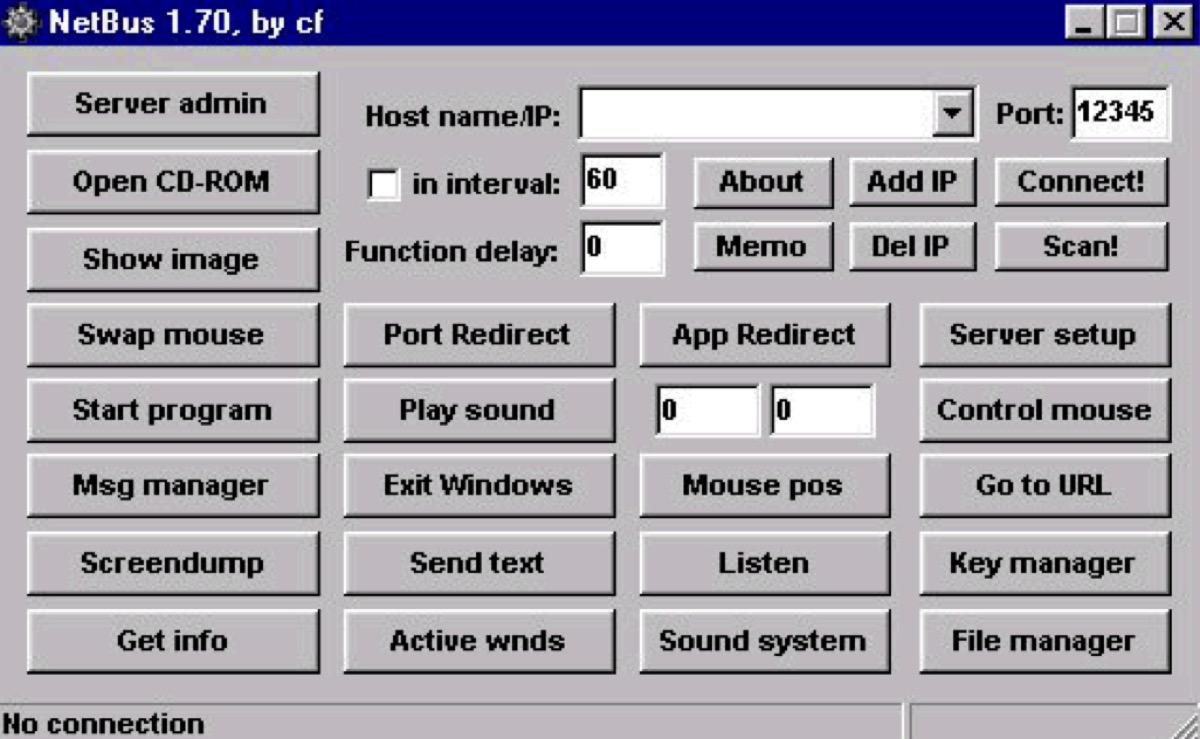
The prog that turned a friend's computer into a puppet: they ran the file, and suddenly their CD tray wouldn't stay shut. NetBus arrived in March 1998 and became one of the two names everybody in the AOL-era prog scene knew. Its author insisted it was a prank tool — and its Swedish name says exactly that.

Video thumbnail — Second Life trailer (original 2003 version)
Trends 2003–present

Second Life

A world with no levels, no quests, and no way to win — just land you could buy and a currency you could cash out for real money. For about two years in the mid-2000s, Second Life was going to be the future, and every news network, embassy and corporation piled in to say so. It is still running, which surprises people.

sub-seven
Tech 1999–2003

SubSeven

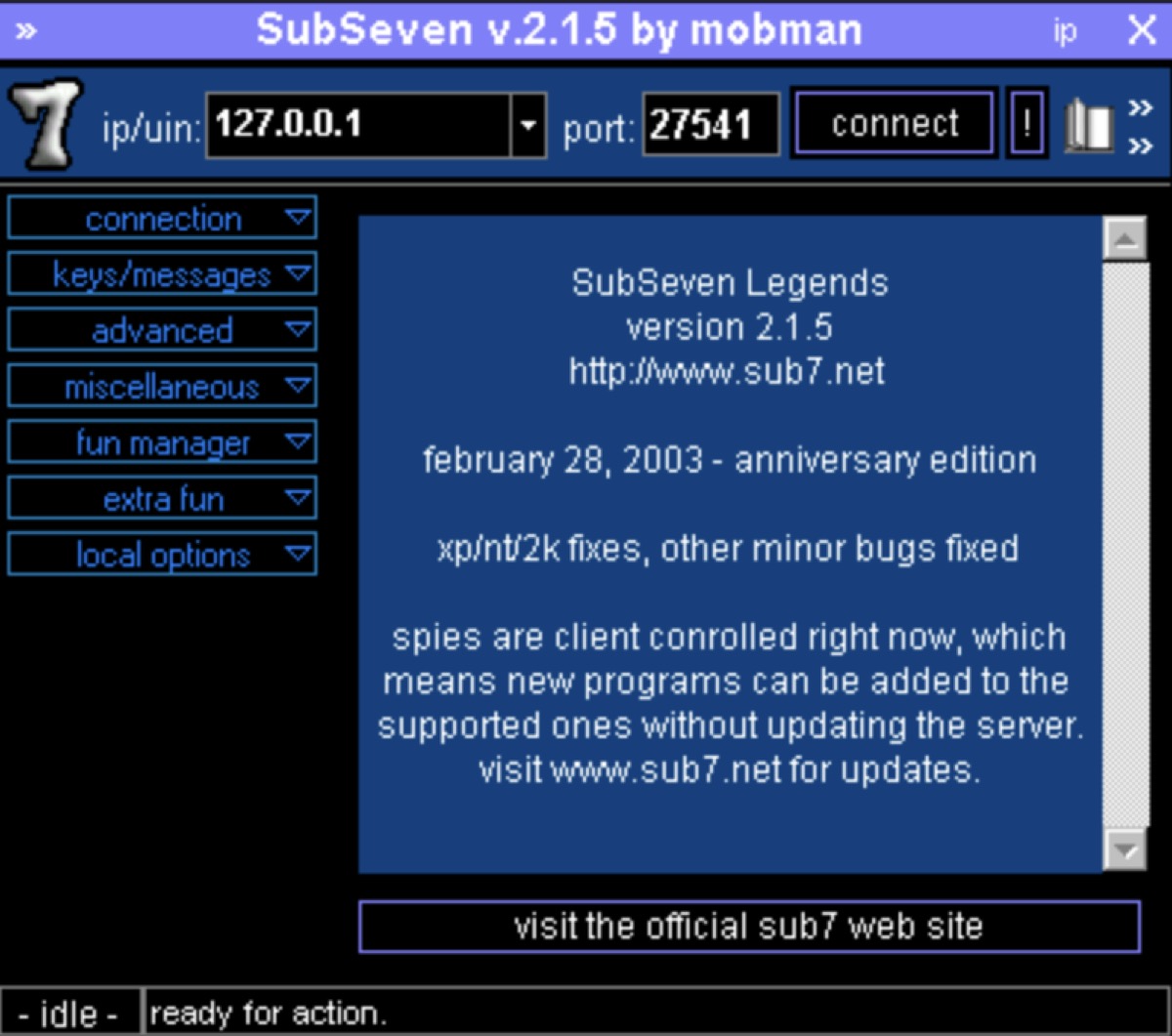
The other name every prog kid knew, and the one that got the reputation. SubSeven arrived in February 1999 doing what NetBus did but with more of everything, and it became the era's definitive "double-click this" mayhem. Its author has never been convincingly identified — and that fight is still going.

Video thumbnail — AIM should have lasted forever | Version History
Trends 1999–2006 peak

AIM Away Messages

The cryptic, ever-changing status you left up for your buddy list to decode — song lyrics aimed at nobody in particular, inside jokes, coded hints about your mood and your crush. AIM away messages were half diary entry, half performance art, and everyone was reading.

Video thumbnail — Bebo | The Forgotten Social Network - PKMX
Trends 2005–2010

Bebo

The social network that beat MySpace in Britain, sold to AOL for $850 million at the top, and got bought back by its own founders for $1 million five years later. America barely noticed Bebo; for a few years the UK and Ireland barely used anything else.

The blue and orange Meebo wordmark
Trends 2005–2012

Meebo

The browser tab that ran AIM, MSN, Yahoo and ICQ all at once — no download, no install, no getting caught. On locked-down school and library computers, Meebo was the loophole: the IT department could block installers, but the browser was always open.

Illustrated placeholder card for Photobucket
Trends 2003–2010 peak

Photobucket

The image host that decorated the entire early internet — MySpace profiles, forum signatures, eBay listings. Photobucket's ten billion images were invisible infrastructure, right up until June 2017, when a paywall turned millions of embedded pictures into upgrade-nag placeholders all at once.

Video thumbnail — RealPlayer: The media player from the 90s that was spyware
Trends 1995–2005

RealPlayer Buffering

The ritual of early streaming: the "Buffering..." wheel, the mid-song stutter, the postage-stamp video window, the eternal nag to download the player. By 2000, more than 85% of streaming content on the internet ran on RealNetworks' format — which meant everyone, everywhere, was buffering.

trillian
Trends 2000–2007 peak

Trillian

AIM, ICQ, MSN and Yahoo in one window — and AOL hated it. Trillian was the power user's messenger, locked in a patch-versus-block war with the biggest network of the IM era.

Video thumbnail — Basshunter - Vi sitter i ventrilo och spelar DotA
Trends 2002–2010 peak

Ventrilo

The voice server of 2000s PC gaming — "Vent" to everyone who ever memorized an IP, a port, and a password to get on it. The crackle of raid nights, the guildmate who paid for the server, the push-to-talk key you forgot to release. Then Discord arrived, and the servers emptied out.