AOL Punters & Progs

Homemade Visual Basic programs that exploited and weaponized the AOL client. AOHell kicked off the era; "punters" crashed users offline; the scene thrived in secret warez rooms until AOL clamped down.
In the mid-1990s, amateur programmers discovered that AOL's Windows client could be extended with homemade Visual Basic programs — "progs" — that bolted new functionality onto the platform. What started as experimentation became an underground toolkit for mischief, fraud, and exploration.
The movement's figurehead was AOHell, written in 1994 by Koceilah Rekouche, a teenager operating under the alias "Da Chronic." AOHell bundled a notorious suite of capabilities: a fake-account generator (for scamming AOL), credit-card-number generators (for fraud), email and IM bombers (for harassment), chat-room scrollers that flooded rooms with ASCII art, a mass mailer used in the warez underground, and a password-stealing tool whose January 1995 documentation contains the first recorded use of the word "phishing." AOHell proved that the AOL client was a sieve for security.
Parallel to prog development came "punters" — a simpler exploit that kicked other users offline by crafting messages that crashed the AOL client's parser. The technique required no custom software, just knowledge of AOL's message format. Punters weaponized it for kicks, trolling, and competition.
FateX arrived as the second major prog, offering many of AOHell's capabilities (the mailers, the scrollers, the mass features) while omitting the outright-illegal phisher and card-generator tools. Dozens of imitators proliferated, each refining the toolkit and splitting hairs over legality. The scene lived in secret warez and prog chat rooms, trade channels visible only to those who knew to look. AOL's response was swift and unrelenting: account terminations, TOS crackdowns, and legal threats. By 1999, the golden age had ended.
Similar items

AOL
The dial-up gateway that wired up America. AOL's "You've Got Mail" voice, aggressive free-trial CD carpet-bombing, and shift to unlimited $19.95/month pricing triggered the legendary busy-signal crisis — millions of Americans' first taste of the internet.
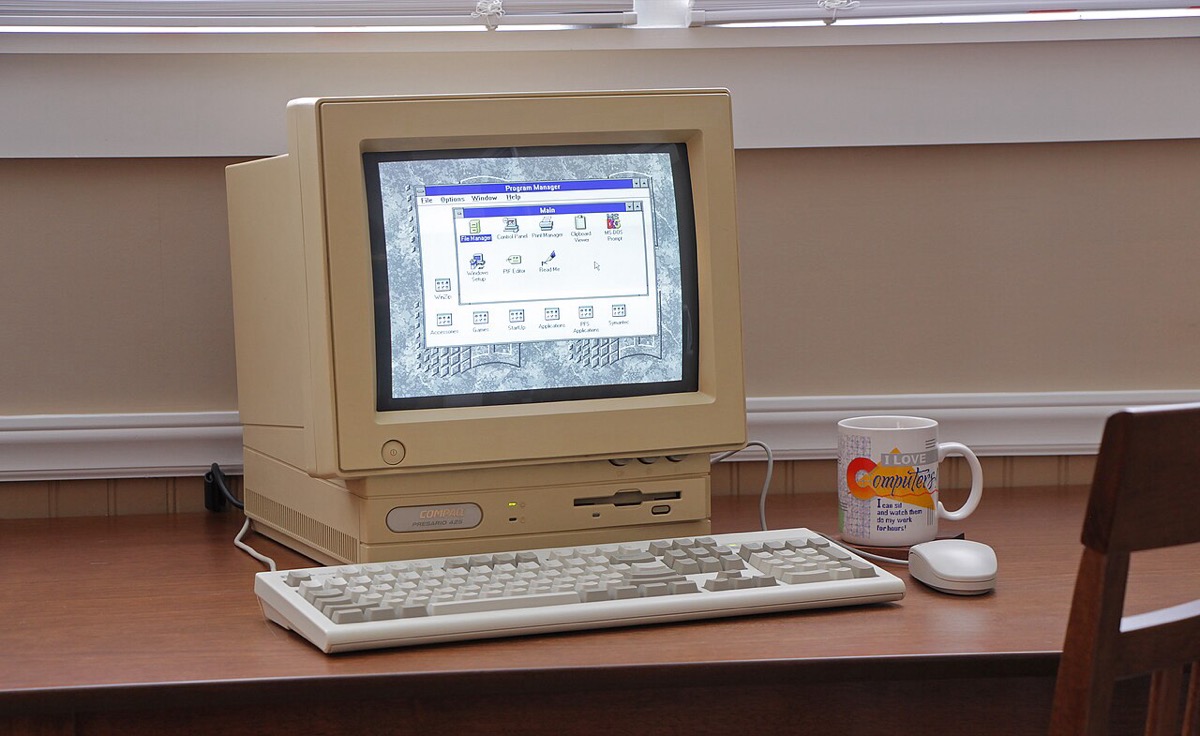
AOL Private Chat Rooms
The hidden rooms where 90s internet culture actually lived. Capped at 23 people, joinable only if you knew the name, and greeted by universal "A/S/L?" — private rooms were where friendships, flirtations, and warez trades quietly thrived.
Hackers
A young Angelina Jolie and Jonny Lee Miller rollerblade through a neon-drenched, absurdly rendered version of hacking where code is visualized as 3D graphics and 'Hack the planet!' became an unironic battle cry. Iain Softley's 1995 box-office flop became a beloved cult classic on the strength of its aesthetic audacity and a landmark electronic soundtrack.

AIM & MSN Messenger
The after-school ritual: logging on to a dial-up modem, scanning your buddy list, typing AIM away messages packed with song lyrics and veiled drama, and knowing your 12-year-old screen name would haunt you forever. AIM and MSN Messenger were the social nervous system of the '90s and 2000s — instant, informal, and utterly addictive.