GeoCities

Photo credit: Public domain (PD-textlogo), via Wikimedia Commons
The free web hosting empire where the internet learned to be chaotic. GeoCities gave millions of people their first webpage, organized into themed neighborhoods, and established the visual language of under-construction GIFs, MIDI soundtracks, and blinking text that defined the early web.
GeoCities started as Beverly Hills Internet in 1994 and rebranded as GeoCities in 1995, offering free web hosting and a simple page builder to anyone. The neighborhoods system was its signature: sites were organized by theme—Area51 for sci-fi, Hollywood for entertainment, SiliconValley for tech, Heartland for family—with URLs like geocities.com/Area51/1234 (later /username). For a generation, GeoCities was the first place they built their own corner of the internet.
The aesthetic was chaos incarnate. "Under Construction" GIFs with yellow-and-black caution stripes, spinning globes, and blinking text marked sites that may never have been finished. Visitors would leave messages in guestbooks; obsessive hit counters tracked every visitor. Autoplay MIDI music screamed from pages featuring tiled or starfield backgrounds, and sites exploited every HTML tag available—<marquee> scrolling messages, <blink> text that wouldn't stop, and hundreds of animated GIFs. It was garish, earnest, and completely unapologetic.
For a generation, GeoCities was the gateway to understanding how the web worked. Kids and teenagers learned HTML by tinkering, discovered webrings linking related sites, and assembled bizarre fan pages about movies, games, and TV shows. The platform was as much about identity and community as it was about content; it's where people experimented with who they wanted to be online.
Yahoo! acquired GeoCities in 1999 for approximately $3.57 billion at the dot-com peak. The company gradually dismantled the neighborhood system for yahoo.com/username URLs, and eventually shut down the US version on October 26, 2009 (the Japanese service lasted until 2019). The closure was symbolic: the amateur, chaotic web was giving way to algorithmic platforms.
Keep talking about it (Reddit)
Similar items

Angelfire
The free web host where the internet got weird and stayed that way. Angelfire grew into one of the "big three" free-hosting services of the late 90s, offering bare-bones page building for personal fan sites, rants, and niche collections—all with guestbooks, hit counters, and clashing backgrounds.

MySpace
MySpace launched in August 2003 and became the social network that swallowed the mid-2000s internet — where everyone's first friend was Tom. Top 8 rankings sparked drama, profile songs played on auto-load, and DIY HTML customization meant glitter graphics and autoplay music ruled. Bands broke careers there; it was the most-visited website in the US by 2006.

AOL
The dial-up gateway that wired up America. AOL's "You've Got Mail" voice, aggressive free-trial CD carpet-bombing, and shift to unlimited $19.95/month pricing triggered the legendary busy-signal crisis — millions of Americans' first taste of the internet.
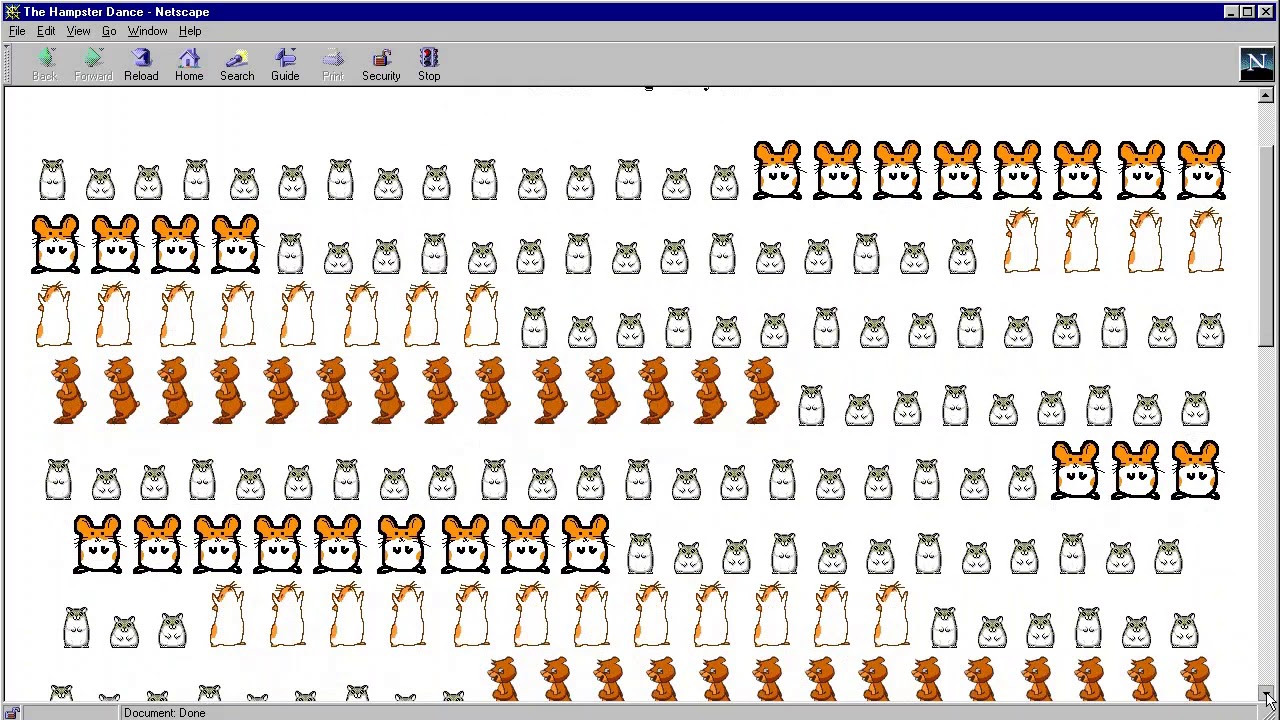
The Hampster Dance
Four animated hamsters repeated ad nauseam, set to a sped-up Disney sample — one of the internet's first viral sensations. Created in 1997 by a Canadian art student as a GeoCities tribute to her pet hamster, The Hampster Dance puttered along unseen until a 1999 email chain sent it stratospheric, spawning hit songs, merch, and a permanent place in internet history.