MySpace

Photo credit: Public domain (PD-textlogo), via Wikimedia Commons
MySpace launched in August 2003 and became the social network that swallowed the mid-2000s internet — where everyone's first friend was Tom. Top 8 rankings sparked drama, profile songs played on auto-load, and DIY HTML customization meant glitter graphics and autoplay music ruled. Bands broke careers there; it was the most-visited website in the US by 2006.
Tom Anderson and Chris DeWolfe created MySpace as a space where users could customize their own corner of the web in ways Friendster never allowed. The early appeal was the total creative freedom: code your own profile, embed a song, arrange your Top 8 friends in a hierarchy that mattered. For teenagers and bands, MySpace became the place to exist online—your profile was your identity, and customization was currency.
The platform exploded in 2004–2006. Lily Allen famously built an early fanbase on MySpace, and the Arctic Monkeys broke out through a MySpace page their fans had built for them—the band itself hadn't even heard of the site. News Corp acquired it in 2005 for $580 million, convinced they'd bought the future of social networking. But MySpace's open customization turned profiles into baroque chaos—the more you could personalize, the worse it often looked. When Facebook launched and offered clean, standardized profiles, the migration was swift. By 2008–2009, Facebook had overtaken MySpace, and the site cratered into irrelevance. MySpace tried several reinventions but never recovered that golden era.
Similar items
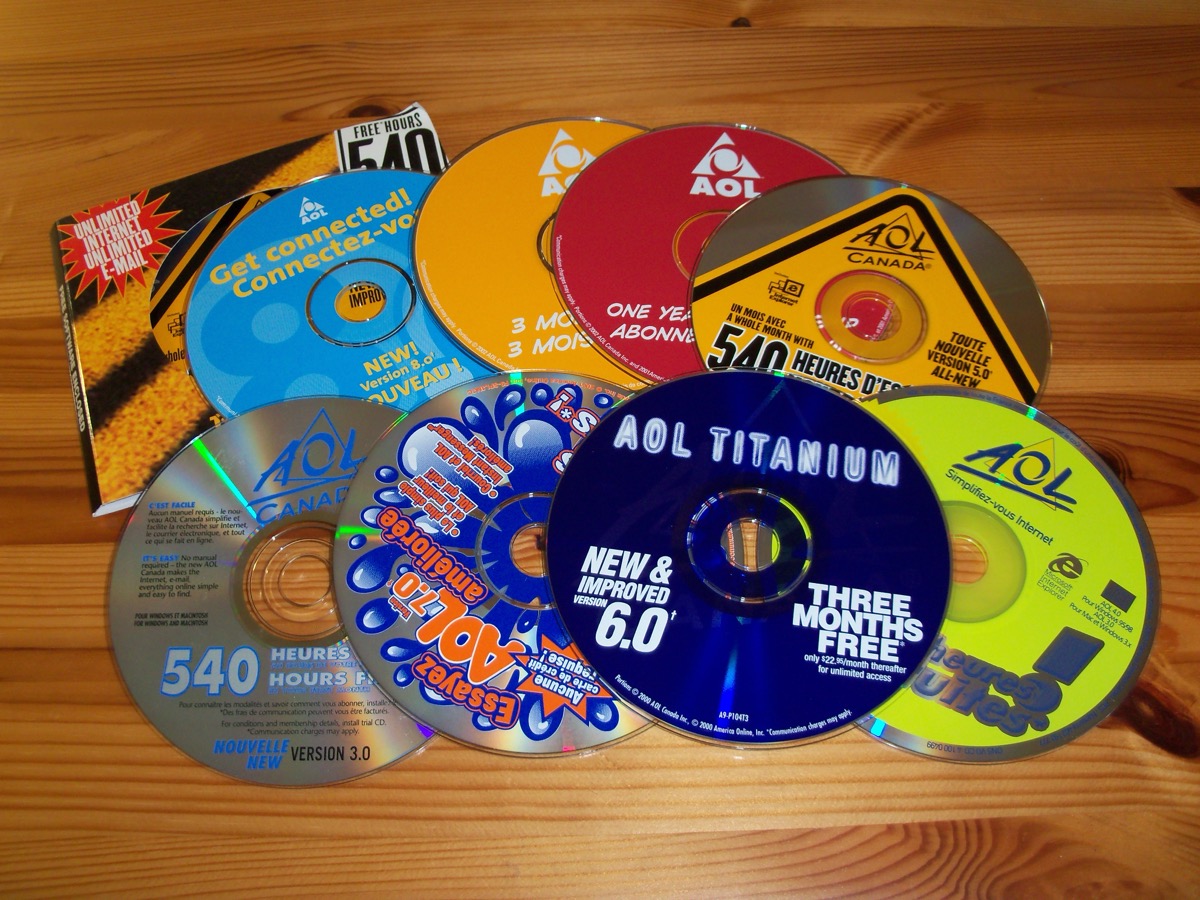
AOL Free-Trial CDs
AOL's marketing chief Jan Brandt carpet-bombed America with free-trial discs—in magazines, mailboxes, at Blockbuster and Best Buy, even in Omaha Steaks shipments. At peak saturation — by Brandt's own estimate — roughly half of all CDs manufactured worldwide bore the AOL logo, a $300 million marketing gambit that made the "You've Got Mail" sound the most iconic audio cue of the 1990s.

iPod
Steve Jobs unveiled the iPod on October 23, 2001, promising "1,000 songs in your pocket." The original model packed a 5GB hard drive, mechanical scroll wheel, and FireWire connection—Mac-only, $399. The click wheel, iTunes Music Store (2003), and later Windows support made it the gateway device to digital music and one of the most influential electronics ever built.

Motorola Razr
The Razr V3 launched in late 2004 as the world's thinnest clamshell phone at a shocking $500. Its anodized-aluminum body, laser-etched keypad, and impossible thinness made it a fashion statement. When the price dropped in 2005–2006, everyone had one—and snapping it shut after a call was the whole point.
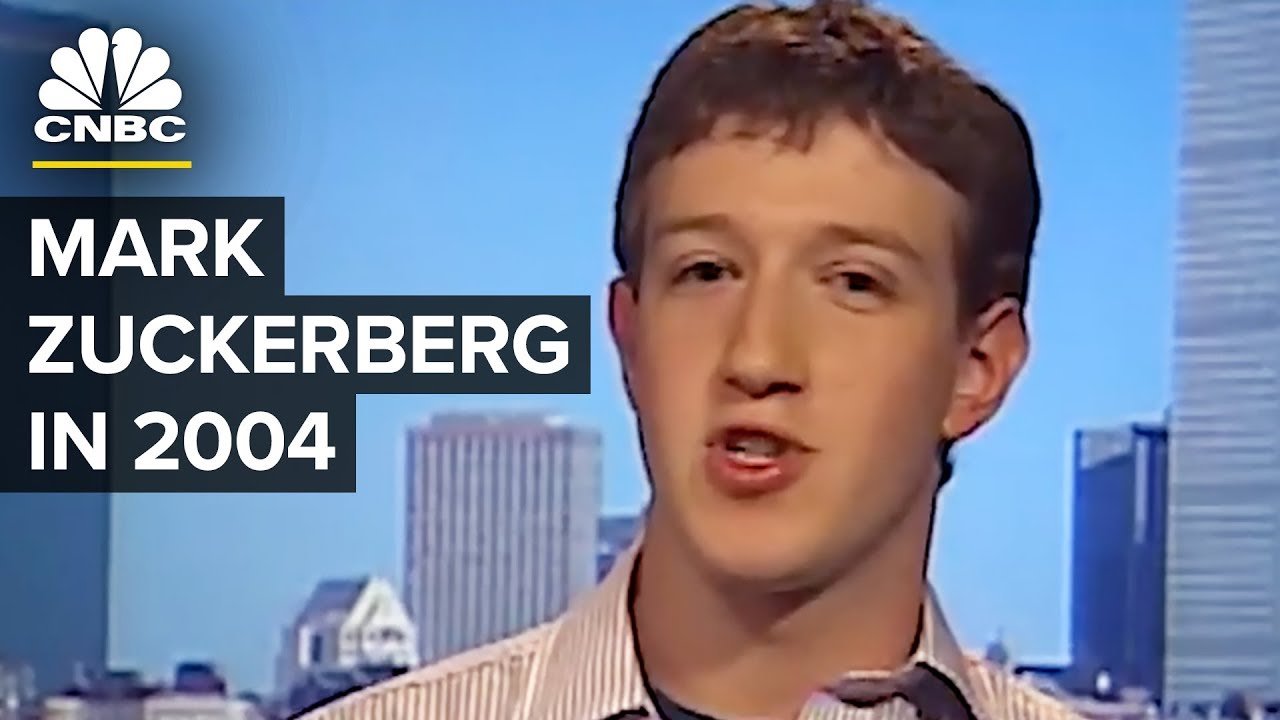
Early Facebook
Mark Zuckerberg launched TheFacebook from a Harvard dorm in 2004, and it spread to college campuses like a virus — exclusive, intimate, and gated behind a .edu email address. By 2006, when it opened to anyone with an email address, the velvet rope had fallen and the era was over.