AOL

The dial-up gateway that wired up America. AOL's "You've Got Mail" voice, aggressive free-trial CD carpet-bombing, and shift to unlimited $19.95/month pricing triggered the legendary busy-signal crisis — millions of Americans' first taste of the internet.
America Online began as Quantum Computer Services in 1985, renamed itself America Online in 1991, and rose under CEO Steve Case. The mid-1990s Windows versions transformed AOL into mainstream America's on-ramp to the internet. Before unlimited access, users paid by the hour — a barrier that kept adoption in check until December 1996, when AOL flipped the switch to unlimited access for a flat $19.95 per month.
The flat-rate shift triggered the infamous busy-signal crisis. Millions of new subscribers logging on simultaneously overwhelmed AOL's infrastructure, and users found themselves perpetually unable to connect — hours of redialing through busy signals became the symbol of the era. The frustration was real, but so was the cultural penetration: AOL was the internet for tens of millions of Americans.
AOL's killer apps were simple and social: the keyword system ("AOL Keyword: ..." shortcuts to channels and services), the Channel guide, and the Buddy List, which let you see friends come online and helped make instant messaging a mainstream daily habit. The brand voice came from Elwood Edwards' "You've Got Mail" greeting (recorded in 1989), a voice so iconic it became the era's audio signature for online arrival. Massive CD carpet-bombing campaigns seeded free-trial offers in mailboxes and retail stores, introducing new cohorts to the service in waves.
By the early 2000s, AOL boasted 26–27 million US subscribers at its peak. In January 2000, AOL announced a merger with Time Warner for roughly $165 billion, a deal that closed in 2001 and soon became widely regarded as one of the worst corporate mergers in history. Broadband's rise through the 2000s eroded dial-up AOL's core business, and the company never recovered its cultural dominance, though it limped along for decades afterward.
Similar items
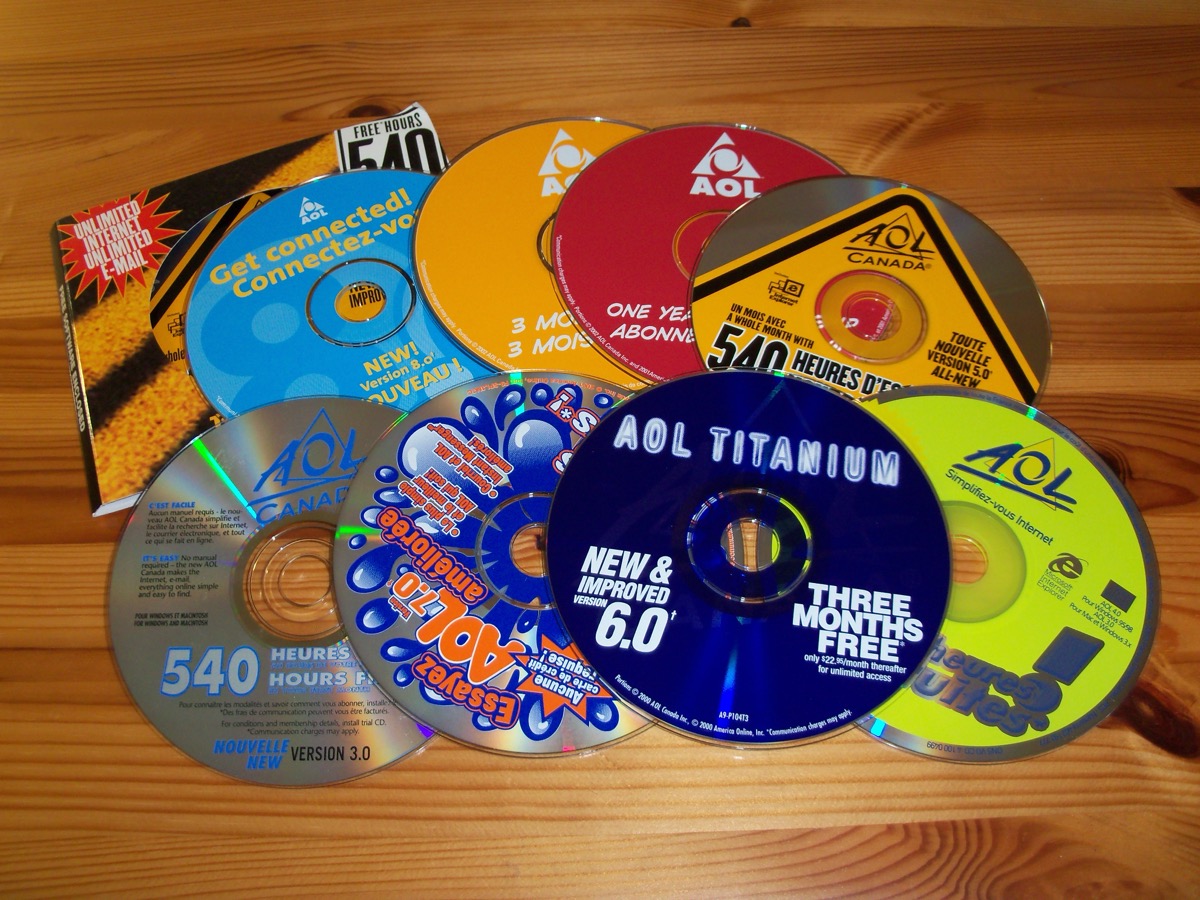
AOL Free-Trial CDs
AOL's marketing chief Jan Brandt carpet-bombed America with free-trial discs—in magazines, mailboxes, at Blockbuster and Best Buy, even in Omaha Steaks shipments. At peak saturation — by Brandt's own estimate — roughly half of all CDs manufactured worldwide bore the AOL logo, a $300 million marketing gambit that made the "You've Got Mail" sound the most iconic audio cue of the 1990s.

AIM & MSN Messenger
The after-school ritual: logging on to a dial-up modem, scanning your buddy list, typing AIM away messages packed with song lyrics and veiled drama, and knowing your 12-year-old screen name would haunt you forever. AIM and MSN Messenger were the social nervous system of the '90s and 2000s — instant, informal, and utterly addictive.
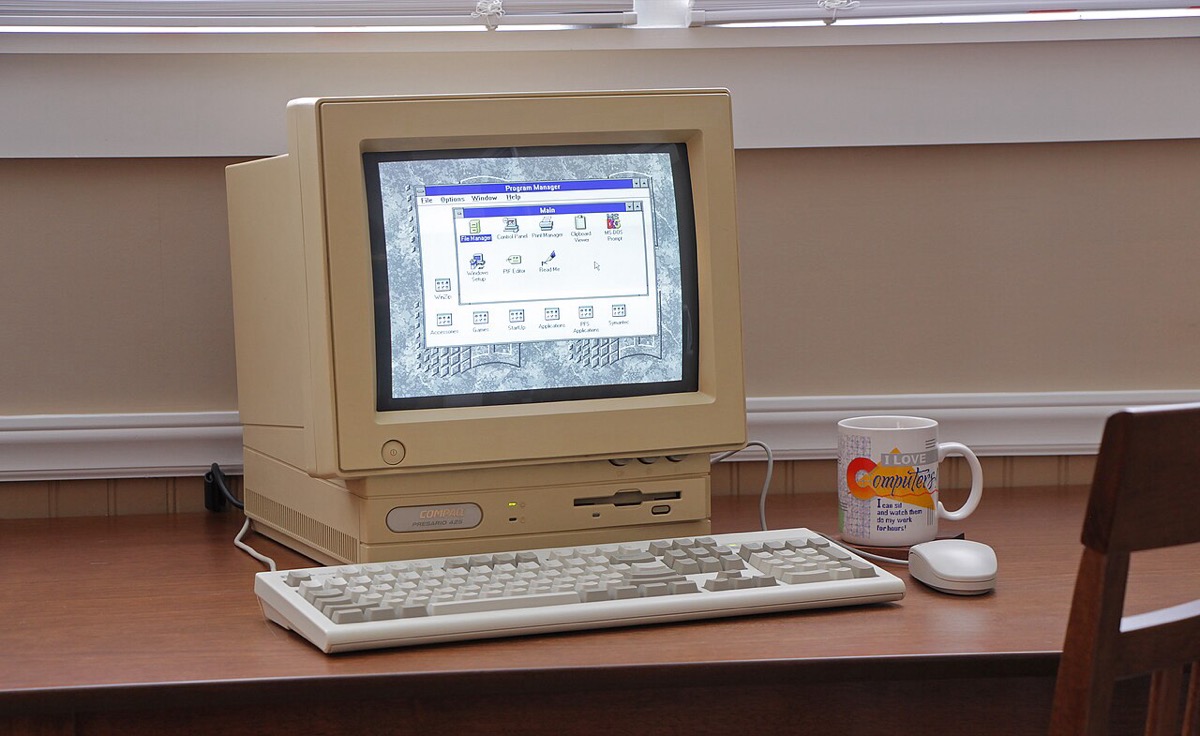
AOL Private Chat Rooms
The hidden rooms where 90s internet culture actually lived. Capped at 23 people, joinable only if you knew the name, and greeted by universal "A/S/L?" — private rooms were where friendships, flirtations, and warez trades quietly thrived.

AOL Punters & Progs
Homemade Visual Basic programs that exploited and weaponized the AOL client. AOHell kicked off the era; "punters" crashed users offline; the scene thrived in secret warez rooms until AOL clamped down.