The Hampster Dance
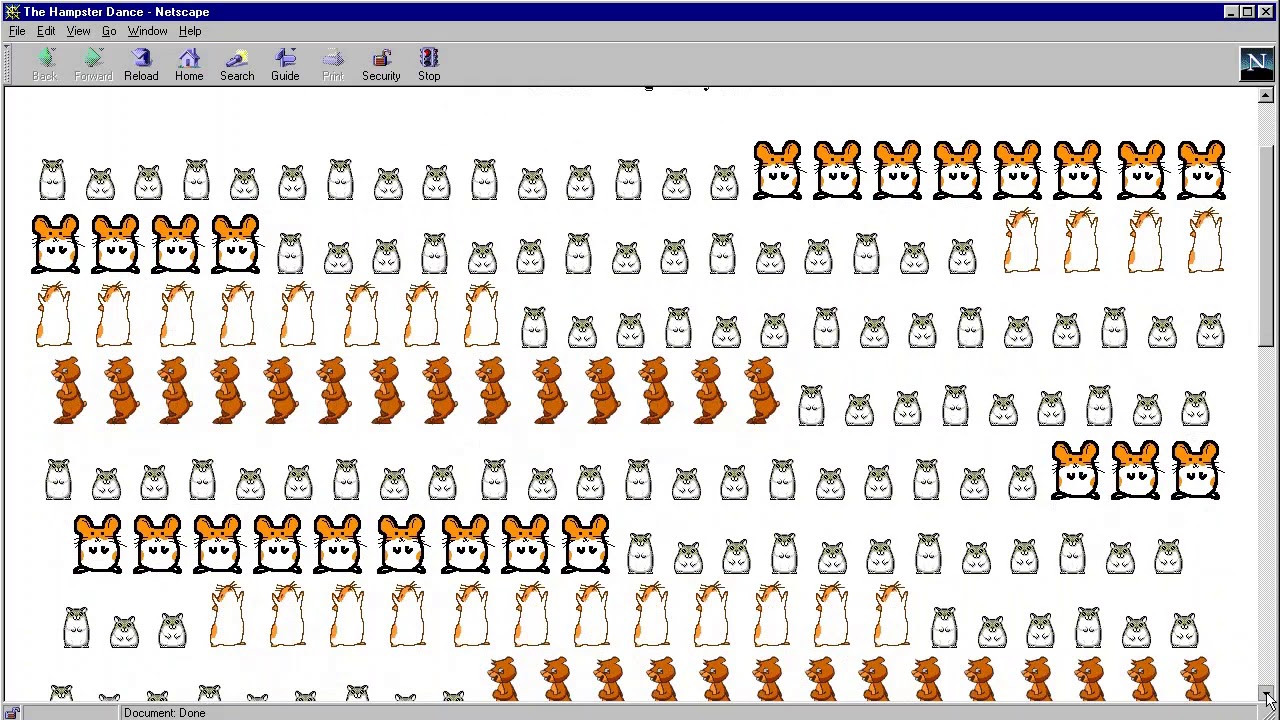
Four animated hamsters repeated ad nauseam, set to a sped-up Disney sample — one of the internet's first viral sensations. Created in 1997 by a Canadian art student as a GeoCities tribute to her pet hamster, The Hampster Dance puttered along unseen until a 1999 email chain sent it stratospheric, spawning hit songs, merch, and a permanent place in internet history.
The Hampster Dance — the misspelling is part of the brand — was created in August 1997 by Deidre LaCarte, a Canadian art student and martial-arts instructor from Nanaimo, British Columbia, as a GeoCities-hosted page ("Hampton Hampster's Hamster House") in tribute to her pet hamster Hampton. She was competing with her sister and her best friend over who could generate the most web traffic. The page was nothing but four unique animated hamster GIFs repeated in rows by the dozens, plus a maddeningly catchy nine-second looping WAV: a sped-up sample of "Whistle-Stop," written and performed by Roger Miller for Disney's 1973 animated Robin Hood.
For over a year it puttered along almost unseen — roughly 800 total visits by early 1999. Then it exploded through email forwards and early blogs in February and March 1999, at one point pulling about 60,000 views in four days. The traffic contest was over, and so was the era when the internet's weirdness stayed on the internet: the dancing rodents got merchandise, ringtones, and radio coverage, and the site became shorthand for the web at its most gloriously pointless.
The tune escaped the browser entirely. The Cuban Boys' soundalike-sampling "Cognoscenti vs. Intelligentsia" hit number 4 on the UK singles chart at Christmas 1999, and LaCarte's official "The Hampsterdance Song" — produced with the Boomtang Boys, released in June 2000 and credited to Hampton the Hampster — went to number 1 on the Canadian singles chart. Not bad for four GIFs and a nine-second loop; no early-internet retrospective since has managed to leave it out.
Keep talking about it (Reddit)
Similar items

GeoCities
The free web hosting empire where the internet learned to be chaotic. GeoCities gave millions of people their first webpage, organized into themed neighborhoods, and established the visual language of under-construction GIFs, MIDI soundtracks, and blinking text that defined the early web.
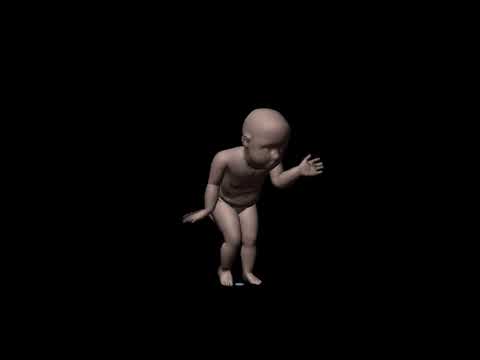
Dancing Baby
A 3D-rendered infant doing the cha-cha — arguably the first viral video-meme of the internet age. Born as a software demo in 1996 and spread through email chains like a digital chain letter, the "Ooga-Chaka baby" went fully mainstream when it started haunting Ally McBeal.

Zombo.com
Welcome to Zombo.com. You can do anything at Zombo.com. Anything at all. The only limit is yourself. And then... nothing — the internet's greatest anti-website: pulsing dots, a silky voice making infinite promises, and a quarter-century of delivering absolutely none of them.

AddictingGames.com
The flash-game portal that gave "I'm bored" a URL. AddictingGames launched in 2002 as a constantly updated grid of free browser games, became one of the sites school IT departments most loved to block — and somehow outlived Flash itself.