Second Life

A world with no levels, no quests, and no way to win — just land you could buy and a currency you could cash out for real money. For about two years in the mid-2000s, Second Life was going to be the future, and every news network, embassy and corporation piled in to say so. It is still running, which surprises people.
Linden Lab launched Second Life on 23 June 2003. Philip Rosedale, who had formed the company in 1999, spent years insisting it was not a game — "we don't see this as a game," he said in March 2006, "we see it as a platform" — and structurally he was right: there was no manufactured conflict and no set objective. Residents built the place themselves, and what they built is what you came to see.
The economy is what made it more than a curiosity. The Linden dollar was exchangeable for real currency through Linden Lab's own LindeX exchange at a floating market rate, and you could take a surplus back out to PayPal. That single fact drove everything else: if the money was real, then the land was real, and if the land was real, then somebody was going to become a landlord.
The hype crested in 2005 and 2006. BusinessWeek ran a cover story. IBM bought twelve islands for virtual training. CNET, Reuters, NPR and the BBC opened presences. Countries opened embassies — the Maldives first, then Sweden in May 2007 and Estonia that December, with Colombia, Serbia, the Philippines, Israel and others following. For a stretch, being absent from Second Life read as being absent from the future.
The most repeated story from that peak deserves its hedge. Ailin Graef, known in-world as Anshe Chung, was reported as the first person to turn a virtual-world fortune into more than a million real dollars, built from an initial $9.95 through buying, selling and renting virtual land. The claim originated in her own company's press release in November 2006; Linden Lab told Fortune it could not immediately verify it, and Fortune published the story with the word "apparently" carefully in place. It became a fact by repetition rather than by confirmation. The era's other emblematic moment was less ambiguous: a CNET interview with Chung that December was overrun by griefers bombarding the virtual studio with flying animated genitalia until the simulator crashed.
The numbers are where memory misleads hardest, because three different figures get told as one. Second Life had 21.3 million registered accounts by 2010 — but its highest concurrent population ever was about 88,200 avatars in early 2009, and by the end of 2017 it counted somewhere between 800,000 and 900,000 active users. Tens of millions signed up; fewer than a hundred thousand were ever in there together. The hype died. The world didn't — it is still running today.
Similar items

The Sims
Will Wright's dollhouse simulator where you controlled virtual lives, sent them to work, made them fall in love, and then deleted the pool ladder and watched them drown. Launched in February 2000 by Maxis and EA, The Sims became the best-selling PC game of its era—a mania that never ended, spawning sequels that kept the franchise dominant for decades.
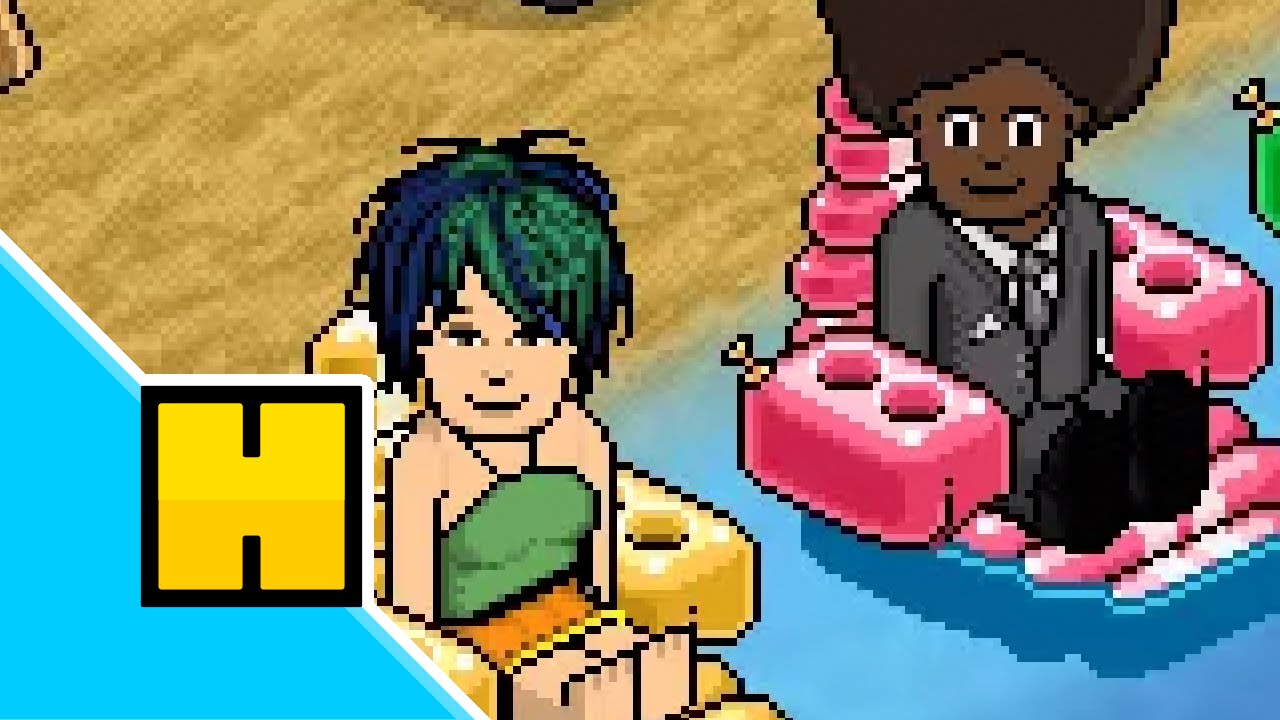
Habbo Hotel
A giant isometric pixel-art hotel you checked into as a blocky avatar — decorating rooms with "furni," chatting in the lobby, and guarding the virtual pool. One of the first massively popular online social worlds built for teenagers.

Club Penguin
The online hangout where millions of kids waddled around as cartoon penguins, decorated their igloos, adopted puffle pets, and played mini-games for coins in a safety-focused chat environment. Club Penguin was one of the first MMOs designed specifically for kids, and it became an after-school addiction that defined a generation's online childhood.

AddictingGames.com
The flash-game portal that gave "I'm bored" a URL. AddictingGames launched in 2002 as a constantly updated grid of free browser games, became one of the sites school IT departments most loved to block — and somehow outlived Flash itself.