NetBus
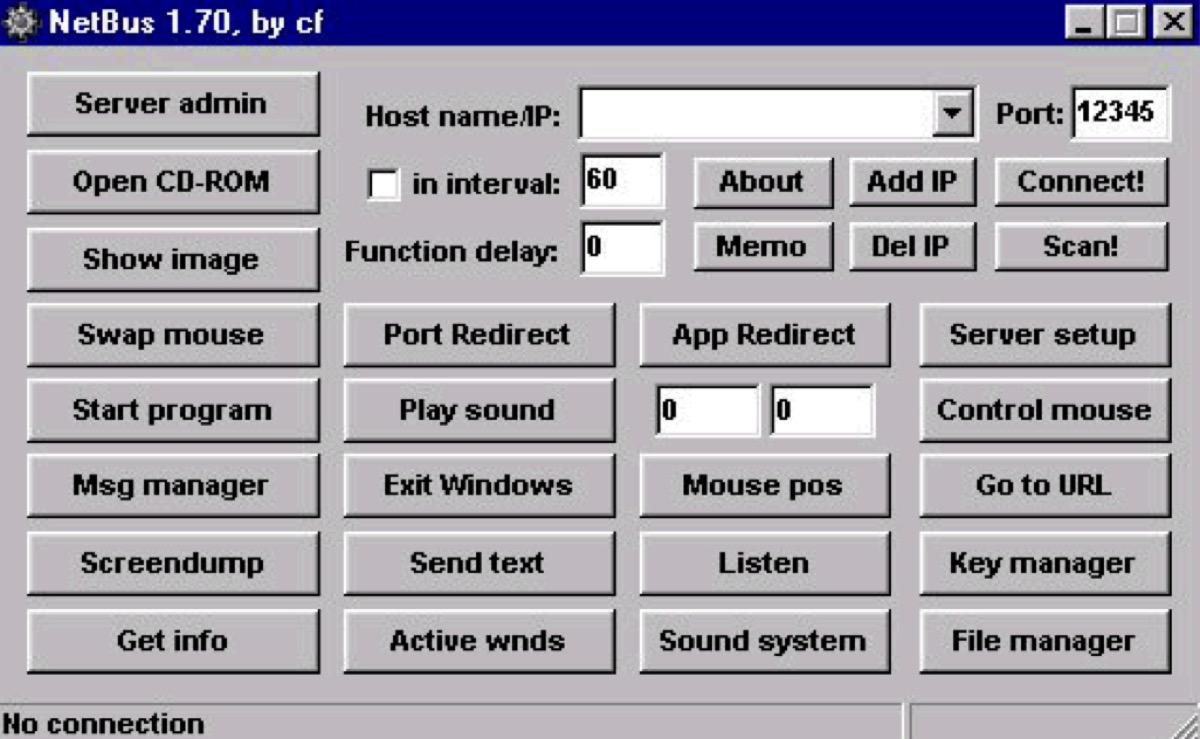
The prog that turned a friend's computer into a puppet: they ran the file, and suddenly their CD tray wouldn't stay shut. NetBus arrived in March 1998 and became one of the two names everybody in the AOL-era prog scene knew. Its author insisted it was a prank tool — and its Swedish name says exactly that.
NetBus was written in Delphi by a Swedish programmer named Carl-Fredrik Neikter in March 1998. The name is the tell: translated from Swedish, it means "NetPrank." Neikter said the program was meant for pranks, and for a lot of the teenagers who passed it around, that is precisely what it was — you talked someone into running an innocent-looking file, and from then on their machine answered to you instead of them. The disc tray sliding open on its own is the memory almost everyone reports first.
The timing is usually told backwards. NetBus was already in wide circulation months before Back Orifice — the Cult of the Dead Cow's far more famous tool, written by Sir Dystic and released at DEF CON in August 1998 with a name punning on Microsoft's BackOffice and a stated purpose of proving how little security Windows 9x had. NetBus came first, in March, and it was the one that had already normalised the whole idea.
It also tried to grow up. NetBus 2.0 Pro appeared in February 1999 marketed commercially as a legitimate remote administration tool, which is a genuinely awkward position for a program whose name means NetPrank and whose reputation was built on hijacking strangers' desktops. Security vendors were not persuaded.
And then there is the reason this entry cannot be entirely fond. In 1999 someone used NetBus to plant 3,500 child-abuse images on the work computer of a law scholar at Lund University. Administrators found them and assumed he had put them there. He lost his research position, and after his name was published he fled the country and needed medical care to cope with it. He was acquitted in late 2004 — five years later — when a court accepted that NetBus had been used to control his machine. The same software that was a punchline in one window ruined a man's life in another, and the prank framing only ever held as long as you were the one holding the mouse.
Similar items

AOL Punters & Progs
Homemade Visual Basic programs that exploited and weaponized the AOL client. AOHell kicked off the era; "punters" crashed users offline; the scene thrived in secret warez rooms until AOL clamped down.
SubSeven
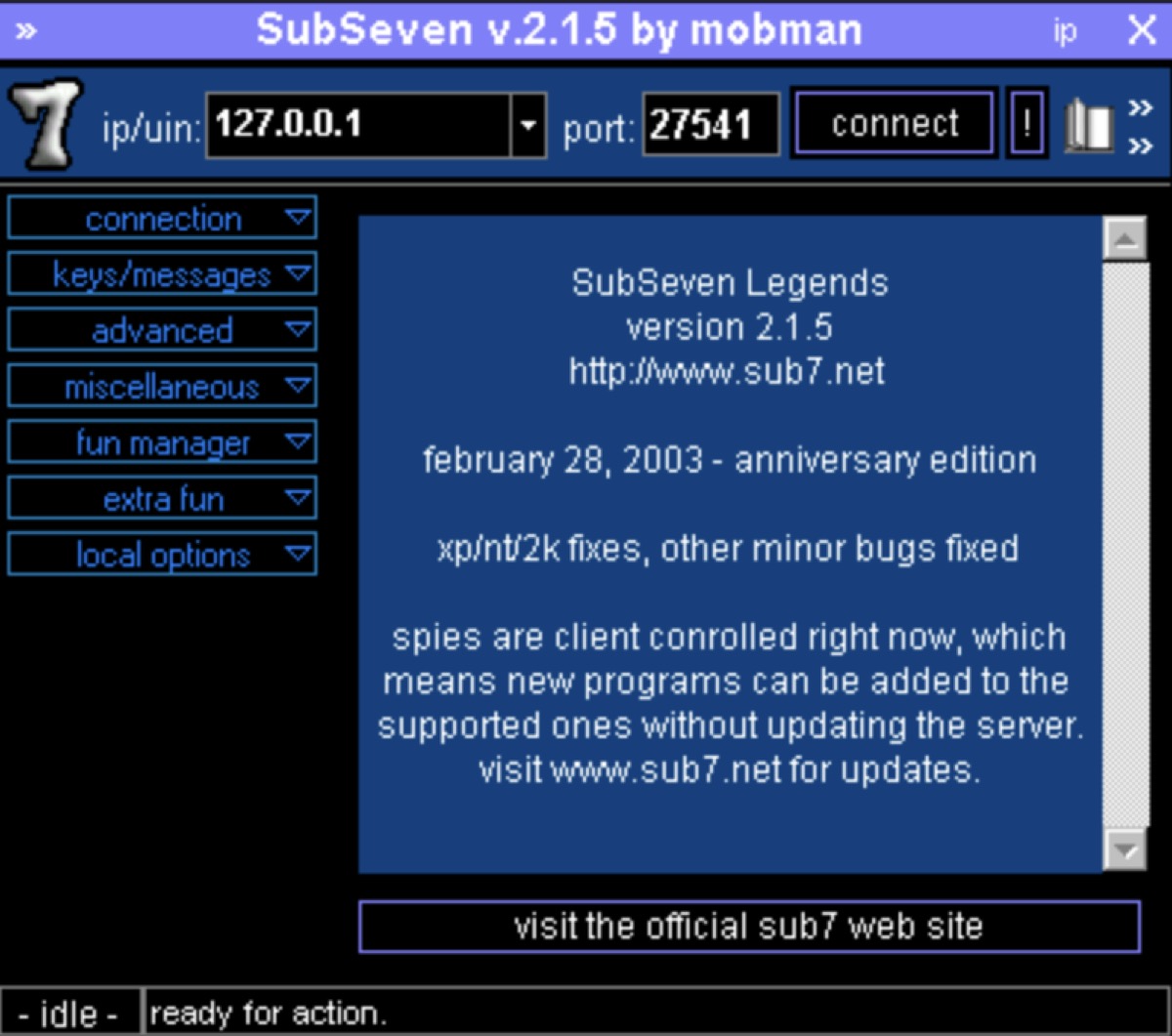
The other name every prog kid knew, and the one that got the reputation. SubSeven arrived in February 1999 doing what NetBus did but with more of everything, and it became the era's definitive "double-click this" mayhem. Its author has never been convincingly identified — and that fight is still going.

BonziBuddy
A purple gorilla who lived on your desktop, told you jokes, and quietly went through your business. BonziBuddy is the friendliest thing ever classified as adware by two antivirus companies. Half the internet remembers installing it on purpose.

AOL
The dial-up gateway that wired up America. AOL's "You've Got Mail" voice, aggressive free-trial CD carpet-bombing, and shift to unlimited $19.95/month pricing triggered the legendary busy-signal crisis — millions of Americans' first taste of the internet.