Dancing Baby
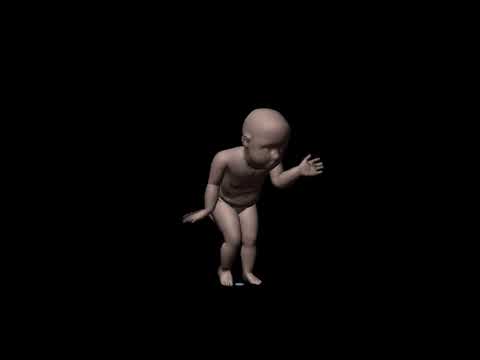
A 3D-rendered infant doing the cha-cha — arguably the first viral video-meme of the internet age. Born as a software demo in 1996 and spread through email chains like a digital chain letter, the "Ooga-Chaka baby" went fully mainstream when it started haunting Ally McBeal.
The Dancing Baby began as a technical demo: the file sk_baby.max, a sample animation shipped with Character Studio, a character-animation plug-in for 3D Studio Max released in the autumn of 1996. The animation was crafted by Michael Girard and Robert Lurye, with rigging dynamics by John Chadwick; the baby model itself was a commercially available Viewpoint Datalabs model called "Toddler with Diaper." Nobody involved was trying to make an icon — they were showing off what the software could do.
The internet had other plans. Users rendered their own clips and passed them around CompuServe forums and the early web, and a compressed animated-GIF version spread through email chains and AOL-era inboxes — the same forward-this-to-everyone circulation as chain letters, arriving pixelated and unstoppable. For a stretch of the late 90s the baby seemed to be in every forwarded email, a shared hallucination of the dial-up age.
Television made it mainstream: on Ally McBeal (1997–98), the baby appeared dancing to Blue Swede's "Hooked on a Feeling" — the "ooga-chaka" intro — as a recurring hallucination taunting Ally about her biological clock. For a while it was everywhere: TV dramas, commercials, music videos — the first demonstration that something born on the internet could colonize mainstream pop culture. It remains the canonical example of the pre-YouTube viral loop: no platform, no algorithm, just email forwards and dial-up patience.
Keep talking about it (Reddit)
Similar items

AOL
The dial-up gateway that wired up America. AOL's "You've Got Mail" voice, aggressive free-trial CD carpet-bombing, and shift to unlimited $19.95/month pricing triggered the legendary busy-signal crisis — millions of Americans' first taste of the internet.
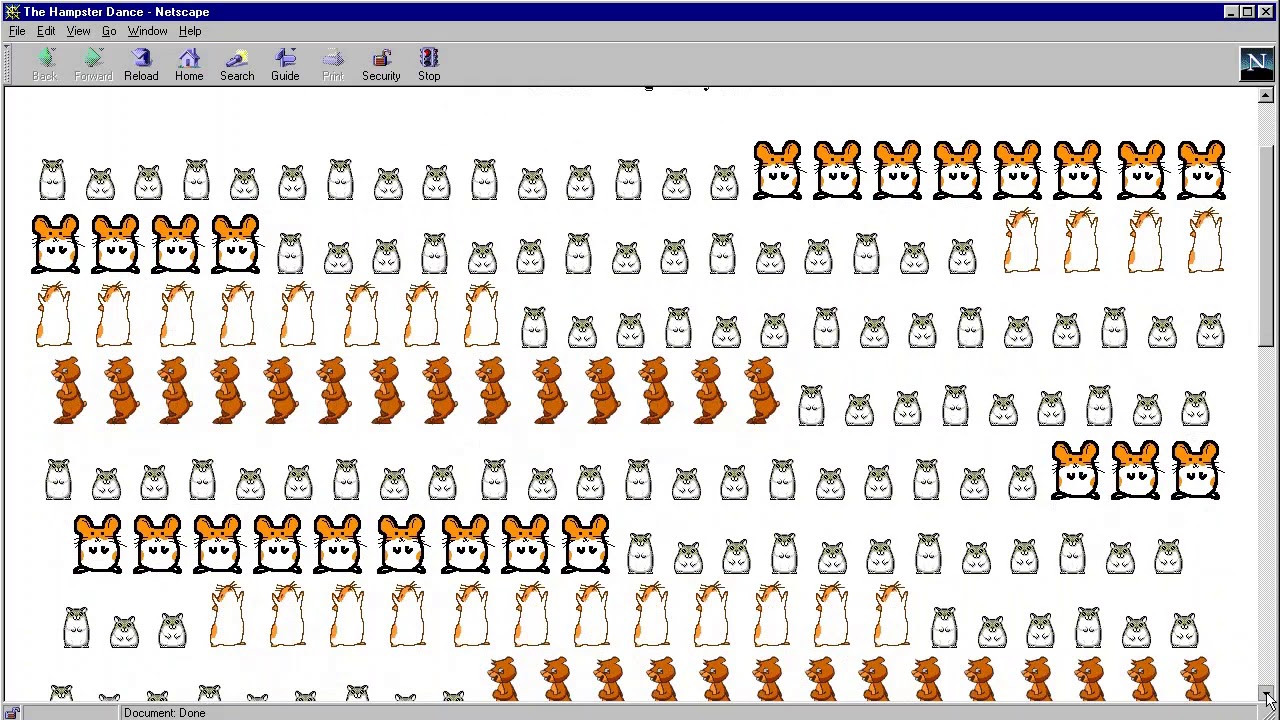
The Hampster Dance
Four animated hamsters repeated ad nauseam, set to a sped-up Disney sample — one of the internet's first viral sensations. Created in 1997 by a Canadian art student as a GeoCities tribute to her pet hamster, The Hampster Dance puttered along unseen until a 1999 email chain sent it stratospheric, spawning hit songs, merch, and a permanent place in internet history.

GeoCities
The free web hosting empire where the internet learned to be chaotic. GeoCities gave millions of people their first webpage, organized into themed neighborhoods, and established the visual language of under-construction GIFs, MIDI soundtracks, and blinking text that defined the early web.

Ally McBeal
A neurotic Boston lawyer's inner life plays out as bizarre fantasies at Fox's weirdly winning legal dramedy. The dancing baby became one of the internet's earliest viral images; the show became a feminist flashpoint.