#Handheld

21 items

Video thumbnail — AI Toy from 2003  - 20Q -  Can It Guess What I’m Thinking?
Toys 2004–2008

20Q

A palm-sized handheld electronic guessing game by Radica where you think of an object and the toy reads your mind through yes/no questions. Released around 2003–2004 and a holiday best-seller by 2005, it used AI to eerily predict what you were thinking.
Video thumbnail — Nintendo Game Boy Advance Commercial (2001) (windowboxed)
Video Games 2001–2008

Game Boy Advance

Nintendo's 32-bit handheld released June 2001, with a landscape shape and full backward compatibility with the entire Game Boy and Game Boy Color library. The screen was notoriously hard to see until the GBA SP (2003) added a front-lit clamshell. Around 80 million sold across the GBA, SP, and Micro variants.

Video thumbnail — Nintendo Game Boy Color - Debut Commercial (1998)
Video Games 1998–2001

Game Boy Color

Nintendo's leap to color: the Game Boy Color arrived in 1998 painting 56 colors on screen at once, with full backward compatibility with original Game Boy games. The screen upgrade alone made Pokémon finally pop in actual colors, and the GBC became essential playground hardware.

Video thumbnail — Tiger Giga Pets Commercial (1997)
Toys 1997–1998

Giga Pets

The keychain virtual pet you fed, cleaned, and played with between classes — America's answer to the Tamagotchi craze. Neglect it and it got sick; ignore it too long and it died right there in your backpack.

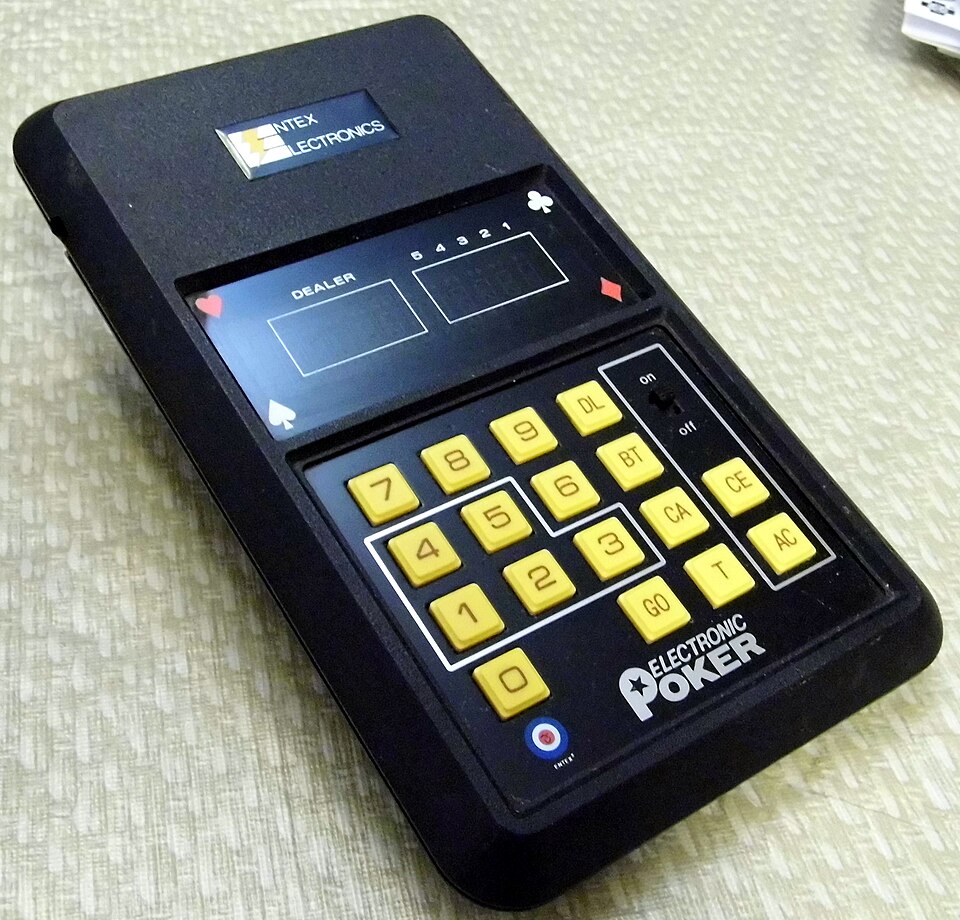
An Entex Electronics 'Electronic Poker' handheld game with card-suit symbols and a yellow keypad — an early pocket electronic casino game

Handheld Casino Games

Single-purpose LCD pocket machines made by Radica — Draw Poker, Blackjack, Slots — with beeping electronic casino sounds. Sold at drugstores and airports, they were the endless video-poker game in your pocket, played on car trips and under the dinner table.

Video thumbnail — Zelda Link's Awakening Game Boy 1993 Zelda Rap TV Commercial
Video Games 1993–1998

The Legend of Zelda: Link's Awakening

The first Legend of Zelda built for a handheld, Link's Awakening proved that Hyrule didn't need a TV and a castle. Stranded on the surreal dream island of Koholint, you solved puzzles, dodged familiar monsters repurposed as random cameos, and discovered an ending that still haunts players three decades later.

Video thumbnail — Original Nintendo DS Commercial (2004)
Video Games 2004–2009

Nintendo DS

The clamshell handheld that split gaming in two — literally. Nintendo's dual-screen DS added a touch-sensitive bottom screen and stylus, backward compatibility with Game Boy Advance cartridges, and era-defining hits like Nintendogs, Brain Age, and Mario Kart DS that proved touch controls weren't a gimmick.

Video thumbnail — Palm Five 'Simply Palm' TV Commercial 1999
Tech 1996–2003

PalmPilot

A little gray slab that put your calendar, contacts, memos — and, let's be honest, games — in your pocket, years before smartphones. You wrote on it with a stylus in Graffiti, its own alphabet you had to learn stroke by stroke. For a while, it was the future.

Video thumbnail — Pokemon Red & Blue Versions Commercial 1998
Video Games 1998–2000

Pokémon Red & Blue

Nintendo's Game Boy sensation that turned playground trading into a global phenomenon. Pokémon Red and Blue made 1998 the year school ceased all productive function in the pursuit of catching 'em all.

Video thumbnail — Pokemon Yellow  - Special Pikachu Edition  - GameBoy Color Commercial  - Limited Edition (1999)
Video Games 1998–2000

Pokémon Yellow

The 'Special Pikachu Edition' of Pokémon that let you start with the anime's poster mouse instead of Bulbasaur or Squirtle. Unlike Red and Blue, Pikachu followed you on screen instead of riding in its Poké Ball, and its mood changed based on how you treated it—making you actually care if your electric mouse was happy.

Video thumbnail — 1994 Mattel Polly Pocket Commercial
Toys 1989–1998

Polly Pocket

Thumb-sized figurines inside impossibly small clamshell compacts — you'd flip one open and find an entire world compressed into plastic the size of a mint tin. Invented by Chris Wiggs and made by UK's Bluebird Toys, these collapsible worlds were so addictive that parents had to confiscate them during family road trips.

Video thumbnail — PSP launch advert: A Day In The Life | 2005 | #20YearsOfPlay
Video Games 2004–2014

PSP

Sony's widescreen handheld that made your backpack feel like contraband. The PSP played UMD games and movies, had actual graphics, and let you game or watch on the go—turning every school lunch period into a gaming session. It felt like the future until the future moved on.

Video thumbnail — SEGA GAME GEAR vs. NINTENDO GAMEBOY 90s TV Commercial
Video Games 1990–1997

Sega Game Gear

Sega's full-color backlit handheld promised to dethrone Nintendo's monochrome Game Boy—and technically it did, with a stunning display that consumed six AA batteries in roughly three to five hours. The eternal playground debate: better screen or battery life?

Video thumbnail — Tamagotchi Original Commercial 1997
Toys 1996–1999

Tamagotchi

The egg-shaped digital pet that lived on a keychain and died if you ignored it during math class. Bandai's Tamagotchi demanded constant feeding, cleaning, and attention, sparking a global craze — and a wave of school bans.

Video thumbnail — 90s Tiger Handheld Games Commercial
Toys 1988–1999

Tiger Electronics LCD Handhelds

Cheap, single-game handheld LCD devices with a massive licensed catalog (Sonic, Batman, X-Men, Jurassic Park) that your parents bought instead of a Game Boy. Crude, limited, and utterly ubiquitous.

Video thumbnail — Nintendo Game Boy Tetris Commercial (1989)
Video Games 1989–1998

Game Boy

The grey brick: four AA batteries, a pea-green screen you had to angle toward a lamp, and Tetris in the box. It was outgunned on paper by every colour handheld it faced, and it buried all of them. Nintendo kept the line it started alive until 2003.

Video thumbnail — Cybiko Wireless Inter-tainment Computer
Tech 2000–2003

Cybiko

A translucent pocket computer for teens with a rubber QWERTY keyboard and its own two-way radio — Cybikos within about a hundred meters could text each other and join wireless chatrooms, years before teens had phones. Over 430 games and apps, all free. Half a million sold in 2000 alone, then the moment passed as fast as it arrived.

Video thumbnail — World Of Gizmondo (Gizmondo) Commercial 2005
Video Games 2005–2006

Gizmondo

The handheld with everything: GPS, a camera, cellular, celebrity launch parties — and, it turned out, an executive with a past in Swedish organized crime. The company collapsed under $300 million of debt in 2006, and weeks later that executive crashed a rare Ferrari Enzo at 162 mph. Fewer than 25,000 were ever sold, by GamePro's count.

Video thumbnail — Nokia N-Gage Arena TV Commercial - 2003
Video Games 2003–2006

Nokia N-Gage

You pressed the edge of your N-Gage to your ear to make calls — the infamous "sidetalking" — while everyone nearby asked why you were talking into a taco. Swapping games meant removing the back cover and battery. The Game Boy Advance outsold it 100 to 1 within weeks. The joke aged beautifully, though: phones really did become game machines.

Video thumbnail — Sega Nomad Toys "R" Us TV Commercial - 1995
Video Games 1995–1999

Sega Nomad

The dream machine: a portable Sega Genesis that played your whole cartridge library on a screen you could hold. It also chewed through six AA batteries fast enough to make the dream expensive. Sega, busy with the Saturn, barely supported it — about a million sold anyway, and now it's a collector's prize.

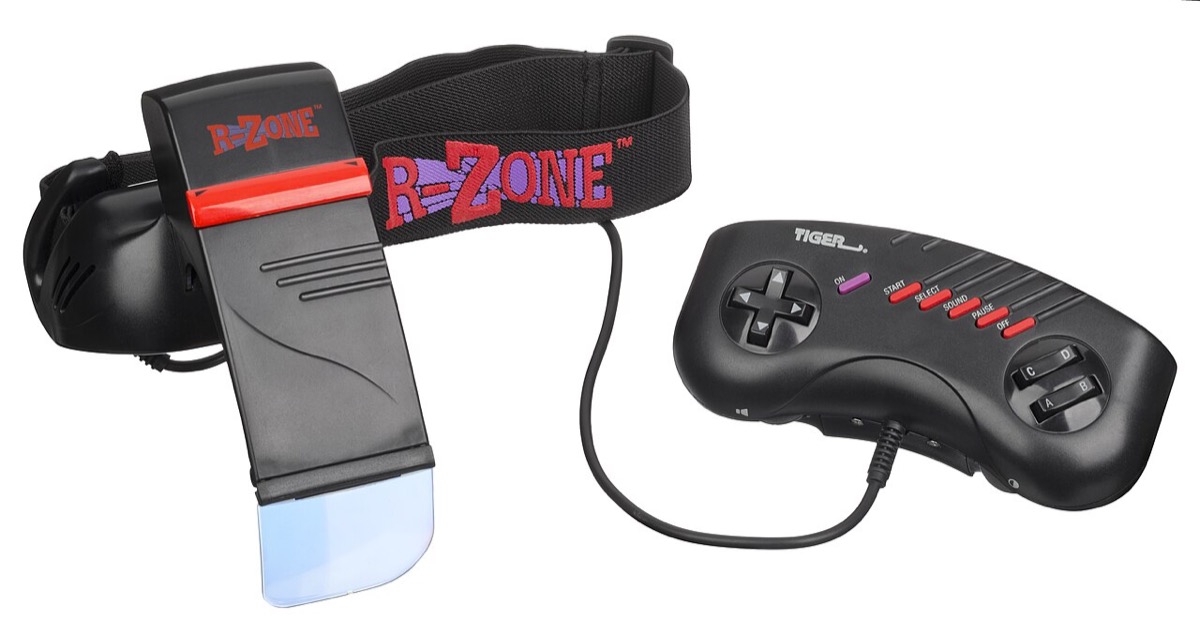
A Tiger R-Zone headset unit with its red-trimmed eyepiece and wired controller
Video Games 1995–1997

Tiger R-Zone

The Tiger R-Zone strapped to your head and projected blocky red games onto a little mirror in front of your eye. Released in 1995 at $29.99, it looked like Tiger's bid to catch the Virtual Boy wave — though Tiger never admitted it. Big licenses, tiny LCD games, and a permanent spot on worst-consoles-ever lists.