Cybiko
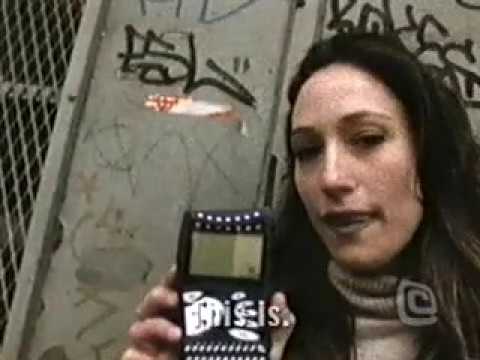
A translucent pocket computer for teens with a rubber QWERTY keyboard and its own two-way radio — Cybikos within about a hundred meters could text each other and join wireless chatrooms, years before teens had phones. Over 430 games and apps, all free. Half a million sold in 2000 alone, then the moment passed as fast as it arrived.
Cybiko Inc., a startup founded by David Yang, test-marketed its "inter-tainment" handheld in New York in April 2000 and went nationwide that May at $139. The pitch was aimed squarely at teenagers: a pocket computer with a rubber QWERTY keyboard, a monochrome screen, and — the real hook — its own two-way radio text messaging. Cybikos within about a hundred meters could message each other and join wireless chatrooms. This was texting before anyone's phone could do it, and over 430 official games and apps were free to download.
For one school year it worked. By the end of 2000, the Cybiko Classic had sold over 500,000 units, and a slimmer Xtreme model followed. But the momentum faded — a planned London launch on September 15, 2001, was canceled after the September 11 attacks, one more blow to a company already losing steam — and Cybiko pivoted to writing software for mobile phones. It announced the end of production in 2003.
The legacy is oddly pure: the kids who had one remember schoolyard wireless chat that nobody else believed existed, a private network that lived and died inside a single homeroom radius. The phones everyone got a few years later just made official what Cybiko had already proven.
Similar items

AIM & MSN Messenger
The after-school ritual: logging on to a dial-up modem, scanning your buddy list, typing AIM away messages packed with song lyrics and veiled drama, and knowing your 12-year-old screen name would haunt you forever. AIM and MSN Messenger were the social nervous system of the '90s and 2000s — instant, informal, and utterly addictive.

Tamagotchi
The egg-shaped digital pet that lived on a keychain and died if you ignored it during math class. Bandai's Tamagotchi demanded constant feeding, cleaning, and attention, sparking a global craze — and a wave of school bans.

Nokia N-Gage
You pressed the edge of your N-Gage to your ear to make calls — the infamous "sidetalking" — while everyone nearby asked why you were talking into a taco. Swapping games meant removing the back cover and battery. The Game Boy Advance outsold it 100 to 1 within weeks. The joke aged beautifully, though: phones really did become game machines.

BlackBerry
The thumb-typed email machine that owned the boardroom, then the teen universe — the hottest phone in America right up until the iPhone ate it. Push email, the blinking red light, BBM: BlackBerry was so addictive that Webster's New World made "CrackBerry" its 2006 Word of the Year.