20Q

A palm-sized handheld electronic guessing game by Radica where you think of an object and the toy reads your mind through yes/no questions. Released around 2003–2004 and a holiday best-seller by 2005, it used AI to eerily predict what you were thinking.
The 20Q handheld was a consumer adaptation of the "20Q" neural-net AI experiment created by Robin Burgener, who wrote the original program in 1988 (passed around on floppy disks) and later put the game online in the mid-1990s. Radica released the palm-sized plastic orb around 2003–2004, turning the concept into an electronic toy. The toy featured a small screen and simple interface: you thought of an object (anything from tangible things to abstract concepts), and the handheld asked up to twenty yes/no/sometimes questions before making a guess. Its uncanny accuracy at narrowing down the target made it feel like the toy could truly read minds, creating a sense of wonder and frustration in equal measure.
The 20Q became a surprise hit and achieved peak popularity as a holiday must-have gift by 2005. The toy's appeal lay in its perfect balance of simplicity and apparent intelligence — it used actual machine learning principles, making it feel genuinely futuristic compared to other handheld games of the era. Its blend of intellectual challenge and slightly creepy AI magic made it a memorable fixture of mid-2000s gift-giving and playground trading.
Similar items

Bop It
The barking baton that shouted commands — Bop it! Twist it! Pull it! — faster and faster until somebody fumbled and somebody else gloated. Simple enough to learn in ten seconds, merciless enough to end friendships, and loud enough that parents hid it on top of the fridge.

Tiger Electronics LCD Handhelds
Cheap, single-game handheld LCD devices with a massive licensed catalog (Sonic, Batman, X-Men, Jurassic Park) that your parents bought instead of a Game Boy. Crude, limited, and utterly ubiquitous.
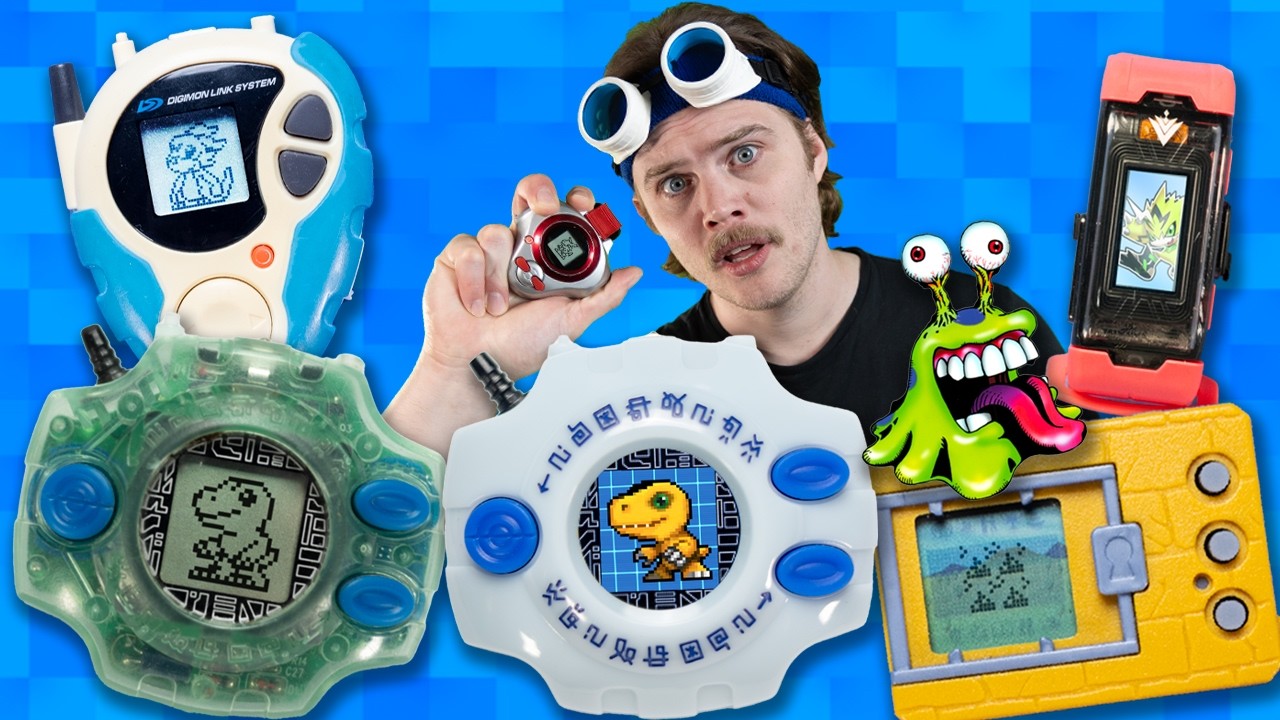
Digimon Virtual Pet
The boy's answer to Tamagotchi, and somehow more addictive: a digital monster you didn't just keep alive, you trained to fight. Snap your device to a friend's, and both creatures would duel on screen, their fate determined by every decision you'd made. The winning evolution wasn't the prettiest — it was the strongest.

Giga Pets
The keychain virtual pet you fed, cleaned, and played with between classes — America's answer to the Tamagotchi craze. Neglect it and it got sick; ignore it too long and it died right there in your backpack.