Nokia N-Gage

You pressed the edge of your N-Gage to your ear to make calls — the infamous "sidetalking" — while everyone nearby asked why you were talking into a taco. Swapping games meant removing the back cover and battery. The Game Boy Advance outsold it 100 to 1 within weeks. The joke aged beautifully, though: phones really did become game machines.
Nokia released the N-Gage on October 7, 2003, at $299, betting it could fuse a phone and a handheld game console into one device. The mockery started immediately. The vertical shape earned it the nickname "taco phone," holding its edge to your ear to make calls got dubbed "sidetalking," and changing a game meant removing the back cover and the battery just to reach the slot. The buttons were phone buttons, ill-suited to gaming, and the whole package mastered neither of its two jobs.
Within weeks of US availability the Game Boy Advance was outselling it 100 to 1, and within 17 days GameStop and Electronics Boutique were offering $100 rebates. The 2004 QD redesign fixed the worst of it — games hot-swapped without pulling the battery, and the price came down — but the momentum was already gone.
About 2 million units sold in two years before Nokia discontinued the N-Gage in February 2006. It spent years as a punchline, the device that supposedly proved phones would never be gaming machines. Then smartphones made the N-Gage's exact pitch the most common way humans play games, and the punchline started looking like a prophecy filed a few years too early.
Similar items

Game Boy Advance
Nintendo's 32-bit handheld released June 2001, with a landscape shape and full backward compatibility with the entire Game Boy and Game Boy Color library. The screen was notoriously hard to see until the GBA SP (2003) added a front-lit clamshell. Around 80 million sold across the GBA, SP, and Micro variants.

PSP
Sony's widescreen handheld that made your backpack feel like contraband. The PSP played UMD games and movies, had actual graphics, and let you game or watch on the go—turning every school lunch period into a gaming session. It felt like the future until the future moved on.
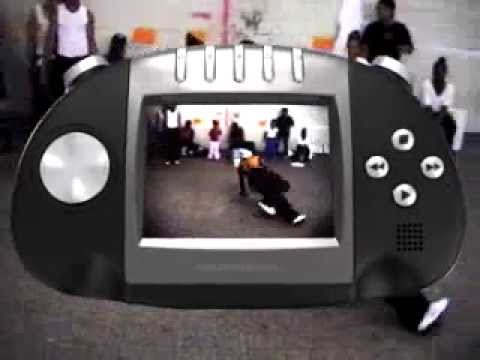
Gizmondo
The handheld with everything: GPS, a camera, cellular, celebrity launch parties — and, it turned out, an executive with a past in Swedish organized crime. The company collapsed under $300 million of debt in 2006, and weeks later that executive crashed a rare Ferrari Enzo at 162 mph. Fewer than 25,000 were ever sold, by GamePro's count.
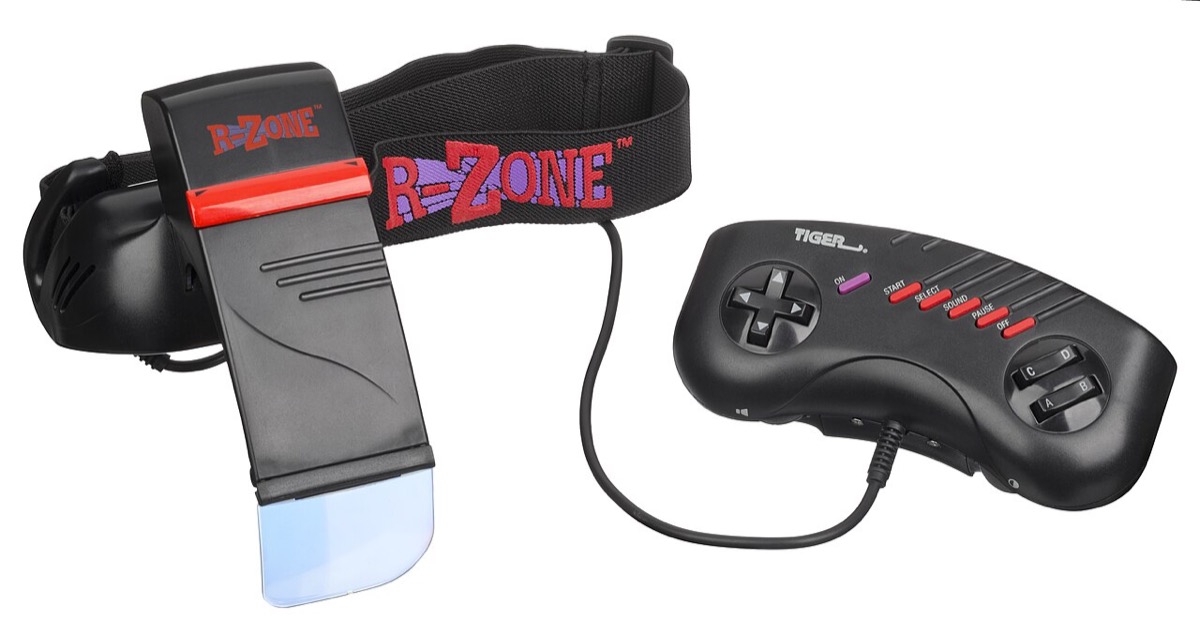
Tiger R-Zone
The Tiger R-Zone strapped to your head and projected blocky red games onto a little mirror in front of your eye. Released in 1995 at $29.99, it looked like Tiger's bid to catch the Virtual Boy wave — though Tiger never admitted it. Big licenses, tiny LCD games, and a permanent spot on worst-consoles-ever lists.