#Nintendo

31 items

Video thumbnail — 1080° Snowboarding "Arabian Snowboarder" (Nintendo 64\N64\Commercial)
Video Games 1998–2003

1080° Snowboarding

"TEN-EIGHTY!" — the grunted title call said it all. Nintendo's own N64 snowboarding game played it straight: weighty, physics-driven boards, board-scraping sound design, and a namesake 1080-degree spin so hard it took nine distinct actions to land. You spent whole evenings just trying to beat the rival rider in Match Race.

Video thumbnail — Nintendo Animal Crossing Commercial 2002 Gamecube
Video Games 2002–2005

Animal Crossing

Nintendo's gentle life-simulation game that reached the US on the GameCube in 2002. You move to a village of animal neighbors, pay off a mortgage to raccoon shopkeeper Tom Nook, and fish, catch bugs, decorate your house, and run errands—all on a real-time clock synced to the console, so the game's day and night and seasons matched real life. No winning, no losing—just a cozy daily routine.

Video thumbnail — Banjo Kazooie Commercial for the N64 from 1998
Video Games 1998–2000

Banjo-Kazooie

A bear with a bird living in his backpack collecting jiggies across Gruntilda's lair: the 3D collect-a-thon platformer perfected. Rare's masterpiece paired note-perfect googly-eyed humor with Grant Kirkhope's unforgettable score on the Nintendo 64.

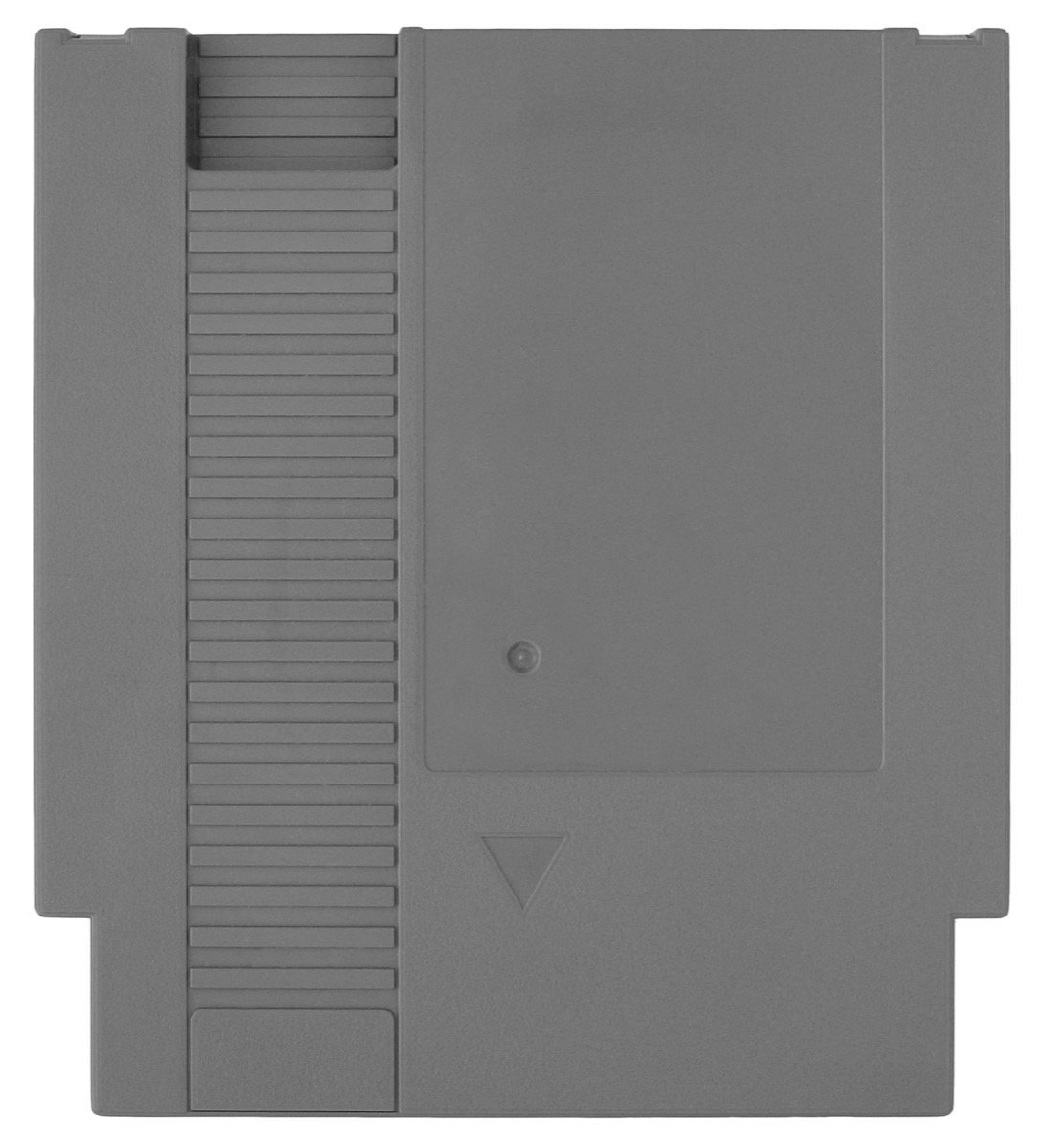
A gray NES game cartridge standing upright on a white background — the kind every 90s kid blew into
Trends 1985–1999

Blowing Into Cartridges

The universal remedy for a glitching NES, SNES, or N64 game: pull the cartridge, blow hard across the contacts, and pray. It never actually worked—the real fix was just reseating the cart—but the ritual of blowing was so universal that every gamer swore by it, confirmation bias at its finest.

Video thumbnail — Donkey Kong Country (SNES) Commercial (1994)
Video Games 1994–1996

Donkey Kong Country

The SNES game whose pre-rendered graphics looked so impossibly '3D' that kids begged for a turn just to see it. Donkey Kong and Diddy rolled through mine carts and jungle levels in a technical showcase that felt like the future.

Video thumbnail — Nintendo Game Boy Advance Commercial (2001) (windowboxed)
Video Games 2001–2008

Game Boy Advance

Nintendo's 32-bit handheld released June 2001, with a landscape shape and full backward compatibility with the entire Game Boy and Game Boy Color library. The screen was notoriously hard to see until the GBA SP (2003) added a front-lit clamshell. Around 80 million sold across the GBA, SP, and Micro variants.

Video thumbnail — Nintendo Game Boy Color - Debut Commercial (1998)
Video Games 1998–2001

Game Boy Color

Nintendo's leap to color: the Game Boy Color arrived in 1998 painting 56 colors on screen at once, with full backward compatibility with original Game Boy games. The screen upgrade alone made Pokémon finally pop in actual colors, and the GBC became essential playground hardware.

Video thumbnail — N64 Commercial - GoldenEye 007, 1997
Video Games 1997–2001

GoldenEye 007

The Nintendo 64 first-person shooter that redefined console multiplayer: four players split-screen deathmatch, and an iron-clad house rule banning Oddjob because his short stature slipped under auto-aim. Rare's landmark game sold over 8 million copies and owned living rooms until Halo arrived.

Video thumbnail — Zelda Link's Awakening Game Boy 1993 Zelda Rap TV Commercial
Video Games 1993–1998

The Legend of Zelda: Link's Awakening

The first Legend of Zelda built for a handheld, Link's Awakening proved that Hyrule didn't need a TV and a castle. Stranded on the surreal dream island of Koholint, you solved puzzles, dodged familiar monsters repurposed as random cameos, and discovered an ending that still haunts players three decades later.

Video thumbnail — Mario Kart 64 Commercial (USA) (1997)
Video Games 1996–2001

Mario Kart 64

The first 3D Mario Kart brought four-player split-screen racing to the Nintendo 64, turning every sleepover and dorm room into a competitive battleground. Shells flew, friendships were tested, and players argued eternally about which character had a hidden advantage.

Video thumbnail — Star Fox 64 with Rumble Pack Commercial
Video Games 1997–2002

N64 Rumble Pak

The plastic cartridge that made you feel explosions in your palms. Nintendo's rumble accessory turned a memory-card slot into a motor, powered by batteries, and changed what players expected from their hardware.

Video thumbnail — Nintendo 64| 1996 TV Commercial
Video Games 1996–2002

Nintendo 64

Nintendo's leap into three dimensions, the N64 brought 3D polygon gaming into living rooms with its quirky three-pronged controller and a cartridge library anchored by Super Mario 64 and The Legend of Zelda: Ocarina of Time. Its rumble pak added tactile feedback, while its four controller ports made it the console of couch multiplayer legends.

Video thumbnail — Original Nintendo DS Commercial (2004)
Video Games 2004–2009

Nintendo DS

The clamshell handheld that split gaming in two — literally. Nintendo's dual-screen DS added a touch-sensitive bottom screen and stylus, backward compatibility with Game Boy Advance cartridges, and era-defining hits like Nintendogs, Brain Age, and Mario Kart DS that proved touch controls weren't a gimmick.

Video thumbnail — Nintendo Gamecube Launch Commercial 2001
Video Games 2001–2007

Nintendo GameCube

The small cube-shaped Nintendo console with a built-in carry handle, released November 2001. Indigo or purple exterior, proprietary MINI-DVD discs, and an oversized green A button that defined its controller. Super Smash Bros. Melee, Mario Kart: Double Dash, Metroid Prime, and The Legend of Zelda: The Wind Waker were system-defining hits.

Video thumbnail — 1990 Nintendo Power Commercial
Books 1988–2012

Nintendo Power

Nintendo's official magazine and the pre-internet bible for stuck kids everywhere. Nintendo Power came packed with glossy fold-out maps, pull-out strategy guides, previews of games you couldn't afford yet, and the exact secret you needed to get past that one impossible level.

Video thumbnail — Wii Would Like to Play (2006) - Wii Commercial [4K + 60 FPS]
Video Games 2006–2013

Nintendo Wii

The white remote-waving console that turned living rooms into bowling alleys and convinced your grandmother that she wanted to play tennis. Nintendo's motion-controlled revolution sold 101 million units by letting non-gamers actually *feel* like they were swinging a bat or rolling a bowling ball, while leaving a trail of cracked TV screens in its wake.

Video thumbnail — The Legend of Zelda - Ocarina of Time - 1998 commercial
Video Games 1998–2001

The Legend of Zelda: Ocarina of Time

The first three-dimensional Legend of Zelda launched the Nintendo 64 into mythic status. Shigeru Miyamoto's masterpiece introduced the Z-targeting lock-on system that became the industry standard for 3D action games, sold 7.6 million copies, and holds a Metacritic score of 99 — still the highest ever recorded.

Video thumbnail — Pokémon: Indigo League 📺 | Opening Theme
TV 1998–2002 peak

Pokémon (Animated Series)

Ash Ketchum's journey to be the very best became a national obsession when the 4Kids English dub hit US syndication in 1998 and moved to Kids' WB in 1999. Pokémon wasn't just a show — it was your Saturday morning, your lunch-table trading-card argument, and one organism with the Game Boy games on every playground in America. Team Rocket blasting off again was the ritual you tuned in for, every single week.

Video thumbnail — Pokemon Trading Card Game BASE SET U.S TV Commercial (1999)
Toys 1999–2001 peak

Pokémon Trading Card Game

Trading cards that turned every backpack into a vault and every playground into a market. Pokémon cards hit US schools in 1999 and became instant contraband — the holographic Charizard was the mythical grail, and somehow every kid in your class claimed to have a mint copy.

Video thumbnail — Pokemon Red & Blue Versions Commercial 1998
Video Games 1998–2000

Pokémon Red & Blue

Nintendo's Game Boy sensation that turned playground trading into a global phenomenon. Pokémon Red and Blue made 1998 the year school ceased all productive function in the pursuit of catching 'em all.

Video thumbnail — Original Pokémon Ruby and Sapphire commercial 2003
Video Games 2002–2005

Pokémon Ruby & Sapphire

The third-generation Pokémon games arrived on Game Boy Advance with a whole new region, double battles, and 135 new creatures to catch. Ruby and Sapphire expanded what Pokémon could be — and nobody questioned whether they still needed to own a Game Boy.

Video thumbnail — Pokemon Yellow  - Special Pikachu Edition  - GameBoy Color Commercial  - Limited Edition (1999)
Video Games 1998–2000

Pokémon Yellow

The 'Special Pikachu Edition' of Pokémon that let you start with the anime's poster mouse instead of Bulbasaur or Squirtle. Unlike Red and Blue, Pikachu followed you on screen instead of riding in its Poké Ball, and its mood changed based on how you treated it—making you actually care if your electric mouse was happy.

Video thumbnail — Super Mario World (SNES) Commercial (1991)
Video Games 1990–1995

Super Mario World

The SNES launch title that introduced Yoshi and redefined what a platformer could be. Mario's dinosaur companion, cape-feather flight, and the hunt for all 96 exit-goals kept millions of players glued to their TVs throughout the decade.

Video thumbnail — Super Nintendo Entertainment System, Christmas 1991 commercial
Video Games 1991–1999

Super Nintendo (SNES)

Nintendo's 16-bit powerhouse that dominated the early 1990s and fought the Sega Genesis for console supremacy. Launched in North America at $199 in August 1991, it came packed with Super Mario World and helped define a generation of gaming with over 49 million units sold worldwide.

Video thumbnail — Super Smash Bros. "Happy Together" (Nintendo64\N64\Commercial)
Video Games 1999–2001

Super Smash Bros.

Masahiro Sakurai's Nintendo crossover brawler launched on the N64 with twelve iconic fighters smashing each other on floating stages in four-player chaos. Released April 1999, Super Smash Bros. sold 5.5 million copies and created the template for a franchise that would define competitive gaming and casual multiplayer for the next 25 years.

Video thumbnail — Wii Sports, Wii (Nintendo, 2006) UK TV ad
Video Games 2006–2013

Wii Sports

The pack-in game that turned the Nintendo Wii into a living-room phenomenon — tennis, bowling, boxing, baseball, and golf played by swinging the remote. Grandparents, house parties, and flying Wii-motes; it got everyone off the couch.

Video thumbnail — Rare HQ US TV Yoshi's Story (N64) Commercial - Nintendo 64 1999
Video Games 1997–1998

Yoshi's Story

The N64 platformer that looked like a pop-up storybook—levels stitched from cloth, cardboard, and pastel construction paper, starring baby Yoshis who squeal, flutter-jump, and eat 30 fruit per page. Critics shrugged; kids never forgot it.

Video thumbnail — Nintendo Game Boy Tetris Commercial (1989)
Video Games 1989–1998

Game Boy

The grey brick: four AA batteries, a pea-green screen you had to angle toward a lamp, and Tetris in the box. It was outgunned on paper by every colour handheld it faced, and it buried all of them. Nintendo kept the line it started alive until 2003.

Video thumbnail — Nintendo Virtual Boy Commercial (1995)
Video Games 1995–1996

Nintendo Virtual Boy

Nintendo's red-and-black 3D machine that sat on a table and asked you to press your face into it. It was on sale in Japan for about five months and in America for about a year, and it is the lowest-selling standalone console Nintendo ever put its name on. Everyone remembers the demo unit at the toy store, and everyone remembers the headache.

Video thumbnail — Galoob "Game Genie" Video Game Enhancer (Sega Genesis\Super NES\Commercial) Full HD
Video Games 1990–1996

Game Genie

Slot your game into the Game Genie, slot the Game Genie into the console, thumb in a code from the booklet, and play with unlimited lives. Nintendo went to court to kill it, lost, and was ordered to pay Galoob the entire $15 million bond it had posted — a landmark copyright fight waged over a plastic cheat cart. It was never a Nintendo product, and it wasn't Nintendo-only: Sega gave the Genesis version its official approval while Nintendo was still in court.

Video thumbnail — 1998 - Game Boy Camera & Printer - Funtography Commercial
Video Games 1998–2002

Game Boy Camera

You plugged this cartridge into your Game Boy, twisted its chunky lens ball around to face you, and snapped a grayscale selfie — in 1998, years before anyone had the word. Four shades, 128×112 pixels, printable on thermal paper. That lo-fi bleakness is exactly why people treasure the photos today.