#Retail

21 items

Video thumbnail — The Lost Bath & Body Works Scents
Trends 1990–present

Bath & Body Works

The scent wall: every bottle a different color, every color a different smell, and you had to sniff them all. Bath & Body Works opened in 1990 and within a decade its body sprays were a generational signature — half a middle school could leave for class smelling of Cucumber Melon.
Video thumbnail — The Decline of Borders...What Happened?
Trends 1971–2011

Borders

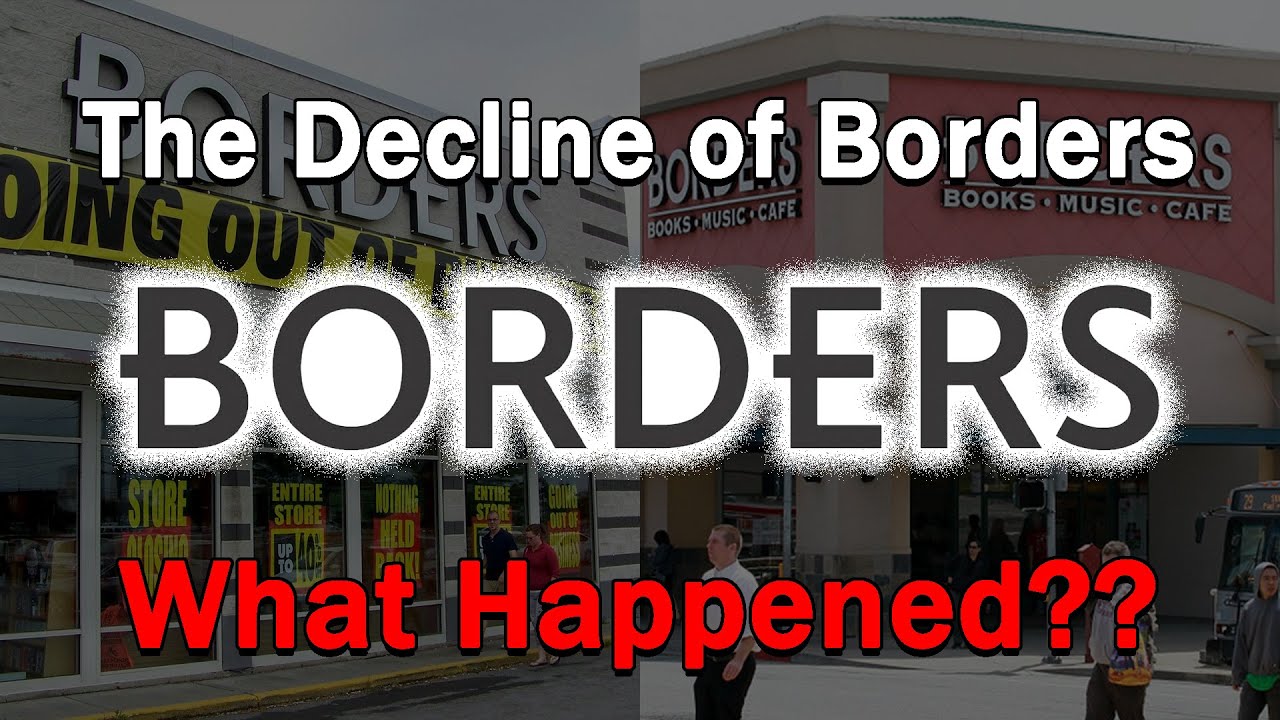
Three hours in the armchairs with a stack of books you never bought, a chai from the café, and a lap through the CD listening stations — Borders wasn't a store so much as a place to be. Then it was gone, all of it, in a single September.

Video thumbnail — Circuit City Commercial 1990
Trends 1984–2009

Circuit City

The electronics superstore where your parents went to buy the first family PC, camcorder, or big-screen TV — with a commissioned salesman in a dress shirt walking them through every feature. Those red-tower storefronts were the 90s temple of consumer electronics. From superstore dominance to total liquidation in 2009, Circuit City is the retail ghost story of the era.

Video thumbnail — The Decline of Claire's...What Happened?
Fashion 1973–present

Claire's

The ear-piercing rite of passage: the window chair, the piercing gun, picking starter studs while your friends pressed against the glass. Claire's claims more ear piercings than any other retailer — over 100 million — and for generations of tween girls it was the reason the mall existed: bins of cheap earrings, chokers, butterfly clips, and best-friend necklaces made to be split in half.

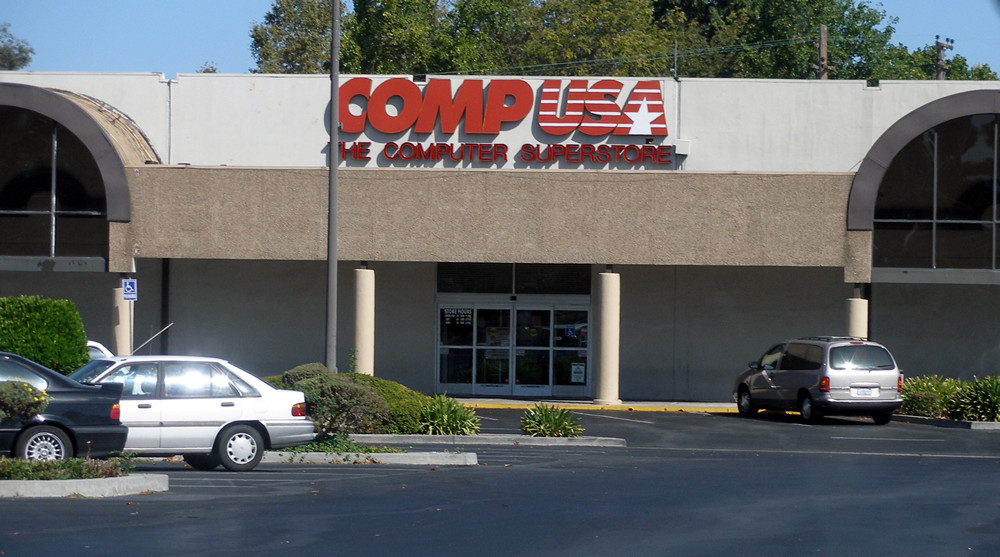
A CompUSA storefront in Santa Clara, California, with 'The Computer Superstore' signage over the entrance
Trends 1984–2008

CompUSA

Aisle after aisle of boxed software, a wall of printer cables, and a cart carrying your family's first PC. CompUSA — the self-billed Computer Superstore — was where America went to buy the future, one weekend errand at a time.

Video thumbnail — We Found an Original Old Disney Store Stuck in Time from the 90s!
Trends 1987–present

The Disney Store

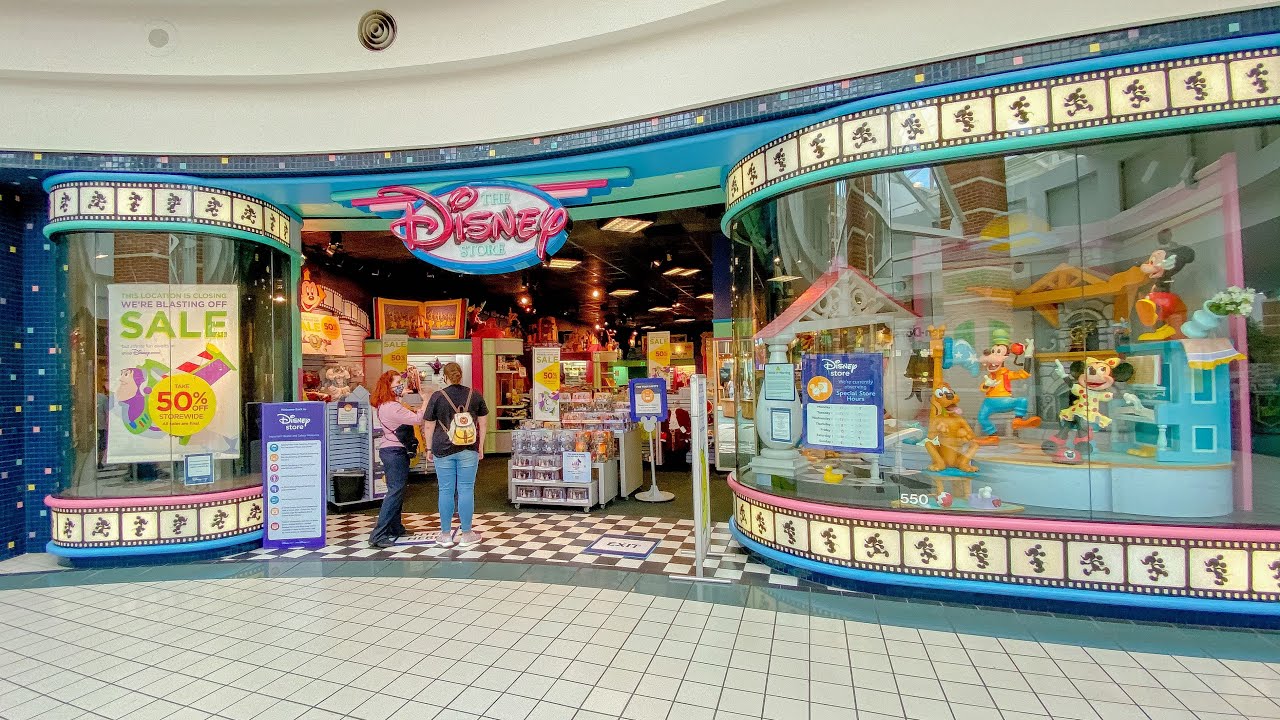
The closest thing to the parks that existed within driving distance of most kids — a bright box of plush, videos, and costume dresses parked between the shoe store and the food court. In the 1990s there were nearly 750 of them. Today there are about twenty.

Video thumbnail — The History of Gadzooks, Inc. - A Once Popular Mall Clothing Store (1983-2005)
Fashion 1983–2005

Gadzooks

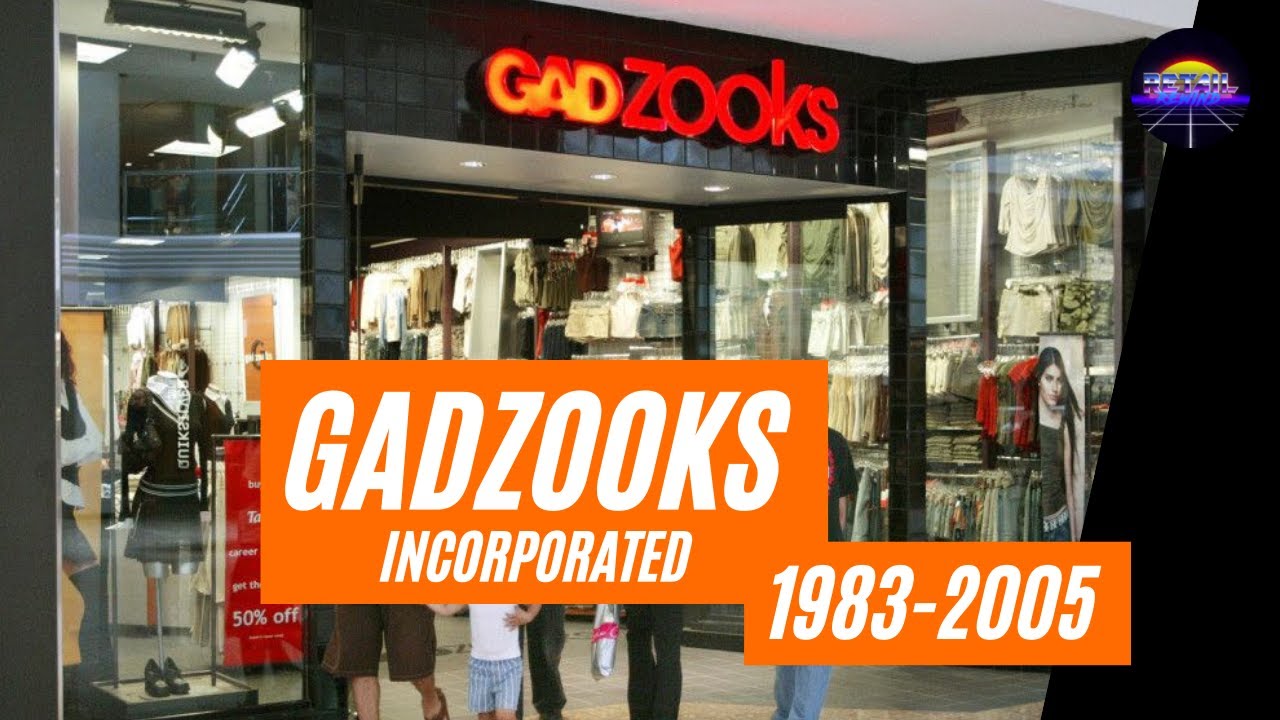
Half a Volkswagen Beetle mounted in the store was the trademark. Gadzooks was the loud shop across from the food court where the mall kept its JNCO jeans, No Fear tees, and Doc Martens — edgy teen retail, Texas-born and gone by 2005.

Video thumbnail — Halo 3: ODST Launch night at Gamestop | 2009 - RETRO FOOTAGE - Xbox 360
Trends 2004–2013 peak

GameStop Midnight Releases

The line outside the strip mall at 11:45 PM, the pre-order receipt clutched like a ticket, the countdown, the cheer. Midnight launches at GameStop were gaming's midnight movie premiere — plus the counter where your old games became seven dollars.

Video thumbnail — 1999 Hollywood Video rentals red carpet TV commercial
Trends 1988–2010

Hollywood Video

The video rental chain that played Blockbuster's biggest shadow competitor, with blue-and-gold membership cards that lived in junk drawers nationwide. Founded in 1988 and headquartered in Oregon, it grew into a national Blockbuster rival — and gave gamers GameCrazy, the buy-sell-trade store-within-a-store. It was the other card to carry, the place that often had the tape you needed when Blockbuster was cleaned out.

Video thumbnail — The History Of HOT TOPIC
Fashion 1989–present

Hot Topic

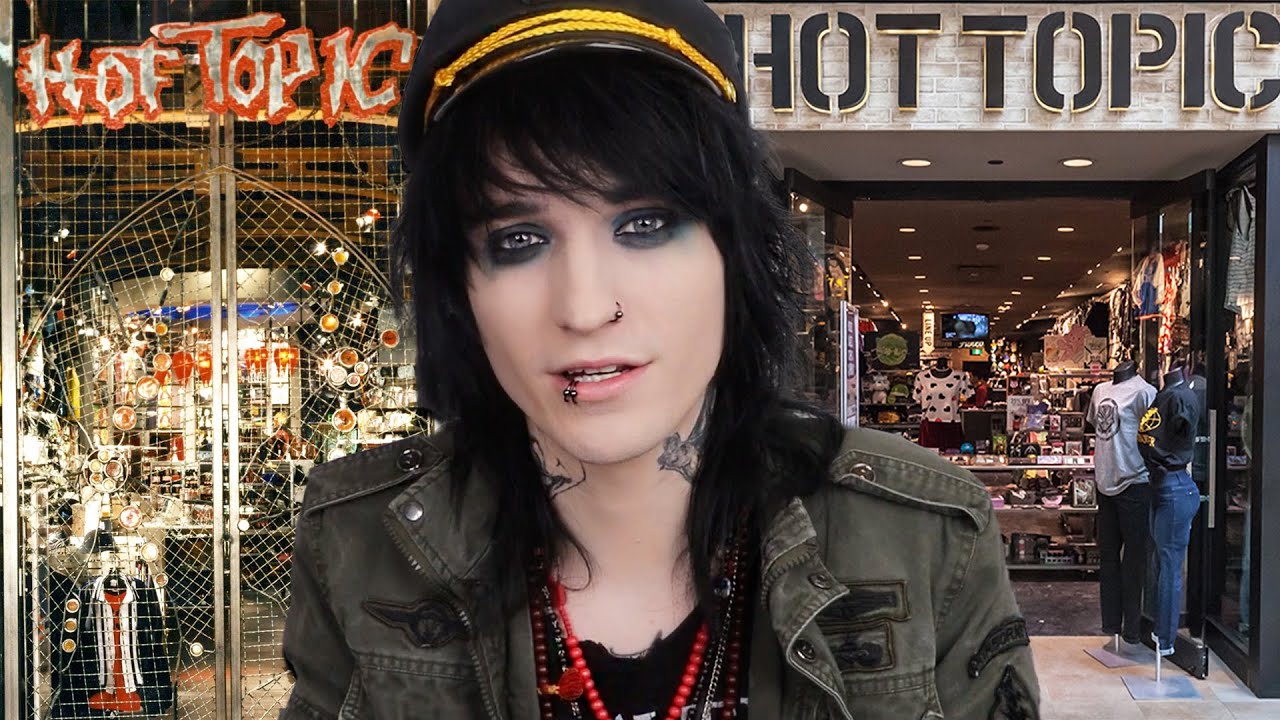
The black-walled store at the end of the mall where the music was too loud and the T-shirts had bands your parents had never heard of. Studded belts, band merch, hair dye, and a smell of incense you could identify from thirty feet away. For a certain kind of teenager, walking in felt like finding your people.

Video thumbnail — KAYBEE Toy Store Commercial from 1991
Trends 1973–2009

KB Toys

The cramped, stacked-to-the-ceiling toy store tucked into every American mall — smaller and more chaotic than Toys "R" Us, with clearance bins spilling into the aisles. It was the impulse-buy toy stop on any mall trip, right up until it liquidated for good in 2009.

Video thumbnail — 2000's Limited Too Spring Commercial
Fashion 1987–2008

Limited Too

Created in 1987 as an offshoot of The Limited, it grew into the tween mall temple — the glittery, flared-jeans cathedral where girls a few years too old for kids' stores but too young for juniors discovered who they wanted to become. Then, between 2008 and 2010, it vanished.

Video thumbnail — Do You Remember Noodle Kidoodle?
Trends 1993–2000

Noodle Kidoodle

The "learning and discovery" toy store where the whole point was to play before you bought — hands-on demo stations, educational and non-violent toys, and a name no kid could say without smiling. A mid-90s mall staple that vanished almost as fast as it appeared.

Video thumbnail — 1995 RadioShack Cellular Phones "You've got questions. We've got answers" TV Commercial
Trends 1990–2000 peak

RadioShack

Every strip mall had one: RadioShack, where you flashed your Battery of the Month club card for a free Enercell and got asked for your phone number just to buy batteries. Drawers of components, Realistic-brand gadgets, RC cars, police scanners, and staff who actually knew electronics. "You've got questions. We've got answers."

the 1987 Spencer Gifts logo — "spencer" in rounded black lettering with "Gifts" in red script
Trends 1947–present

Spencer Gifts

The dark, loud, faintly disreputable novelty store your parents walked past and you did not. Lava lamps, gag gifts, rude T-shirts, Halloween masks, and a whole lot of merchandise a twelve-year-old had no business examining closely. Every mall had one, and going in was its own small act of rebellion.

Video thumbnail — Spirit Halloween - Why They're Successful
Trends 1983–present

Spirit Halloween

Every August, a dead storefront blooms orange and black. Spirit Halloween turned vacant retail space into a two-month empire of costumes and animatronics — the annual resurrection that tells you a Sears used to be here, and that Halloween is coming.

Video thumbnail — What Happened to Suncoast?
Trends 1986–2009

Suncoast Motion Picture Company

The dim little mall store where you bought the movie you'd already rented five times. Suncoast sold films to own in the age of renting — VHS, Laserdisc, then DVD — under a neon marquee that made movie collecting feel like a legitimate way of life.

Video thumbnail — Toys R Us Commercial - Jingle - I Don't Wanna Grow Up (1990)
Trends 1957–2018

Toys "R" Us

The cathedral of childhood shopping. Charles Lazarus's toy superstore — the backwards "R," aisle upon aisle of Christmas lists waiting to happen, and Geoffrey the Giraffe's unmissable jingle — defined how kids experienced wanting. Then a leveraged buyout, five billion in debt, and a 2018 collapse ended the era.

the Urban Outfitters wordmark
Fashion 1970–present

Urban Outfitters

The store where art-school aspiration got merchandised: ironic graphic tees, distressed denim, a wall of novelty books, and housewares nobody needed but everybody wanted. Every location was built inside a renovated building, so no two ever looked quite alike. It started in 1970 as a tiny secondhand shop near a college campus, and by the 2000s it was where you went to buy a personality.

Video thumbnail — The Rise and Fall of the Warner Brothers Studio Store
Trends 1991–2001

Warner Bros. Studio Store

The 90s moment when Looney Tunes was streetwear — Taz on denim jackets, Tweety on tees, Superman holding up the elevator. The Warner Bros. Studio Store was the studio's answer to the Disney Store, and it vanished almost overnight when the corporate weather changed.

A Wet Seal mall storefront with its black script sign and juniors racks visible inside
Fashion 1962–2017

Wet Seal

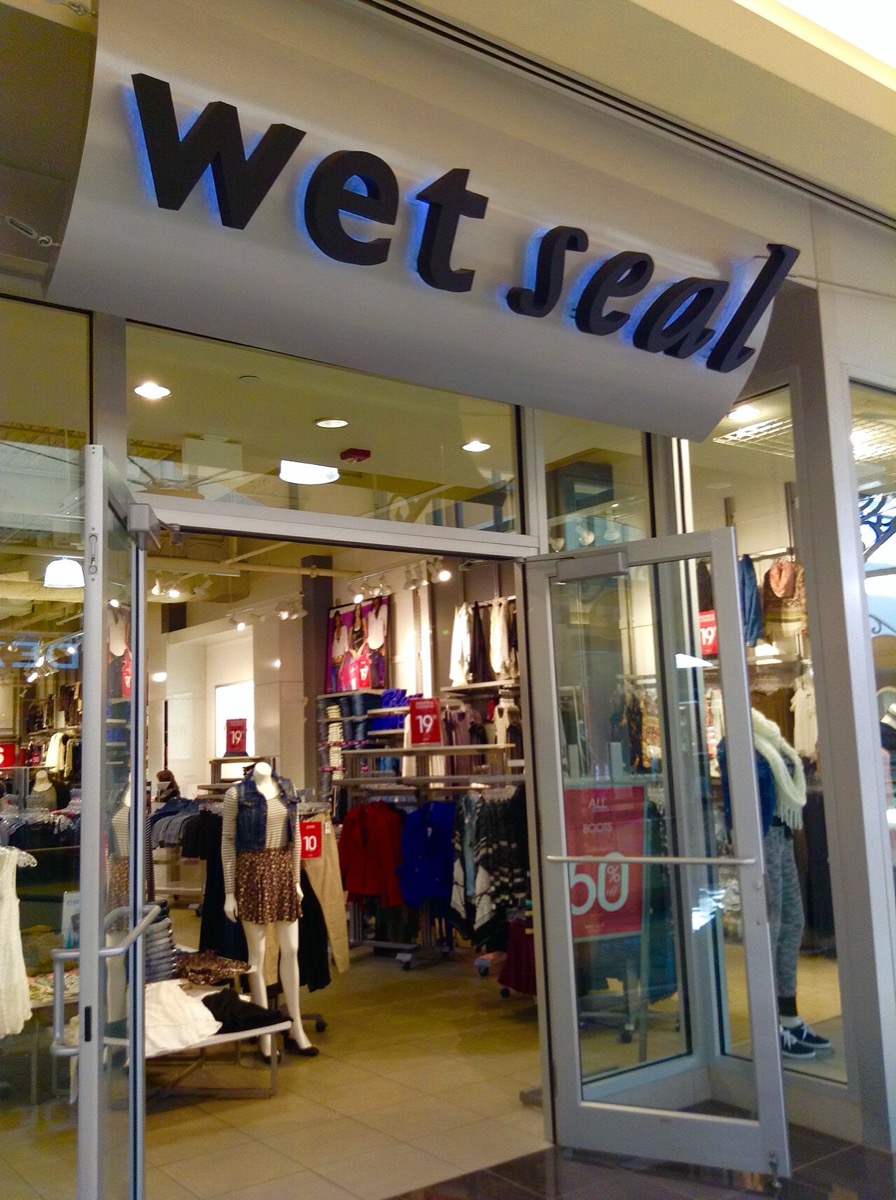
The juniors racks where a going-out top cost almost nothing and lasted one dance. Wet Seal was fast fashion for teenage girls — trend pieces bought cheap, worn once, and replaced next weekend. The 2000s mall uniform came off these racks.