Hot Topic
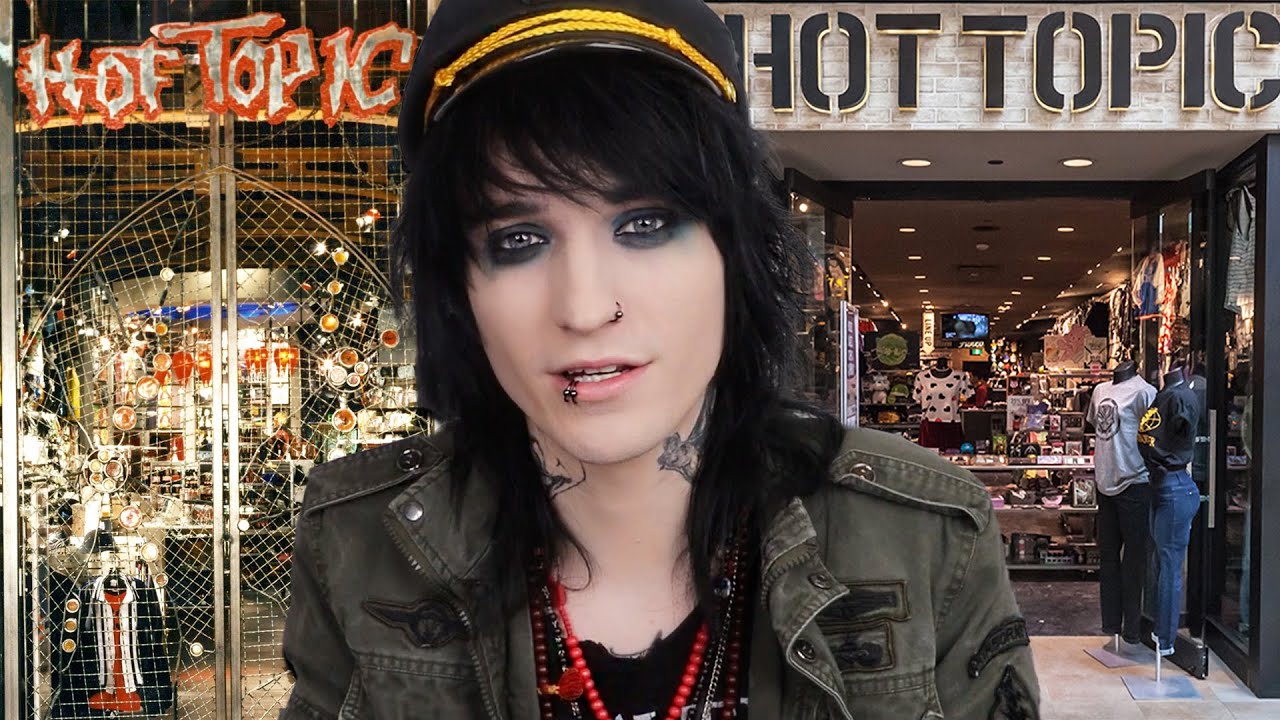
The black-walled store at the end of the mall where the music was too loud and the T-shirts had bands your parents had never heard of. Studded belts, band merch, hair dye, and a smell of incense you could identify from thirty feet away. For a certain kind of teenager, walking in felt like finding your people.
Hot Topic opened in late 1989 in Montclair, California, founded by Orv Madden, a former Children's Place executive whose pitch was simple: bring Melrose to the mall. The counterculture storefronts on Los Angeles's Melrose Avenue sold the clothes, the records, and the attitude that suburban teenagers could otherwise only read about, and Madden's bet was that those teenagers would buy it closer to home. The chain's first buyer, Cindy Levitt, had lived in London in 1979 and fallen in love with the punk and alternative scene there; she stocked leather wristbands with spikes and crucifixes and lots of skulls, and the first band shirts she brought in were Siouxsie and the Banshees, Bauhaus, Depeche Mode, and Metallica. "And that kept blowing up," she said.
The malls themselves were not thrilled. "Malls didn't want us," Levitt recalled. "A lot of rumors were happening about what was going on in our stores: bloodletting, body piercing." They took the leases anyway. Hot Topic went public on the NASDAQ in 1996 and spent the next decade as the retail home of whatever loud thing teenagers were currently into — heavily marketing nu-metal merchandise in the early 2000s, then pivoting toward scene, emo, and hardcore punk as the decade wore on. The store never invented those looks so much as stocked them; one employee described it as mirroring whatever the trends were. The engine underneath was licensing: by 2007, roughly 40% of Hot Topic's revenue came from selling licensed band T-shirts. At its peak the chain ran more than 600 stores, and it added the plus-size concept Torrid in 2001.
Then the music stopped working. By the time John Kirkpatrick took over as music head, the company had posted six straight years of negative comparable sales. The fix, as longtime music buyer Jay Adelberg put it, was "not broadening of the music assortment, but rather the broadening of the licensing assortment" — Doctor Who, Funko Pops, Harry Potter, Marvel. The band tees stayed, but they made room for fandom of every other kind, and the store survived by becoming a general-purpose merchandise counter for people who liked things intensely. Sycamore Partners bought the chain for $600 million in 2013, and Hot Topic still counted 675 locations as of April 2020 — long after most of the mall around it had gone dark.
Similar items

Spencer Gifts
The dark, loud, faintly disreputable novelty store your parents walked past and you did not. Lava lamps, gag gifts, rude T-shirts, Halloween masks, and a whole lot of merchandise a twelve-year-old had no business examining closely. Every mall had one, and going in was its own small act of rebellion.

Urban Outfitters
The store where art-school aspiration got merchandised: ironic graphic tees, distressed denim, a wall of novelty books, and housewares nobody needed but everybody wanted. Every location was built inside a renovated building, so no two ever looked quite alike. It started in 1970 as a tiny secondhand shop near a college campus, and by the 2000s it was where you went to buy a personality.
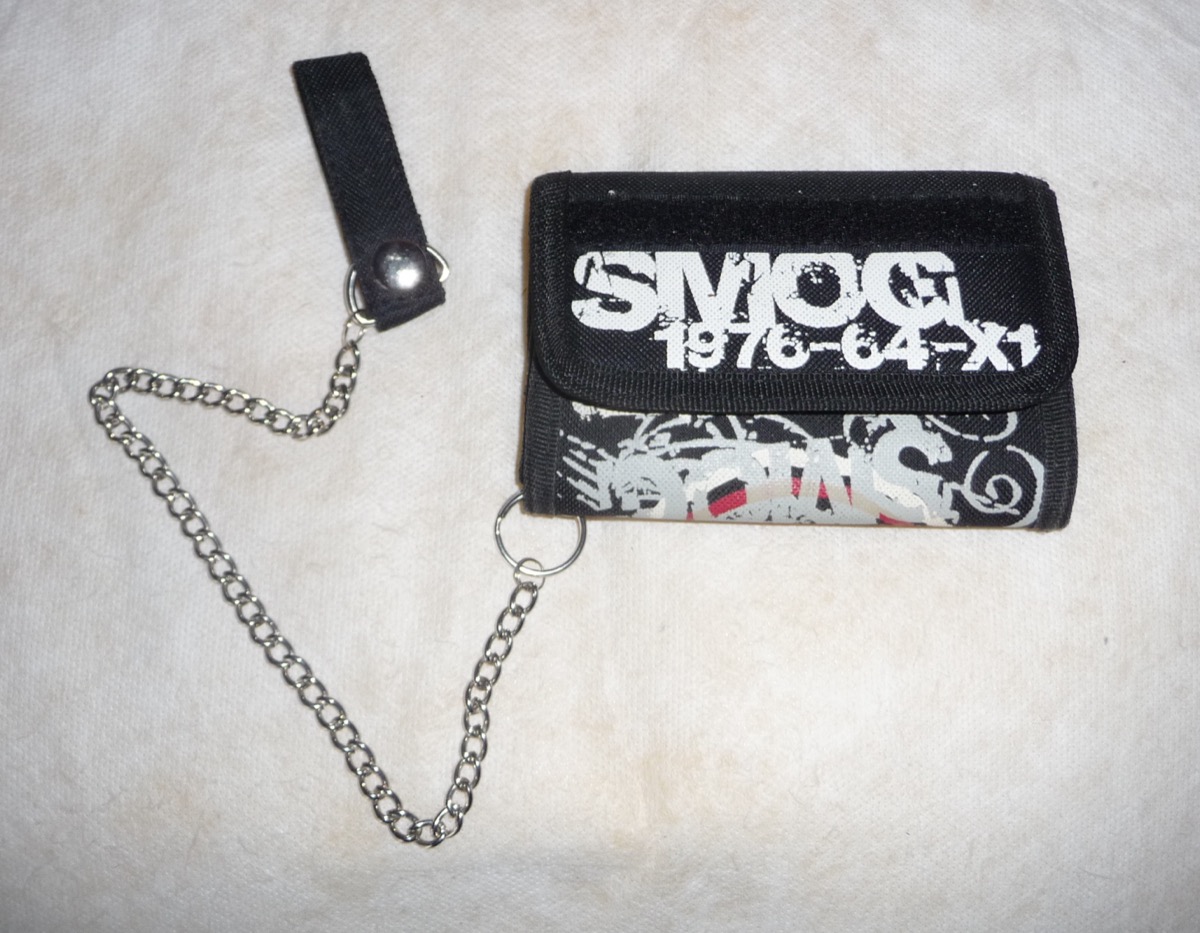
Chain Wallets
A metal chain connecting your trifold wallet to your belt loop—the ultimate 90s mall accessory that nobody actually needed for security but everyone desperately wanted anyway. Biker chic meets suburban shopping mall.

Sam Goody
The ubiquitous mall record store where 90s kids bought CDs, cassettes, and band tees. Sam Goody was the go-to destination for new releases and the social hub of music shopping before big-box discounters and digital downloads reshaped retail.