The Disney Store
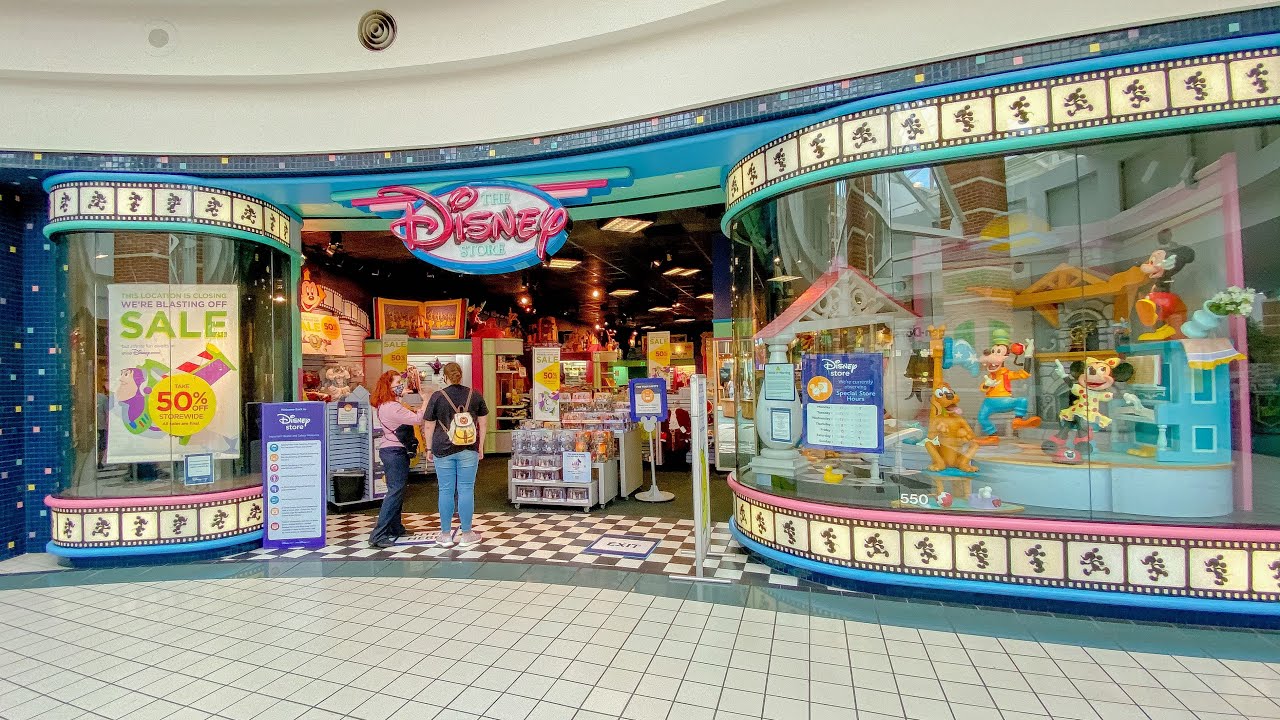
The closest thing to the parks that existed within driving distance of most kids — a bright box of plush, videos, and costume dresses parked between the shoe store and the food court. In the 1990s there were nearly 750 of them. Today there are about twenty.
The first Disney Store opened on March 28, 1987, at the Glendale Galleria in Glendale, California, and the timing turned out to be perfect. The company was about to enter the run of animated hits that would define a generation of childhoods, and every one of those films arrived with a storefront already waiting for it in the local mall. The stores multiplied through the boom years and peaked in 1997 at 749 Disney-owned locations — a number worth sitting with, because it means that for most of the decade, a Disney Store was simply an assumed feature of any mall large enough to have a second floor.
What happened next is more tangled than most people remember. In November 2004 Disney sold most of its North American stores to The Children's Place — not as an outright sale of the brand, but as a sale of assets at inventory cost paired with a 15-year licensing agreement, with a royalty holiday until October 2006 and a 5% royalty on store sales after that. The Children's Place ran them through a subsidiary called Hoop Retail. The arrangement did not last the fifteen years or anything close to it: on March 20, 2008, Hoop announced it was in talks to hand the brand back, and on May 1, 2008, 231 Disney Stores in North America once again became the property of The Walt Disney Company. Disney had never given up the characters, which is why it could take the stores back at all.
The long decline was the mall's decline. In early March 2021 Disney announced it would close at least 155 Disney Store locations across North America; 59 of those were set to close on or before September 15, leaving roughly twenty-two standing. A chain that had once run 749 stores now amounts to about twenty-one standalone locations plus the shops attached to the parks and resorts. The merchandise never went anywhere — it simply moved online and into the places where people were already buying tickets.
Keep talking about it (Reddit)
Similar items

Toys "R" Us
The cathedral of childhood shopping. Charles Lazarus's toy superstore — the backwards "R," aisle upon aisle of Christmas lists waiting to happen, and Geoffrey the Giraffe's unmissable jingle — defined how kids experienced wanting. Then a leveraged buyout, five billion in debt, and a 2018 collapse ended the era.

FAO Schwarz
The toy store as a destination — the marble-and-magic Fifth Avenue palace with the giant walk-on piano from Big, toy-soldier doormen, and stuffed animals taller than you were. For a '90s kid, FAO Schwarz was the place a trip to New York was really about.
Sam Goody
The ubiquitous mall record store where 90s kids bought CDs, cassettes, and band tees. Sam Goody was the go-to destination for new releases and the social hub of music shopping before big-box discounters and digital downloads reshaped retail.

Spencer Gifts
The dark, loud, faintly disreputable novelty store your parents walked past and you did not. Lava lamps, gag gifts, rude T-shirts, Halloween masks, and a whole lot of merchandise a twelve-year-old had no business examining closely. Every mall had one, and going in was its own small act of rebellion.