Urban Outfitters

The store where art-school aspiration got merchandised: ironic graphic tees, distressed denim, a wall of novelty books, and housewares nobody needed but everybody wanted. Every location was built inside a renovated building, so no two ever looked quite alike. It started in 1970 as a tiny secondhand shop near a college campus, and by the 2000s it was where you went to buy a personality.
Urban Outfitters opened in 1970 near the University of Pennsylvania campus in Philadelphia, started on $5,000 of pooled money by Richard Hayne, his then-wife Judy Wicks, and Scott Belair. The original shop ran about 400 square feet and was called the Free People Store, selling secondhand clothing, Indian fabrics, candles, and ethnic jewelry to college students. Hayne and Wicks divorced about a year in; she left with nothing and waited tables for over a decade before founding Philadelphia's White Dog Cafe. The business took the Urban Outfitters name in 1976 after moving into larger quarters, and a second store followed in Cambridge, Massachusetts, in 1980. The Free People name never really went away — it came back as a wholesale line, and eventually as a retail brand of its own in 2002.
Growth came steadily and then all at once. Revenue climbed from $37.4 million in 1990 and kept compounding at double digits, and the company went public in November 1993 at $18 a share, raising more than $13 million. By 1995 there were twenty Urban Outfitters stores — Madison, Ann Arbor, Boston, Seattle, Chicago, San Francisco, and a run of California college towns among them — plus three locations of Anthropologie, the older-skewing spinoff that had opened in October 1992 inside a renovated auto dealership in Wayne, Pennsylvania. The retail philosophy never budged, and the company said so plainly: "We always use renovated buildings … we use an existing space to enhance our image. None of our stores look alike."
The 2000s were the peak. By January 2005 the chain counted 75 Urban Outfitters stores against 65 Anthropologie locations, and revenue had reached $827.8 million. The store aimed squarely at eighteen-to-thirty-year-olds, and the formula was less about clothing than about curation — apparel and footwear on one side, and on the other a sprawl of accessories, gag books, and apartment bric-a-brac arranged like a thrift store that had been to design school. The exposed brick and salvaged fixtures were the point. You were not shopping in a mall unit; you were shopping in a building that had clearly been something else first.
That same instinct for the provocative produced a long public record of missteps. In 2007 the company pulled a keffiyeh it had marketed as an "anti-war woven scarf" after criticism; in 2011 the Chicago designer Stevie Koerner posted side-by-side photographs accusing Urban Outfitters of copying her "United States of Love" jewelry line — "I understand that they are a business," she wrote, "but it's not cool to completely rip off an independent designer's work." The Navajo Nation sued in 2012 over a line of twenty-one products labeled Navajo or Navajo-inspired, arguing they falsely suggested the goods came from the Nation itself; the suit settled in the autumn of 2016, with the parties announcing plans to collaborate on authentic American Indian jewelry. And in September 2014 the company listed a "Vintage Kent State University sweatshirt" for $129 — holed, and marked with red discoloration that readers took for bloodstains, a reading the company denied. The university responded that the item "trivializes a loss of life that still hurts the Kent State community today." Urban Outfitters apologized, said it had never intended the allusion, and pulled it. The store kept selling the aesthetic anyway, and people kept buying it.
Similar items
Hollister Co.
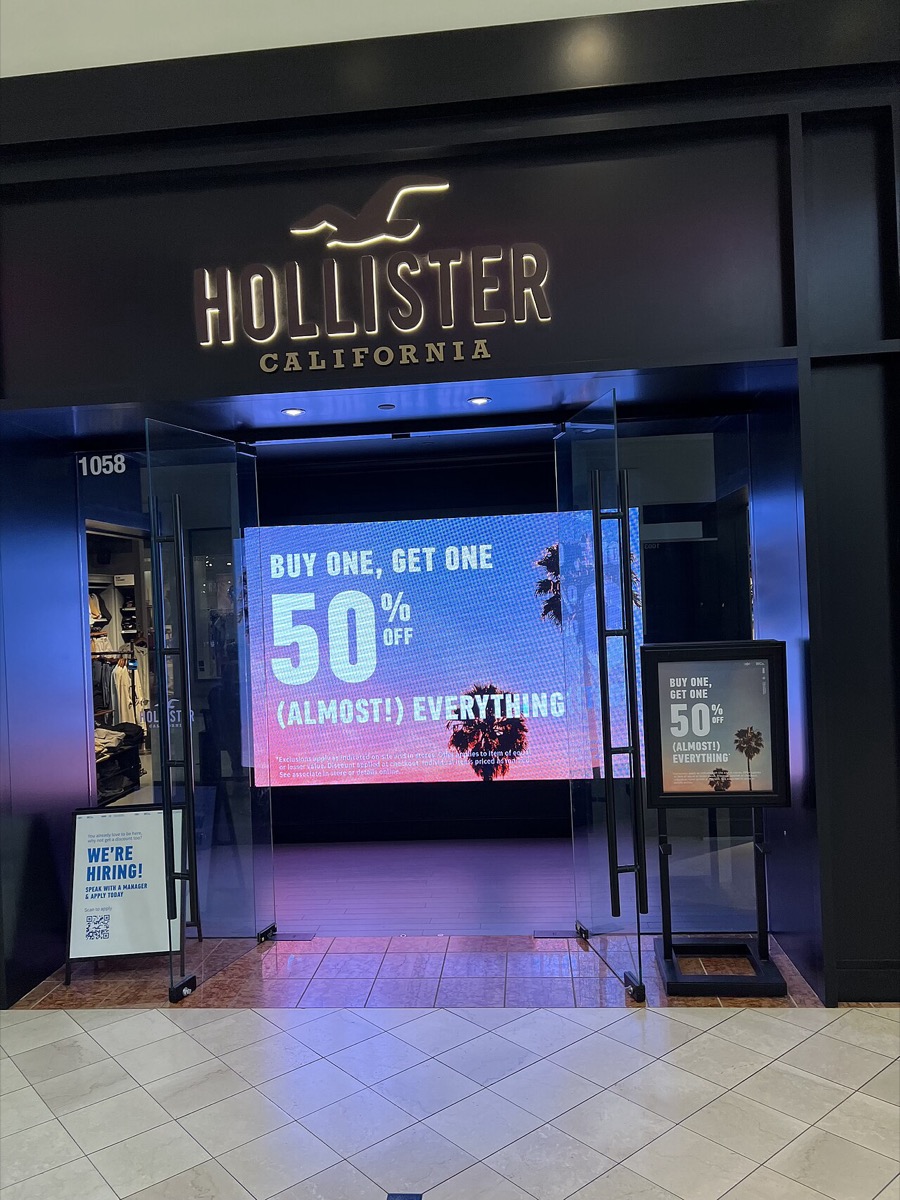
Abercrombie & Fitch's Southern-California-surf-themed spinoff brand, launched in 2000 and aimed at teens. Hollister stores were deliberately dim, cave-like spaces with beachy decor, a seagull logo, and an overwhelming signature cologne. Logo hoodies and tees were a 2000s teen status marker.
Abercrombie & Fitch
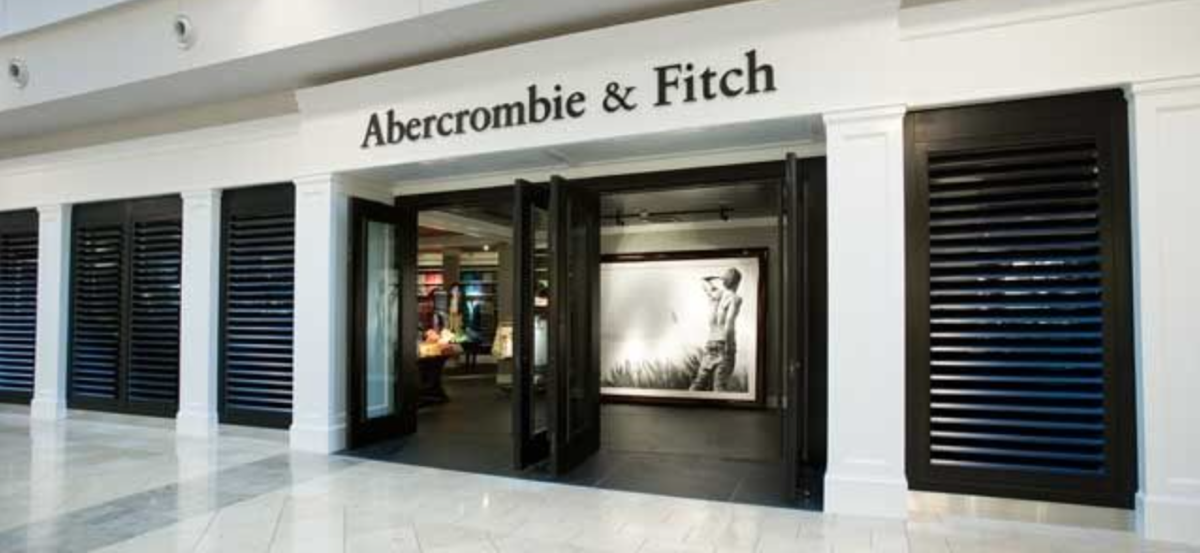
The dim-lit mall temple with impossibly loud music, a signature cologne so thick it hit you at thirty paces, and shopping bags plastered with shirtless male models. The Abercrombie & Fitch moose logo on polos and tees became a middle-school currency of cool in the 2000s. Wearing it meant you had money, taste, or both—or at least that's what everyone pretended to think. The brand launched its spinoff, Hollister, in 2000, spreading the gospel even wider.

Spencer Gifts
The dark, loud, faintly disreputable novelty store your parents walked past and you did not. Lava lamps, gag gifts, rude T-shirts, Halloween masks, and a whole lot of merchandise a twelve-year-old had no business examining closely. Every mall had one, and going in was its own small act of rebellion.
Hot Topic
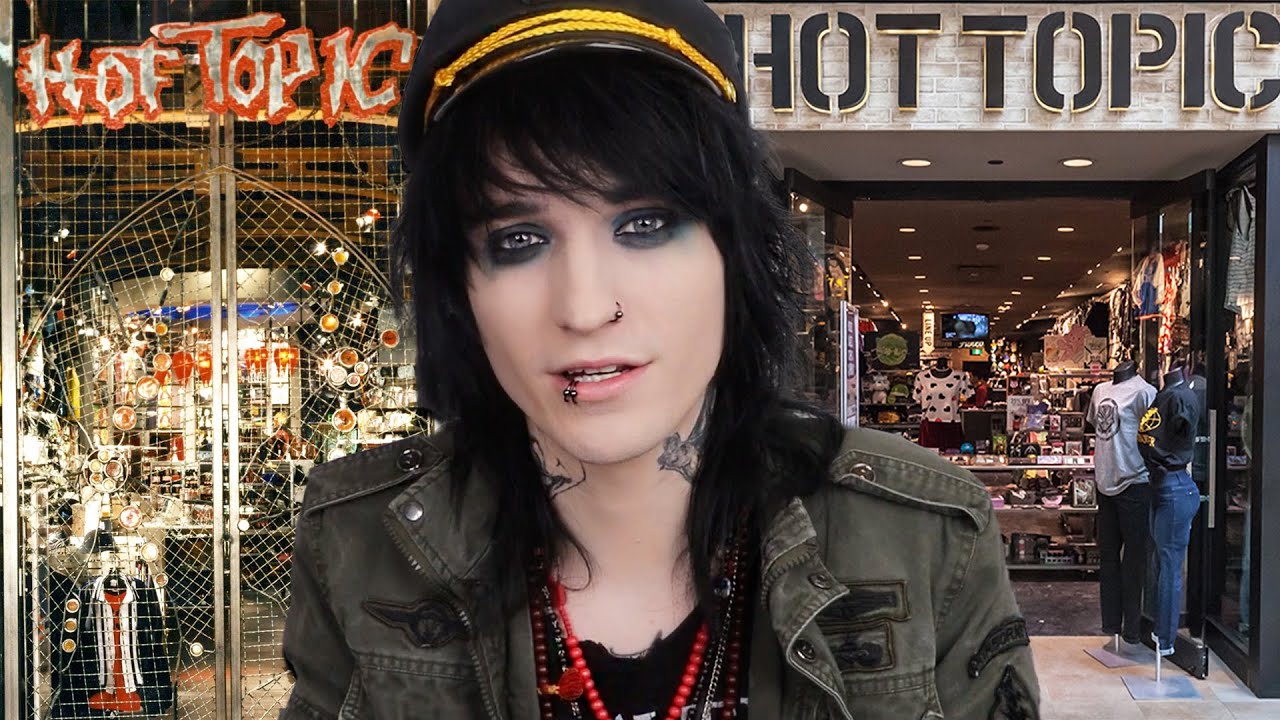
The black-walled store at the end of the mall where the music was too loud and the T-shirts had bands your parents had never heard of. Studded belts, band merch, hair dye, and a smell of incense you could identify from thirty feet away. For a certain kind of teenager, walking in felt like finding your people.