RadioShack
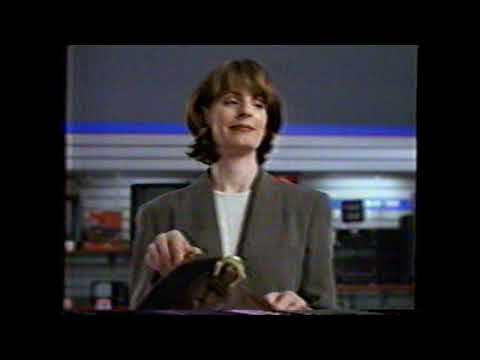
Every strip mall had one: RadioShack, where you flashed your Battery of the Month club card for a free Enercell and got asked for your phone number just to buy batteries. Drawers of components, Realistic-brand gadgets, RC cars, police scanners, and staff who actually knew electronics. "You've got questions. We've got answers."
RadioShack was born in 1921 in Boston, when brothers Theodore and Milton Deutschmann opened a mail-order business supplying amateur and ham radio operators — the name is the old nautical term for a ship's radio room. Charles Tandy bought the struggling company in 1962 for $300,000 and turned it into an empire of thousands of small stores staffed by people who knew their stock, filled with private-label brands like Realistic, Optimus, and Archer. Its 1977 TRS-80 was one of the machines that brought the personal computer into American homes, and the humble Realistic Flavoradio stayed in production from 1972 to 2000 — the longest production run in radio history.
The 1990s made RadioShack a cultural fixture. The Battery of the Month club card earned you a free Enercell battery each month — a ritual kids understood by age eight. There were drawers of resistors and connectors, RC cars, police scanners, and that one salesperson asking for your name and phone number over a two-dollar purchase. The slogan "You've got questions. We've got answers." arrived in 1994 and was everywhere for the rest of the decade. By the late 90s the chain ran more than 8,000 stores across the US, Mexico, and Canada — there was one in practically every strip of stores in America.
Tandy Corporation renamed itself RadioShack Corporation in May 2000, right as the ground was shifting. Best Buy, Walmart, and then the internet ate the specialist alive. After eleven straight quarterly losses, RadioShack filed for Chapter 11 in February 2015; its buyer, General Wireless, went bankrupt itself in March 2017, ending the store network as everyone knew it. The brand survives today — a few hundred authorized dealers and an e-commerce operation, acquired by Unicomer Group in 2023 — but the strip-mall outpost with the component drawers exists only in memory.
Similar items

Circuit City
The electronics superstore where your parents went to buy the first family PC, camcorder, or big-screen TV — with a commissioned salesman in a dress shirt walking them through every feature. Those red-tower storefronts were the 90s temple of consumer electronics. From superstore dominance to total liquidation in 2009, Circuit City is the retail ghost story of the era.

KB Toys
The cramped, stacked-to-the-ceiling toy store tucked into every American mall — smaller and more chaotic than Toys "R" Us, with clearance bins spilling into the aisles. It was the impulse-buy toy stop on any mall trip, right up until it liquidated for good in 2009.

ZipZaps
RadioShack's palm-sized RC cars turned a strip-mall electronics store into toy-craze headquarters. You didn't just drive a ZipZap — you tuned it, with swappable motors, gears, and body shells, like a pocket garage for the Fast and Furious generation.

Bath & Body Works
The scent wall: every bottle a different color, every color a different smell, and you had to sniff them all. Bath & Body Works opened in 1990 and within a decade its body sprays were a generational signature — half a middle school could leave for class smelling of Cucumber Melon.