#Cartridge

26 items

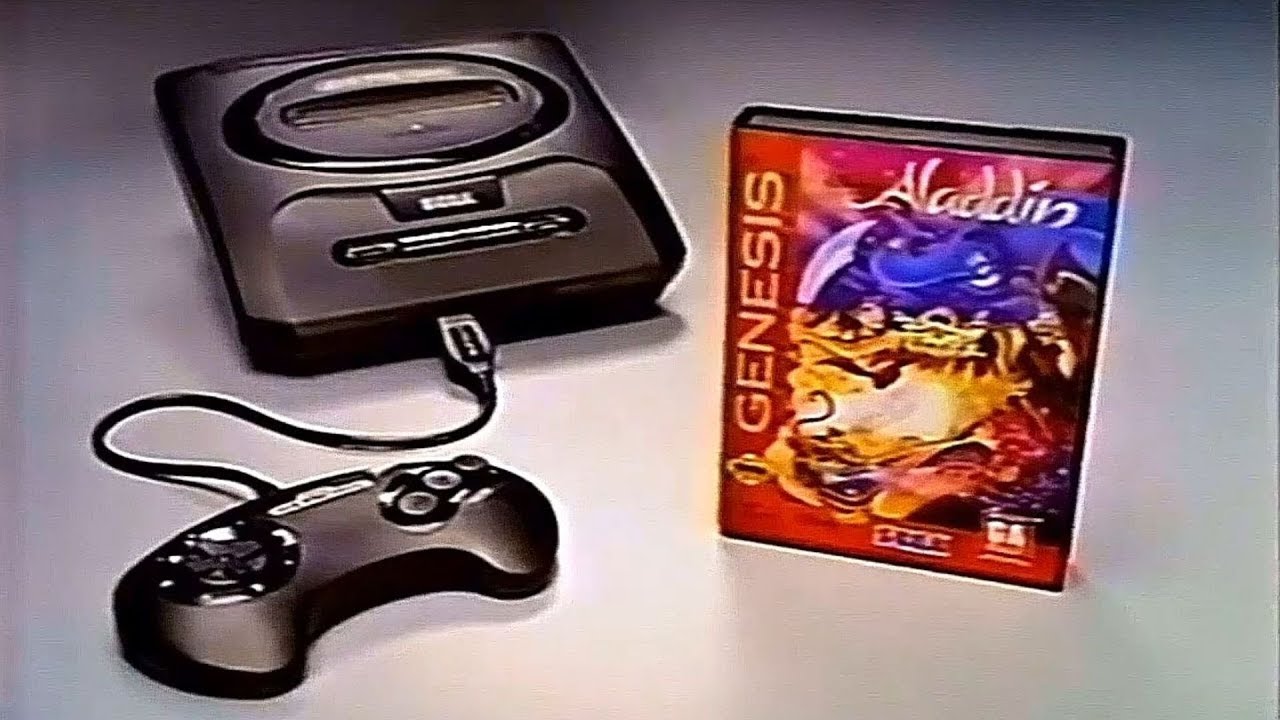
Video thumbnail — Disney's Aladdin for SEGA Genesis (1993) TV Commercial (Remastered HD)
Video Games 1993–1996

Disney's Aladdin (Genesis)

Virgin Games didn't just make a movie tie-in — they got actual Disney animators to draw the game, so Aladdin ran, leapt, and sword-swung across your Genesis with real film-grade animation. Four million copies later, it was one of the best-selling Genesis games ever, and one half of an eternal playground debate with the totally different SNES version.

Video thumbnail — Banjo Kazooie Commercial for the N64 from 1998
Video Games 1998–2000

Banjo-Kazooie

A bear with a bird living in his backpack collecting jiggies across Gruntilda's lair: the 3D collect-a-thon platformer perfected. Rare's masterpiece paired note-perfect googly-eyed humor with Grant Kirkhope's unforgettable score on the Nintendo 64.

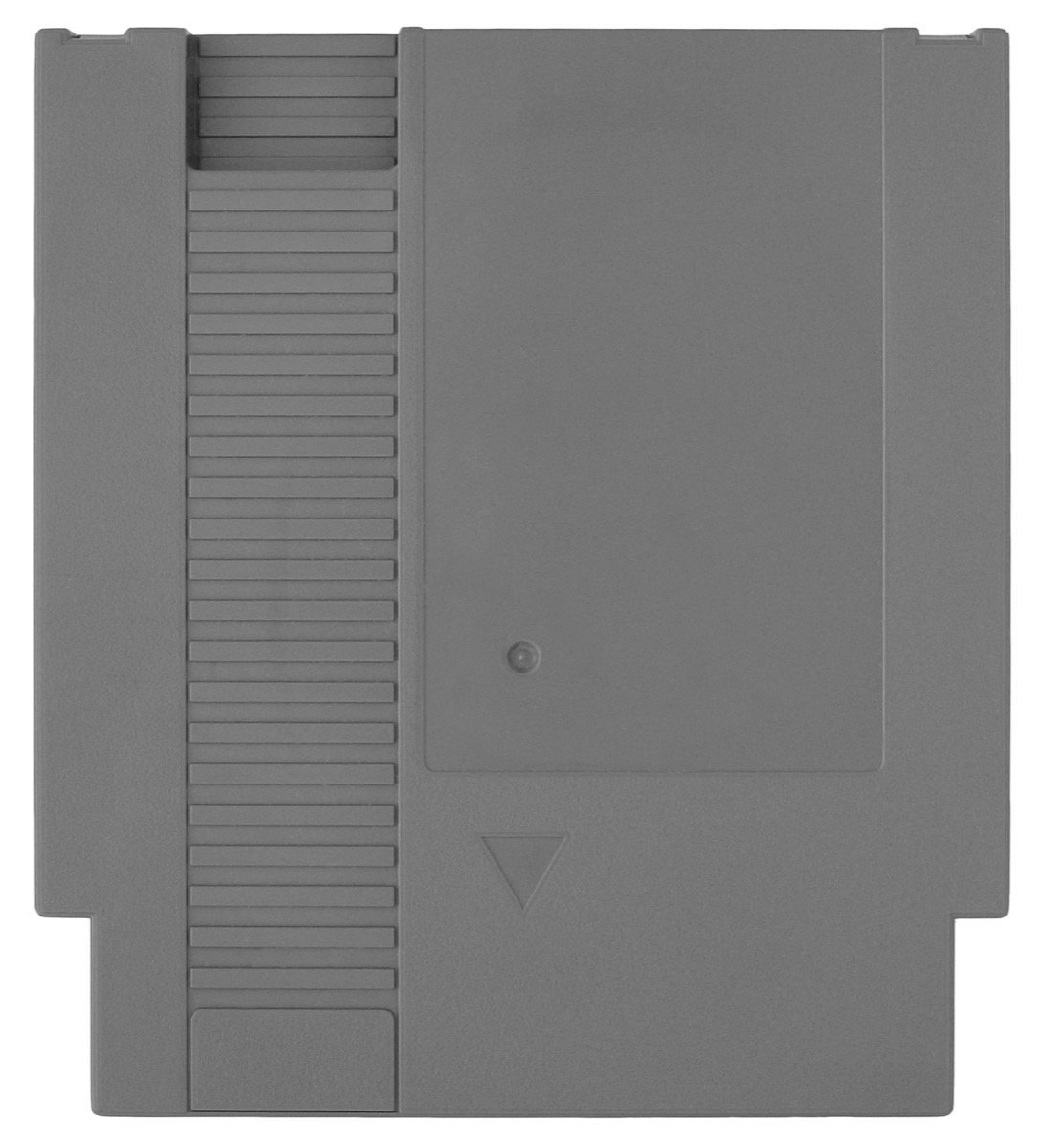
A gray NES game cartridge standing upright on a white background — the kind every 90s kid blew into
Trends 1985–1999

Blowing Into Cartridges

The universal remedy for a glitching NES, SNES, or N64 game: pull the cartridge, blow hard across the contacts, and pray. It never actually worked—the real fix was just reseating the cart—but the ritual of blowing was so universal that every gamer swore by it, confirmation bias at its finest.

Video thumbnail — Bomberman 64 "Bomberman Song" (Nintendo 64\N64\Commercial\Ad) Full HD
Video Games 1997–1999

Bomberman 64

The first Bomberman to go 3D: Hudson Soft's 1997 N64 adventure traded the classic grid for free-roaming chaos, and the four-player couch battles were glorious or broken depending on who you asked. The single-player mode hid real depth — 100 of 120 Gold Cards to unlock the true ending — but it was the sing-song TV jingle and the rental-store ritual that cemented it in your brain.

Video thumbnail — Nintendo Game Boy Advance Commercial (2001) (windowboxed)
Video Games 2001–2008

Game Boy Advance

Nintendo's 32-bit handheld released June 2001, with a landscape shape and full backward compatibility with the entire Game Boy and Game Boy Color library. The screen was notoriously hard to see until the GBA SP (2003) added a front-lit clamshell. Around 80 million sold across the GBA, SP, and Micro variants.

Video thumbnail — Nintendo Game Boy Color - Debut Commercial (1998)
Video Games 1998–2001

Game Boy Color

Nintendo's leap to color: the Game Boy Color arrived in 1998 painting 56 colors on screen at once, with full backward compatibility with original Game Boy games. The screen upgrade alone made Pokémon finally pop in actual colors, and the GBC became essential playground hardware.

Video thumbnail — N64 Commercial - GoldenEye 007, 1997
Video Games 1997–2001

GoldenEye 007

The Nintendo 64 first-person shooter that redefined console multiplayer: four players split-screen deathmatch, and an iron-clad house rule banning Oddjob because his short stature slipped under auto-aim. Rare's landmark game sold over 8 million copies and owned living rooms until Halo arrived.

Video thumbnail — Zelda Link's Awakening Game Boy 1993 Zelda Rap TV Commercial
Video Games 1993–1998

The Legend of Zelda: Link's Awakening

The first Legend of Zelda built for a handheld, Link's Awakening proved that Hyrule didn't need a TV and a castle. Stranded on the surreal dream island of Koholint, you solved puzzles, dodged familiar monsters repurposed as random cameos, and discovered an ending that still haunts players three decades later.

Video thumbnail — Mario Kart 64 Commercial (USA) (1997)
Video Games 1996–2001

Mario Kart 64

The first 3D Mario Kart brought four-player split-screen racing to the Nintendo 64, turning every sleepover and dorm room into a competitive battleground. Shells flew, friendships were tested, and players argued eternally about which character had a hidden advantage.

Video thumbnail — Mortal Kombat 4 Arcade Trailer
Video Games 1997–1999

Mortal Kombat 4

The first Mortal Kombat in 3D, the last one to hit arcades—and the first where you could pull a weapon mid-fight. Polygonal fatalities were the playground whisper of 1997.

Video thumbnail — Nintendo 64| 1996 TV Commercial
Video Games 1996–2002

Nintendo 64

Nintendo's leap into three dimensions, the N64 brought 3D polygon gaming into living rooms with its quirky three-pronged controller and a cartridge library anchored by Super Mario 64 and The Legend of Zelda: Ocarina of Time. Its rumble pak added tactile feedback, while its four controller ports made it the console of couch multiplayer legends.

Video thumbnail — The Legend of Zelda - Ocarina of Time - 1998 commercial
Video Games 1998–2001

The Legend of Zelda: Ocarina of Time

The first three-dimensional Legend of Zelda launched the Nintendo 64 into mythic status. Shigeru Miyamoto's masterpiece introduced the Z-targeting lock-on system that became the industry standard for 3D action games, sold 7.6 million copies, and holds a Metacritic score of 99 — still the highest ever recorded.

Video thumbnail — Pokemon Red & Blue Versions Commercial 1998
Video Games 1998–2000

Pokémon Red & Blue

Nintendo's Game Boy sensation that turned playground trading into a global phenomenon. Pokémon Red and Blue made 1998 the year school ceased all productive function in the pursuit of catching 'em all.

Video thumbnail — Pokemon Yellow  - Special Pikachu Edition  - GameBoy Color Commercial  - Limited Edition (1999)
Video Games 1998–2000

Pokémon Yellow

The 'Special Pikachu Edition' of Pokémon that let you start with the anime's poster mouse instead of Bulbasaur or Squirtle. Unlike Red and Blue, Pikachu followed you on screen instead of riding in its Poké Ball, and its mood changed based on how you treated it—making you actually care if your electric mouse was happy.

Video thumbnail — Sega Genesis Does What Nintendon't Commercial 1990s
Video Games 1989–1997

Sega Genesis

Sega's 16-bit home console arrived in 1989 and dominated the early 90s with its attitude, speed, and Sonic the Hedgehog. The Genesis ('Mega Drive' everywhere else) promised 'Blast Processing' and delivered games that felt faster and edgier than what Nintendo offered, winning hearts — and quarters — across a generation.

Video thumbnail — SEGA GAME GEAR vs. NINTENDO GAMEBOY 90s TV Commercial
Video Games 1990–1997

Sega Game Gear

Sega's full-color backlit handheld promised to dethrone Nintendo's monochrome Game Boy—and technically it did, with a stunning display that consumed six AA batteries in roughly three to five hours. The eternal playground debate: better screen or battery life?

Video thumbnail — Star Fox 64 with Rumble Pack Commercial
Video Games 1997–1999

Star Fox 64

"Do a barrel roll!" Nintendo's on-rails space shooter gave the world Peppy's immortal advice, branching routes that made every run different, and the Rumble Pak — the accessory that made your controller shake with every explosion. Over 4 million copies later, it stands as one of 1997's biggest games.

Video thumbnail — Super Mario World (SNES) Commercial (1991)
Video Games 1990–1995

Super Mario World

The SNES launch title that introduced Yoshi and redefined what a platformer could be. Mario's dinosaur companion, cape-feather flight, and the hunt for all 96 exit-goals kept millions of players glued to their TVs throughout the decade.

Video thumbnail — Super Nintendo Entertainment System, Christmas 1991 commercial
Video Games 1991–1999

Super Nintendo (SNES)

Nintendo's 16-bit powerhouse that dominated the early 1990s and fought the Sega Genesis for console supremacy. Launched in North America at $199 in August 1991, it came packed with Super Mario World and helped define a generation of gaming with over 49 million units sold worldwide.

Video thumbnail — Super Smash Bros. "Happy Together" (Nintendo64\N64\Commercial)
Video Games 1999–2001

Super Smash Bros.

Masahiro Sakurai's Nintendo crossover brawler launched on the N64 with twelve iconic fighters smashing each other on floating stages in four-player chaos. Released April 1999, Super Smash Bros. sold 5.5 million copies and created the template for a franchise that would define competitive gaming and casual multiplayer for the next 25 years.

Video thumbnail — Rare HQ US TV Yoshi's Story (N64) Commercial - Nintendo 64 1999
Video Games 1997–1998

Yoshi's Story

The N64 platformer that looked like a pop-up storybook—levels stitched from cloth, cardboard, and pastel construction paper, starring baby Yoshis who squeal, flutter-jump, and eat 30 fruit per page. Critics shrugged; kids never forgot it.

Video thumbnail — Galoob "Game Genie" Video Game Enhancer (Sega Genesis\Super NES\Commercial) Full HD
Video Games 1990–1996

Game Genie

Slot your game into the Game Genie, slot the Game Genie into the console, thumb in a code from the booklet, and play with unlimited lives. Nintendo went to court to kill it, lost, and was ordered to pay Galoob the entire $15 million bond it had posted — a landmark copyright fight waged over a plastic cheat cart. It was never a Nintendo product, and it wasn't Nintendo-only: Sega gave the Genesis version its official approval while Nintendo was still in court.

Video thumbnail — Atari Jaguar: Do the Math :: Commercial
Video Games 1993–1996

Atari Jaguar

The Atari Jaguar launched in November 1993 at $249.95 with a bold claim: the world's first 64-bit home console. Critics immediately cried foul — its two 32-bit chips didn't quite add up. The PowerPad controller, bristling with 17 buttons including a phone-style keypad, didn't help. It became Atari's last console.

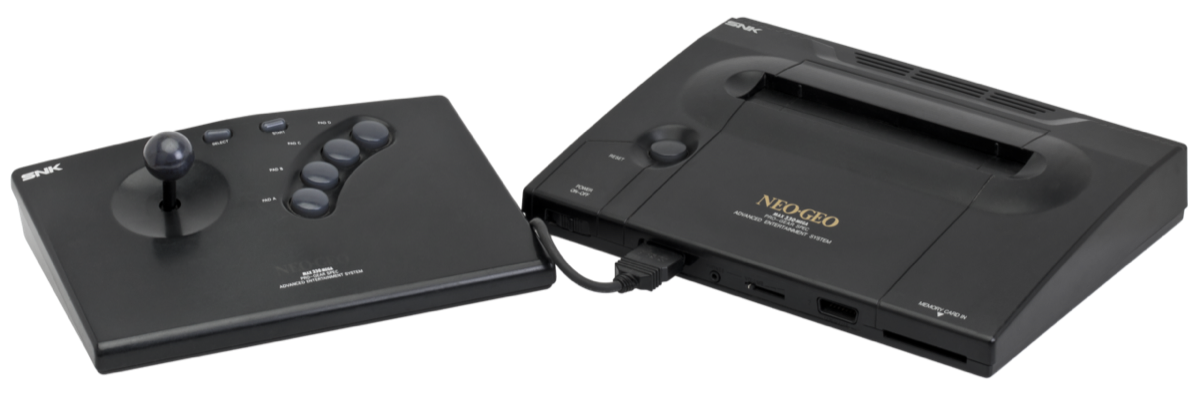
A Neo Geo AES home console with its arcade-style joystick controller
Video Games 1990–1997

Neo Geo

SNK's answer to a dream: the arcade in your home. The Neo Geo's home console ran hardware identical to its arcade cabinets, so you got arcade-perfect games with zero compromises — for $649.99, plus cartridges that cost upward of $200. The rich kid down the street had one. You didn't.

Video thumbnail — Sega Nomad Toys "R" Us TV Commercial - 1995
Video Games 1995–1999

Sega Nomad

The dream machine: a portable Sega Genesis that played your whole cartridge library on a screen you could hold. It also chewed through six AA batteries fast enough to make the dream expensive. Sega, busy with the Saturn, barely supported it — about a million sold anyway, and now it's a collector's prize.

Video thumbnail — ToeJam & Earl - Original Sega Genesis Rap Commercial (1991)
Video Games 1991–1993

ToeJam & Earl

Two alien rappers from the planet Funkotron crash-land on Earth after Earl's terrible piloting, and the result is one of the weirdest, chillest games the Genesis ever got: random floating islands, mystery presents, tomato-throwing, and a split screen that healed itself when you and your buddy walked back together.