Atari Jaguar

The Atari Jaguar launched in November 1993 at $249.95 with a bold claim: the world's first 64-bit home console. Critics immediately cried foul — its two 32-bit chips didn't quite add up. The PowerPad controller, bristling with 17 buttons including a phone-style keypad, didn't help. It became Atari's last console.
The Atari Jaguar arrived in late 1993 with real marketing muscle. Atari's "Do the math!" campaign promised the world's first 64-bit gaming system, though critics argued the system's dual 32-bit processors (nicknamed Tom and Jerry) didn't actually add up to a 64-bit architecture. It launched in North America on November 23, 1993, at $249.95 with Cybermorph as the pack-in game.
The hardware's other Achilles' heel was the PowerPad controller, a complex beast with 17 buttons built around a 12-button phone-style keypad, widely criticized as cumbersome and unintuitive. The system's best-selling title, Alien vs Predator, managed only 52,223 copies — not the numbers a third console contender needed.
By 1996 the Jaguar was discontinued, having sold fewer than 150,000 consoles by Atari's own SEC filing. The company merged with hard-drive maker JTS that year, and the Atari name was sold to Hasbro Interactive in 1998. The Jaguar stands as the last console Atari Corporation ever produced — a high-profile exit from the console wars.
Similar items

Nintendo Virtual Boy
Nintendo's red-and-black 3D machine that sat on a table and asked you to press your face into it. It was on sale in Japan for about five months and in America for about a year, and it is the lowest-selling standalone console Nintendo ever put its name on. Everyone remembers the demo unit at the toy store, and everyone remembers the headache.

3DO
The 3DO was an audacious gamble: a roughly $700 CD console that The 3DO Company didn't even build itself — partners like Panasonic manufactured it under license, with royalties flowing back to Trip Hawkins' company. Time magazine called it 1993's "Product of the Year." No amount of prestige could overcome the price.
![Video thumbnail — Sega Saturn - It's Out There (1995 Launch Commercial) [HD]](https://i.ytimg.com/vi/cyv6ZehQyTQ/hqdefault.jpg)
Sega Saturn
Sega's answer to the PlayStation: a cartridge-free arcade powerhouse with dual processors, a CD-ROM drive, and a cult library of 3D fighters and dreamers. The Saturn dominated Japan but stumbled spectacularly in the West after Sega's infamous E3 surprise launch—a retailer and developer betrayal that became business-school legend.
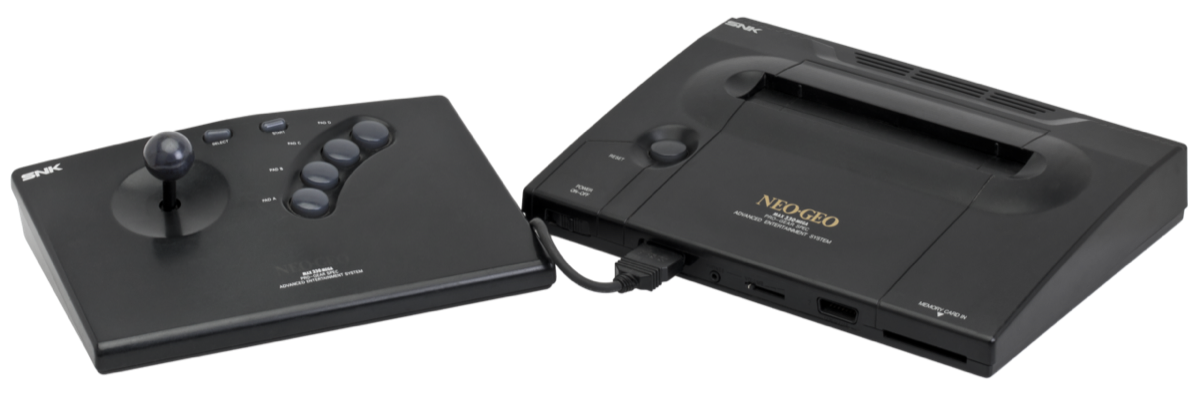
Neo Geo
SNK's answer to a dream: the arcade in your home. The Neo Geo's home console ran hardware identical to its arcade cabinets, so you got arcade-perfect games with zero compromises — for $649.99, plus cartridges that cost upward of $200. The rich kid down the street had one. You didn't.