ToeJam & Earl

Two alien rappers from the planet Funkotron crash-land on Earth after Earl's terrible piloting, and the result is one of the weirdest, chillest games the Genesis ever got: random floating islands, mystery presents, tomato-throwing, and a split screen that healed itself when you and your buddy walked back together.
In October 1991, Sega published ToeJam & Earl on the Genesis, designed by Greg Johnson and programmed by Mark Voorsanger of Johnson Voorsanger Productions. The premise was gloriously strange: two alien rappers crash-land on Earth after Earl's catastrophic piloting, and have to wander a hostile-but-goofy planet collecting the ten scattered pieces of their wrecked spacecraft. The planet was out to get them; the vibe stayed chill anyway — and that tension is basically the whole game.
Under the funk, the design was quietly radical for a console game. It borrowed its foundation from Rogue, the 1980 dungeon-crawler: every playthrough generated a fresh stack of randomly assembled floating islands, so no two games were alike. Wrapped presents littered the world, their contents — good or catastrophic — a mystery until you opened one. Combat was largely non-violent (you threw tomatoes), and the two-player co-op pulled its best trick when the split screen merged back into a single shared screen whenever the players stood together, then split again as you wandered apart. Meeting up felt like something.
At first, almost nobody bought it. But the Genesis's Christmas 1991 surge and steady word-of-mouth turned the flop into a cult hit that eventually sold about 350,000 copies. The 1993 sequel, ToeJam & Earl in Panic on Funkotron, became a conventional side-scrolling platformer after Sega rejected an original-style concept — fans mostly wished it hadn't. The original remains the keeper: a game that shouldn't cohere — funk aliens, mystery gifts, tomato combat — and somehow lands in perfect balance.
Similar items

Sega Genesis
Sega's 16-bit home console arrived in 1989 and dominated the early 90s with its attitude, speed, and Sonic the Hedgehog. The Genesis ('Mega Drive' everywhere else) promised 'Blast Processing' and delivered games that felt faster and edgier than what Nintendo offered, winning hearts — and quarters — across a generation.
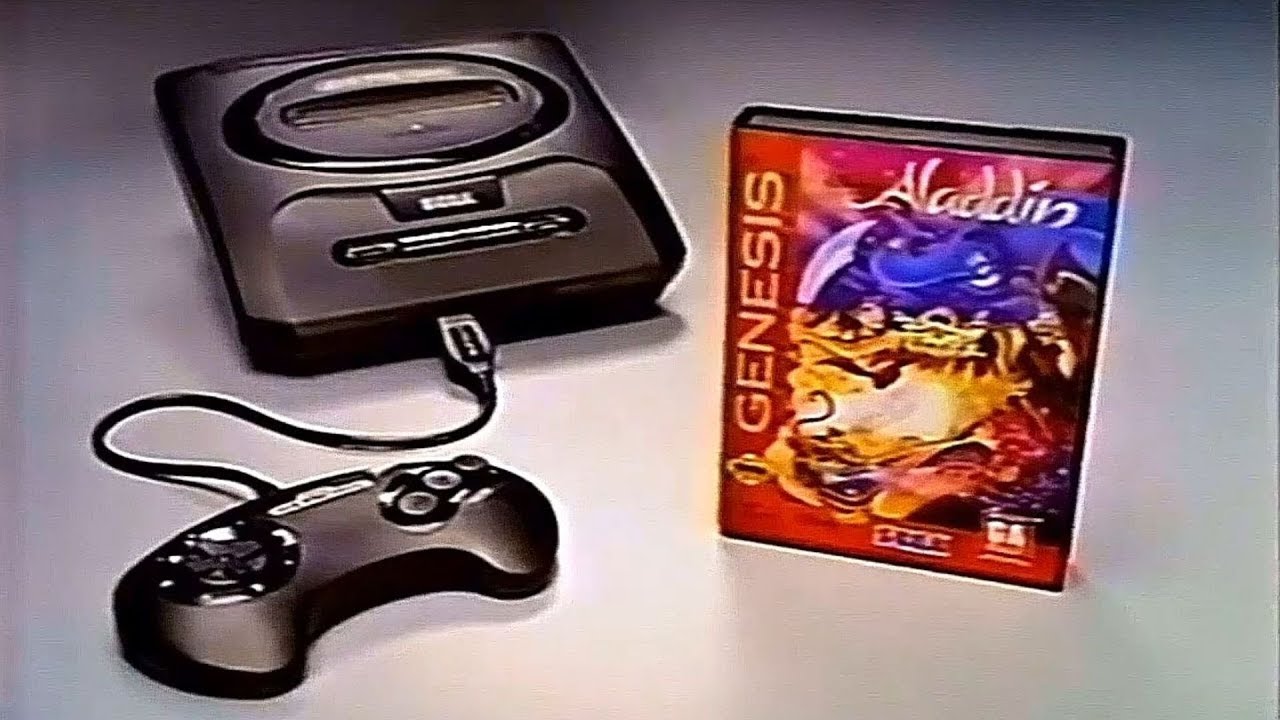
Disney's Aladdin (Genesis)
Virgin Games didn't just make a movie tie-in — they got actual Disney animators to draw the game, so Aladdin ran, leapt, and sword-swung across your Genesis with real film-grade animation. Four million copies later, it was one of the best-selling Genesis games ever, and one half of an eternal playground debate with the totally different SNES version.
Game Genie
Slot your game into the Game Genie, slot the Game Genie into the console, thumb in a code from the booklet, and play with unlimited lives. Nintendo went to court to kill it, lost, and was ordered to pay Galoob the entire $15 million bond it had posted — a landmark copyright fight waged over a plastic cheat cart. It was never a Nintendo product, and it wasn't Nintendo-only: Sega gave the Genesis version its official approval while Nintendo was still in court.

Sega Game Gear
Sega's full-color backlit handheld promised to dethrone Nintendo's monochrome Game Boy—and technically it did, with a stunning display that consumed six AA batteries in roughly three to five hours. The eternal playground debate: better screen or battery life?