Filmstrips in Class
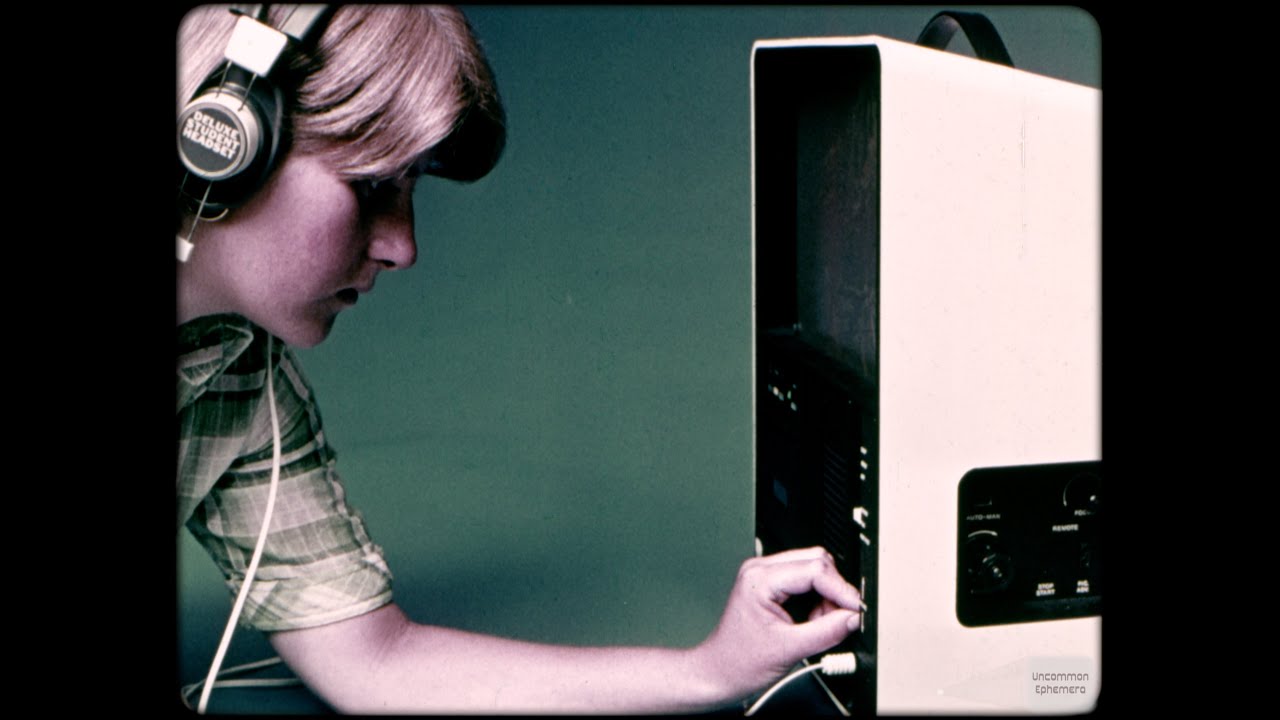
Lights off, projector humming, and a strip of little 35mm frames clicking by one BEEP at a time. Whoever got picked to turn the knob held real power — advance too early and the whole class knew, wait too long and the narrator's beep shamed you from the cassette deck.
The filmstrip was the budget movie of the American classroom: a short spool of 35mm film holding a few dozen still frames in sequence, shown one at a time through a squat little projector. Compared with real 16mm films, strips were cheap, nearly indestructible, easy to store in a drawer of labeled canisters, and rewound in seconds — which is why schools ran them from the 1920s all the way into the era of kids who would grow up on the internet. Companies like Chicago's Society for Visual Education, Coronet Films, CBS, and even The New York Times produced thousands of titles covering everything from photosynthesis to playground manners.
The ritual is what everyone remembers. The AV cart wheeled in, the lights snapped off, the accompanying record or cassette began to narrate — and then the tone. On the classic setups a beep on the soundtrack signaled that it was time to advance the frame, and being the kid assigned to the knob was a small but genuine honor. Later projectors automated the job with an inaudible 50 Hz pulse on the tape, but the beep-and-click ritual is the version burned into collective memory, along with the scorched-dust smell of the projector bulb and the wobbly freeze-frame when a strip jammed.
The end came with the VCR. Through the 1980s videotape got cheap enough for any school, and by the early 1990s the vast majority of filmstrip producers had closed or sold their businesses — so the strips 90s kids saw were mostly a dwindling library of holdovers, wheeled out by teachers who still trusted the old machines. VHS, and then computers, all but finished the job — a few holdouts limped into the 2000s before the last projectors left the AV closet for good. What survives is the sound: for a certain generation, a single sharp beep in a dark room still means it's time to see the next slide.
Similar items

Card Catalogs
The wall of little wooden drawers that stood between you and every book in the library. Author, title, or subject — you thumbed the worn 3×5 cards, copied a call number onto scrap paper with a golf pencil, and set off into the stacks like you'd been handed a treasure map.
Computer Lab
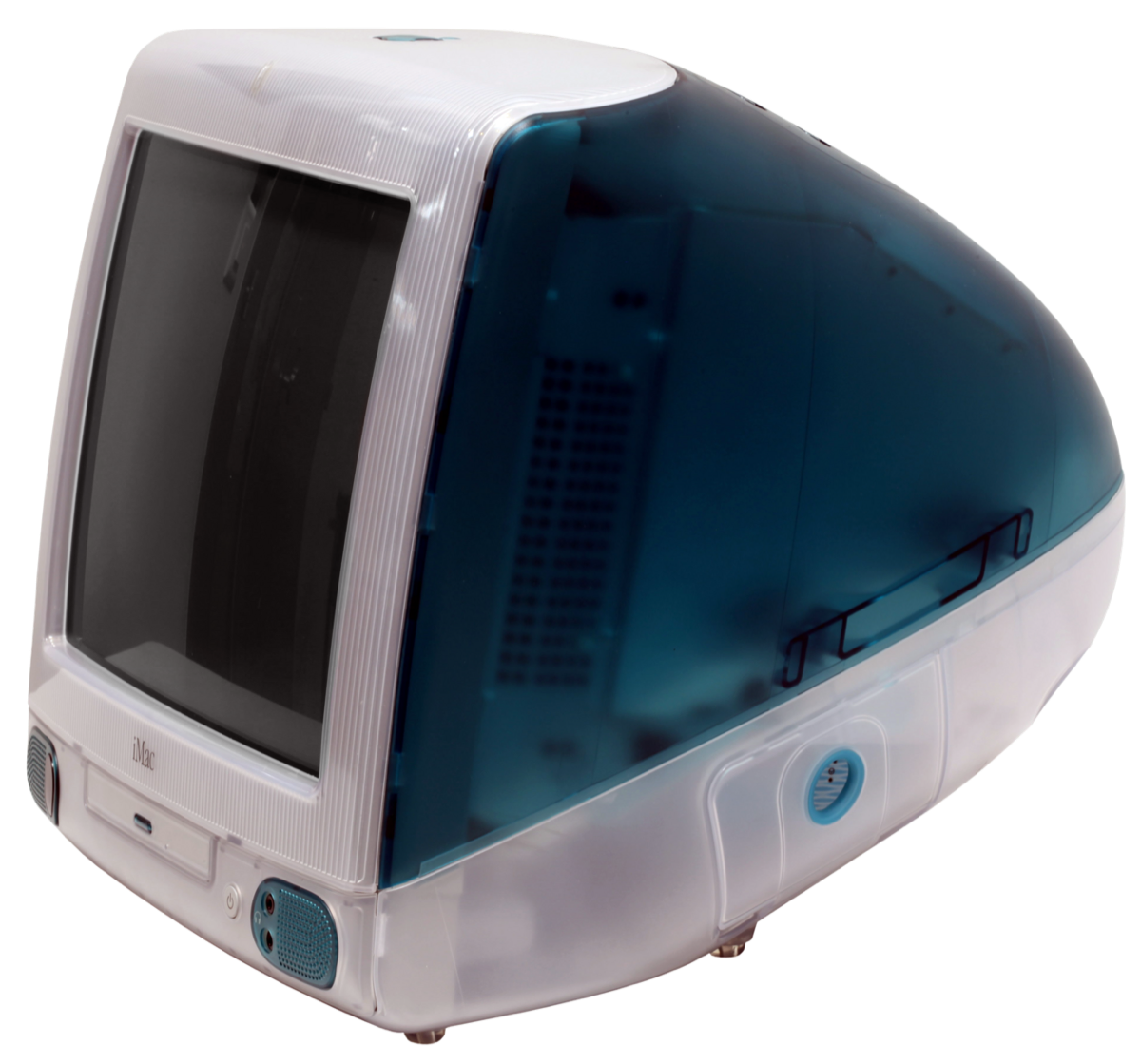
The weekly pilgrimage down the hall to the room full of beige Apple computers, where you'd slot in a floppy disk, wait, and take turns dying of dysentery on the Oregon Trail. "Computer Day" was equal parts educational software and the first place a lot of kids ever touched a keyboard.

Scholastic Book Fairs
The ritual: your school gym transforms overnight into a pop-up bookstore of rolling display cases, and you wander the aisles with a wish list and a budget. Scholastic Book Fairs dominated the 90s market, though what kids actually bought — glittery gel pens, novelty pencils, poster books — often had nothing to do with the Goosebumps stacks they wandered past.
The TV-Cart Day
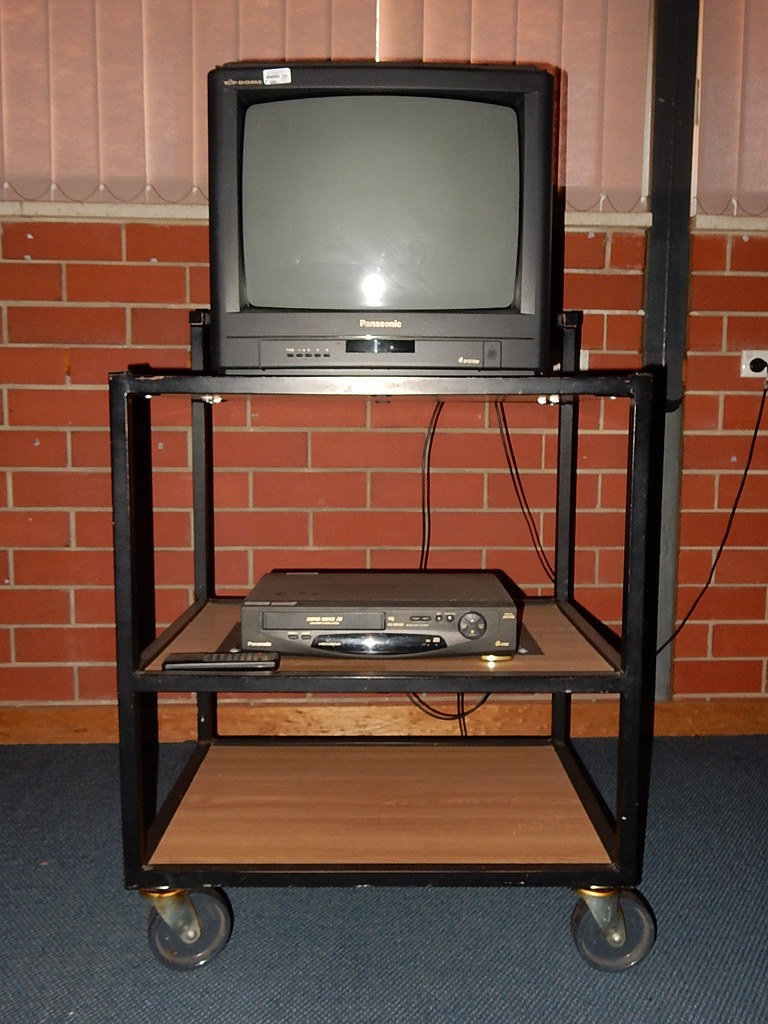
The squeak of wheels in the hallway, the tall metal cart nosing through the classroom door, the TV strapped on top with the VCR on the shelf below — and thirty kids realizing at the same instant that today was not a real school day. No object ever delivered better news than the TV cart.