Scholastic Book Fairs

Photo credit: Public domain (PD-textlogo), via Wikimedia Commons
The ritual: your school gym transforms overnight into a pop-up bookstore of rolling display cases, and you wander the aisles with a wish list and a budget. Scholastic Book Fairs dominated the 90s market, though what kids actually bought — glittery gel pens, novelty pencils, poster books — often had nothing to do with the Goosebumps stacks they wandered past.
Scholastic entered the book-fair business in 1981 by acquiring California School Book Fairs, dominating the market throughout the 1990s. The 90s big sellers were Goosebumps and The Baby-Sitters Club, but the real memories belonged to the peripheral treasures — glittery gel pens, novelty pencils, shimmering bookmarks, foil posters. Schools pocketed roughly 20–33% of the revenue, often as credit for classroom books, while PTA volunteers ran the tables on nights and weekends.
Scholastic's scale grew staggering: by the 2000s, the company ran on the order of 100,000+ fairs a year reaching tens of millions of kids, moving over 100 million books annually. The Book Fair became a fixture in the American school calendar, as reliable and anticipated as the holiday pageant.
Similar items

Eyewitness Books
Visual reference books from Dorling Kindersley that broke the mold of dense gray textbook type. Crisp object photography floating on white pages, labeled and captioned — you didn't read them front-to-back, you wandered them. Within eight years, 18 million copies had sold worldwide; they became the default grab for every school report.

Goosebumps
R.L. Stine's mass-produced horror series for kids, where every book's drippy cover could stop your heart in the school library. Goosebumps sold roughly 4 million copies a month at its mid-90s peak and by 1996 accounted for nearly 15% of Scholastic's entire revenue.

Lisa Frank
Neon-rainbow folders, stickers, and binders plastered with dolphins, unicorns, and technicolor leopards—the aesthetic that defined every 90s classroom. Lisa Frank's maximalist explosion of color became a status symbol and a collecting obsession that grossed over $60 million a year at its peak.
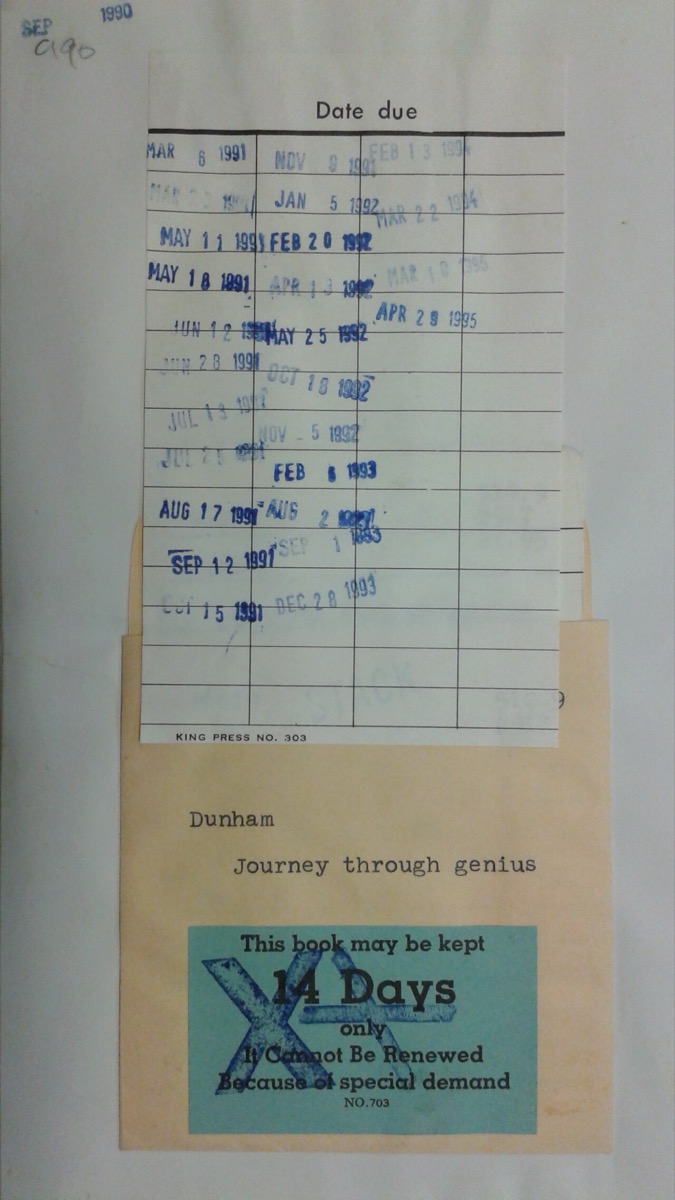
The Library Card & Pocket Checkout
A manila pocket glued inside the back cover of library books, a lined card inside listing every name who'd borrowed the copy before you, stamped with due dates — a fossil record of readers going back years, and you signed in to add yourself to the ledger. Then came barcodes, and 90s kids were among the last to know this ritual.