The TV-Cart Day
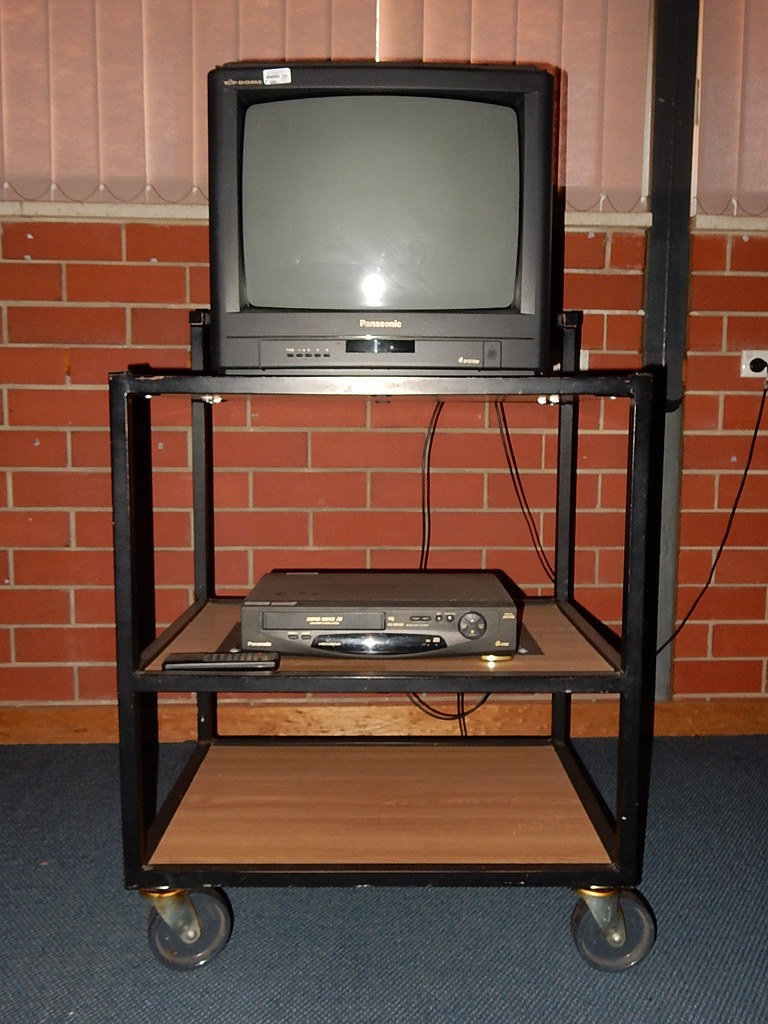
Photo credit: Photo: Michael Coghlan, CC BY-SA 2.0, via Flickr
The squeak of wheels in the hallway, the tall metal cart nosing through the classroom door, the TV strapped on top with the VCR on the shelf below — and thirty kids realizing at the same instant that today was not a real school day. No object ever delivered better news than the TV cart.
Nobody invented the TV-cart day, though somebody did invent the cart: Chicago-area Bretford Manufacturing developed the audiovisual cart with its attached power strip back in 1957, originally to wheel film projectors and overhead projectors between classrooms. When televisions and VCRs flooded into schools in the 1980s and 90s, the same tall rolling cart got a new payload — a heavy tube TV secured up top, a VCR on the shelf beneath, a power cord trailing behind like a leash — and a school ritual was born. Because the cart was shared, its arrival was never routine. It had to be reserved, fetched, and steered down the hall, which meant every kid in every room it passed got a few seconds of agonizing hope before it kept rolling.
When it did turn into your doorway, the whole day changed shape. The lights went off, someone was dispatched to close the blinds, and the class watched whatever the occasion called for — Bill Nye when the science unit allowed it, a Reading Rainbow tape, a movie in the dead week before winter break, or something only loosely educational when a substitute teacher was handed a lesson plan that just said "video." There were rituals within the ritual: the fight over who got to press play, the tracking lines wobbling across the screen, the teacher's warning that yes, this would somehow be on the test.
The cart faded the way it arrived — gradually, room by room — as ceiling-mounted projectors, laptops, and streaming replaced the rolling TV in the 2000s. What survives is the feeling, instantly recognizable to anyone who was in a classroom during the VHS era: that squeak in the hallway was the sound of getting away with something, sanctioned by the school itself.
Similar items
![Video thumbnail — Bill Nye: The Science Guy [Original Intro] ᴴᴰ](https://i.ytimg.com/vi/UtVJdPfm0F8/maxresdefault.jpg)
Bill Nye the Science Guy
The beloved PBS/syndication science show that dominated classrooms throughout the '90s. Bill Nye, the bow-tie-wearing mechanical engineer-turned-science-communicator, made physics and chemistry accessible—and fun—with MTV-style energy, wild demonstrations, and an unforgettable theme song. Substitute teachers everywhere knew exactly what to do: wheel out the TV cart and press play. A cultural institution that made science cool before it was cool.
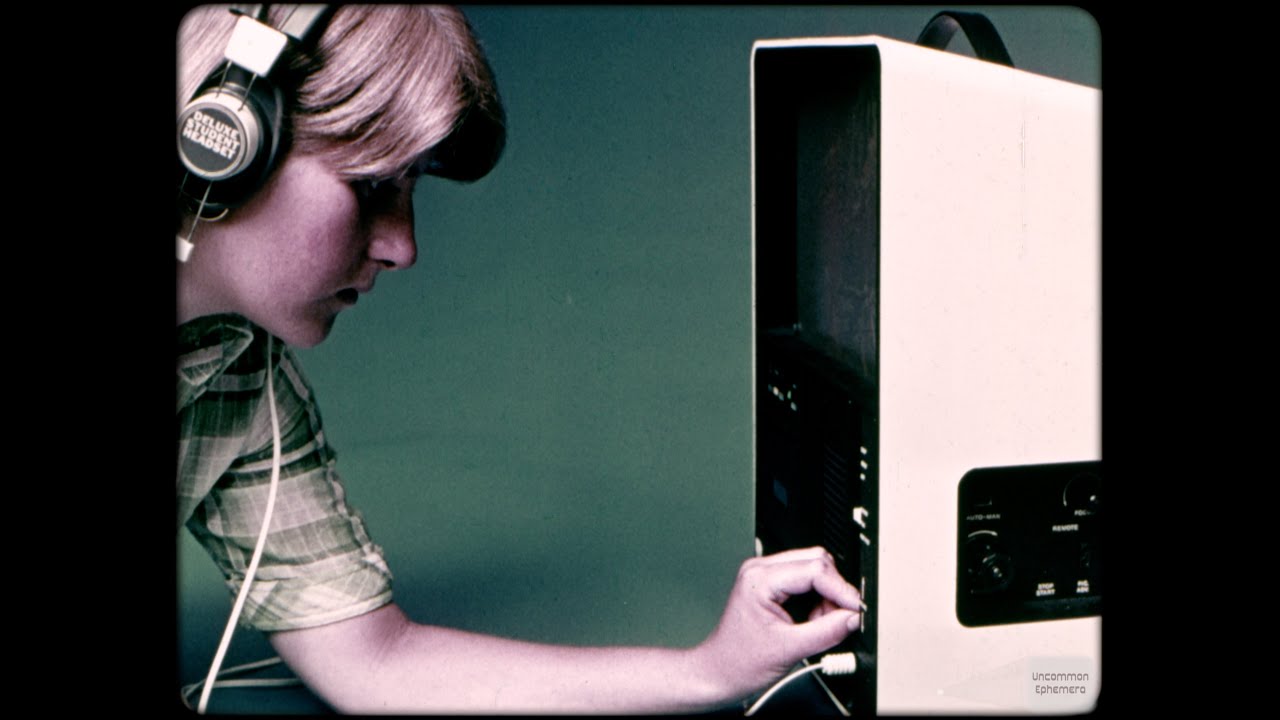
Filmstrips in Class
Lights off, projector humming, and a strip of little 35mm frames clicking by one BEEP at a time. Whoever got picked to turn the knob held real power — advance too early and the whole class knew, wait too long and the narrator's beep shamed you from the cassette deck.

Reading Rainbow
"Butterfly in the sky, I can go twice as high." LeVar Burton spent more than two decades on PBS making one argument, gently and relentlessly: books are where the good stuff is. Then he'd hand the microphone to kids to review them — because you didn't have to take his word for it.
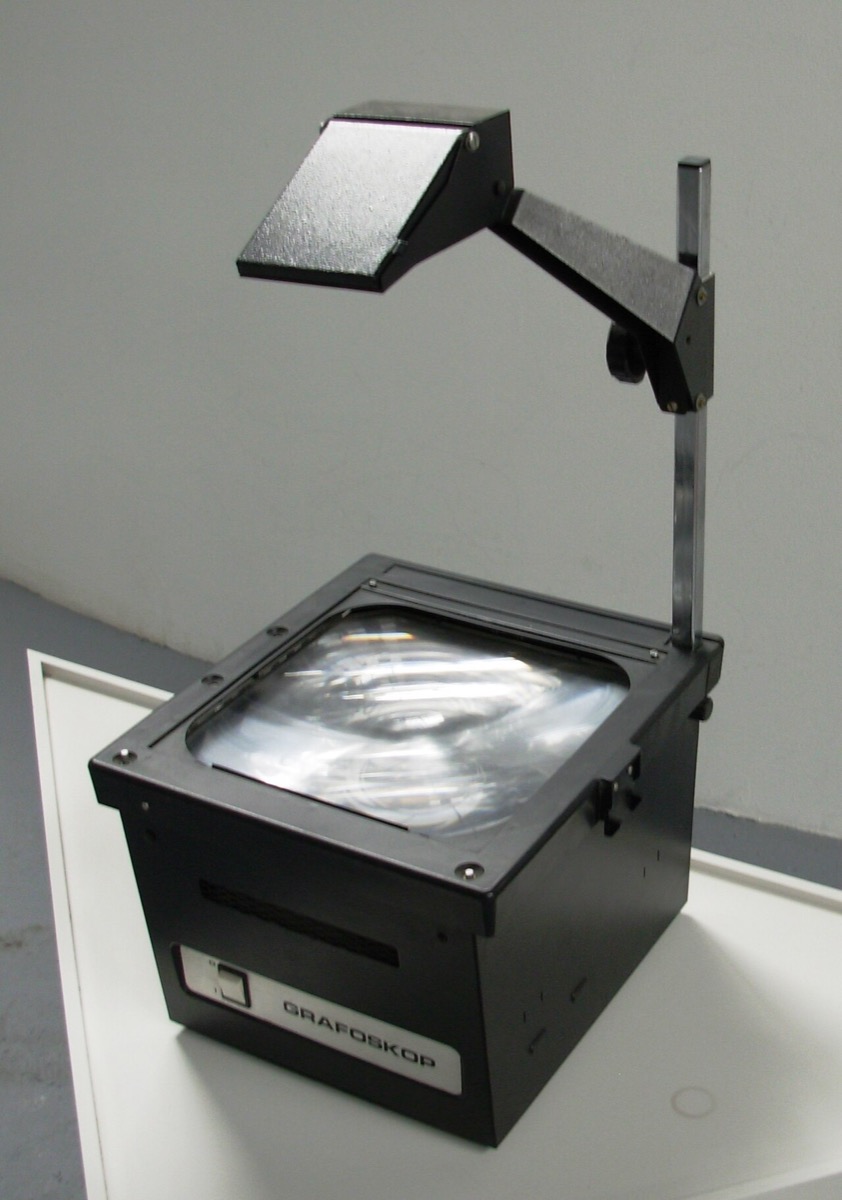
Overhead Projectors
A humming box with a giant mirror arm that threw your teacher's handwriting onto the wall — and, if you were lucky, you were the kid chosen to lay down the next transparency. Overhead projectors ran classrooms for half a century before fading quietly in the 2000s.