WebTV

A black box from Sony or Philips, a wireless keyboard on the couch, and the whole World Wide Web squeezed onto the living-room television at 33.6k. For $329 plus $19.95 a month, WebTV put Grandma online in 1996, and Microsoft paid $425 million for the idea.
WebTV Networks was founded in mid-1995 by Steve Perlman, a veteran of Apple and General Magic, with co-founders Bruce Leak and Phil Goldman, in half of a former BMW dealership in Palo Alto. The trigger was a Campbell's soup recipe website: the people who would actually want it, Perlman figured, were not the people using the web. To hide what it was doing, the company called itself Artemis Research and claimed on its website to be studying "sleep deprivation, poor diet and no social life" in humans and dwarf rabbits. Sony demanded a year of exclusivity, then backed out by certified letter just before a venture round closed; Perlman mortgaged his house to keep the lights on, Philips signed a non-exclusive deal, and Sony came back.
The box was announced on July 10, 1996, and reached stores that fall: a Sony version at $349 and a Philips Magnavox version at $329, a wireless keyboard for about $50 more, and $19.95 a month for unlimited web and email. Inside was a 112 MHz MIPS chip, 2 megabytes of RAM and a 33.6k modem; WebTV's servers did the heavy lifting, reformatting pages so they could be read from a couch. Because it used 128-bit encryption, the US government classified the $329 appliance as munitions and barred its export for about two years. Sales started slowly, 56,000 subscribers by April 1997, but Microsoft's Craig Mundie had already seen the potential, and after six weeks of negotiations, with Bill Gates phoning Perlman at home on Easter Sunday, Microsoft announced the purchase on April 6, 1997, at an announced price of $425 million. Each founder took home $64 million.
Under Microsoft the subscriber count reached about 800,000 by 1999, and the WebTV division went on to build the first satellite DVRs and, later, the Xbox 360 hardware. The brand itself became MSN TV in July 2001, a broadband MSN TV 2 arrived in 2004, and the service finally shut down on September 30, 2013. But the memory is the first box: a relative who would never buy a computer, typing an email on the coffee table with the TV volume down, and the web, blurry and enormous, on the family TV.
Similar items

AOL
The dial-up gateway that wired up America. AOL's "You've Got Mail" voice, aggressive free-trial CD carpet-bombing, and shift to unlimited $19.95/month pricing triggered the legendary busy-signal crisis — millions of Americans' first taste of the internet.
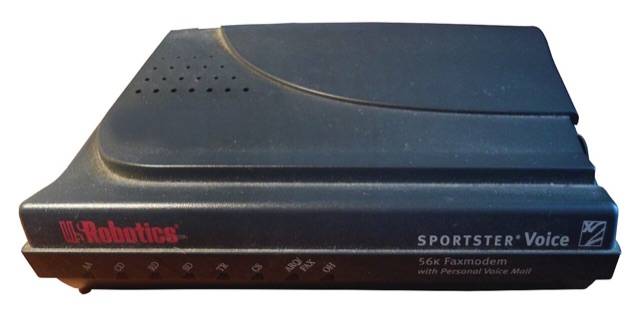
Dial-Up Internet
That modem squeal. The frozen phone line. "Get off the internet, I need to make a call." Dial-up was the sound and the ritual of getting online for a generation of American homes — peaking in the dot-com years, overtaken by broadband around 2004, and lingering until AOL finally hung up in 2025.
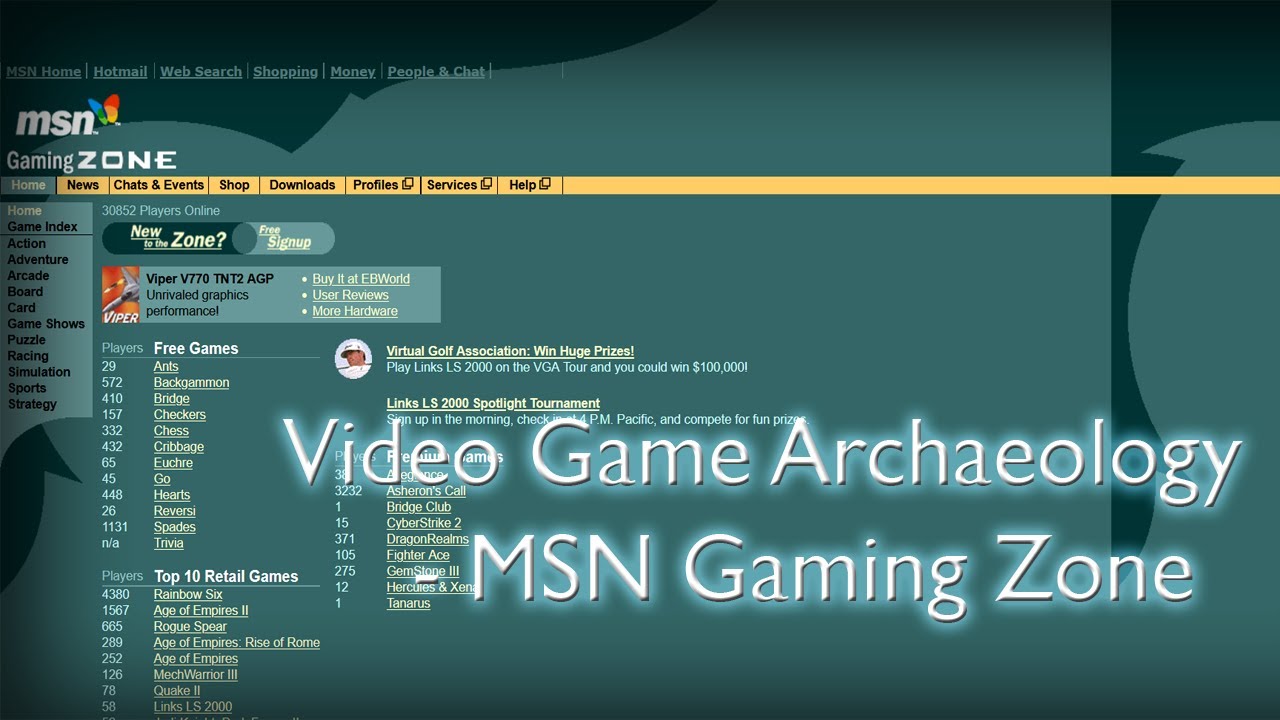
MSN Gaming Zone
For a lot of people, the first place you ever played games against strangers over the internet — dial in, drop into a lobby, and play Hearts, Spades, or Age of Empires. Microsoft's online-gaming portal, and a quiet ancestor of Xbox Live.

Prodigy (online service)
The online service with an ad on nearly every screen: news, weather, Zagat, shopping and message boards in chunky vector graphics, for a flat $9.95 a month, from IBM and Sears. It was the biggest service in America in 1993 and lost to AOL anyway.