Reading Rainbow

"Butterfly in the sky, I can go twice as high." LeVar Burton spent more than two decades on PBS making one argument, gently and relentlessly: books are where the good stuff is. Then he'd hand the microphone to kids to review them — because you didn't have to take his word for it.
Reading Rainbow premiered on PBS on July 11, 1983, hosted by LeVar Burton, then best known for Roots. The pedagogy was built on a simple premise: people become readers by falling in love with books, not by drilling phonics. Burton introduced each episode's book and its world, then stepped back for the show's signature move — real kids delivering their own book reviews — always teed up with the line that became its covenant: "But you don't have to take my word for it." It ran 155 episodes across 21 seasons and collected more than 200 broadcast awards along the way, including a Peabody and 26 Emmys, ten of them for Outstanding Children's Series.
Production ended in November 2006, with reruns airing through 2009 — not because kids stopped watching, but because the funding climate changed: in the No Child Left Behind era, the federal Ready-to-Learn grants that supported it shifted toward programs teaching phonics and spelling ahead of fostering a love of reading. The show's afterlife made the case for how much it had mattered: Burton's 2014 Kickstarter to revive it raised $5.4 million from more than 105,000 backers, plus a million from Seth MacFarlane, from a generation that had grown up taking his word for it after all.
Similar items
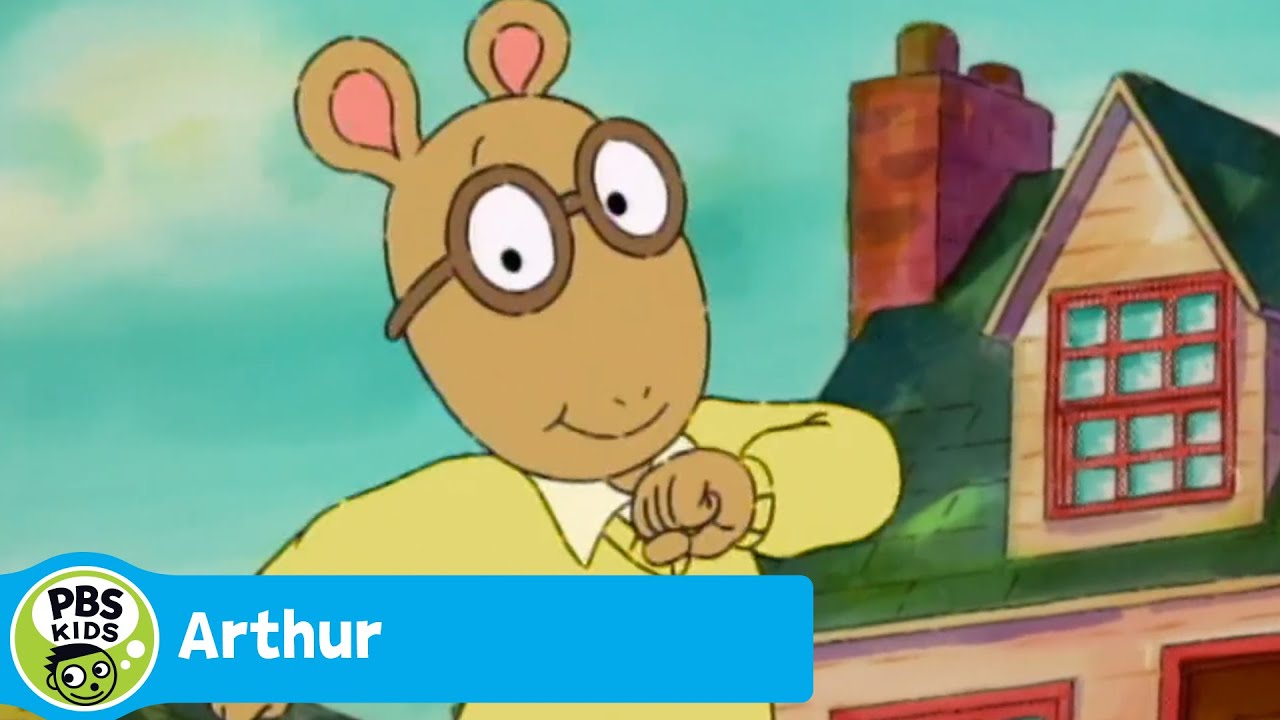
Arthur
PBS's 25-season juggernaut about an aardvark navigating school, friendship, and suburban angst. Arthur Read, his friends Buster, Francine, Muffy, and the Brain, and his little sister D.W. defined childhood TV for an entire generation. The show ran from 1996 to 2022, becoming one of the longest-running animated kids' series in US television history.

The Magic School Bus
Ms. Frizzle's class rode the Magic School Bus into the bloodstream, through outer space, and into a volcano—all while learning science in four seasons of PBS's most unforgettable animated series. Lily Tomlin's fearless teacher and Bruce Degen's original illustrations made learning an adventure, and every kid left knowing 'Take chances, make mistakes, get messy!'
![Video thumbnail — Bill Nye: The Science Guy [Original Intro] ᴴᴰ](https://i.ytimg.com/vi/UtVJdPfm0F8/maxresdefault.jpg)
Bill Nye the Science Guy
The beloved PBS/syndication science show that dominated classrooms throughout the '90s. Bill Nye, the bow-tie-wearing mechanical engineer-turned-science-communicator, made physics and chemistry accessible—and fun—with MTV-style energy, wild demonstrations, and an unforgettable theme song. Substitute teachers everywhere knew exactly what to do: wheel out the TV cart and press play. A cultural institution that made science cool before it was cool.

Mister Rogers' Neighborhood
Fred Rogers walked in the door singing "Won't You Be My Neighbor?", traded his jacket for a cardigan and his shoes for blue sneakers, and for 33 years told children they were special exactly as they were. The Trolley to the Neighborhood of Make-Believe, the fish, the traffic light — it was television slowed to the speed of a child, and nothing else has ever felt quite like it.