Clapping Chalkboard Erasers

Taking the felt erasers outside and banging them together, or against the wall, until they stopped puffing chalk dust, then coming back with white hands and a white shirt. It's remembered as one of the classroom jobs kids actually wanted. Whiteboards ended it.
A chore that ordinary leaves little paper trail. One of the clearest descriptions we found is in a patent. Inventor Juan M. R. Rodriguez first applied for a patent on an "eraser cleaner" in 1988 and refiled in June 1990, and its background section describes the problem he wanted to solve: "it has been common practice to clean blackboard erasers by clapping the erasers together or hitting the erasers against a wall or any other surface. This method gets the erasers clean, but it leads to getting chalk dust all over the hands, face and the clothes of the user. Also the dust gets all over the floors and walls of the building at the time that the cleaning takes place." He called it "a very messy, time-consuming and unsatisfactory approach" and proposed a housing that would contain the eraser, and the dust, while it was cleaned. The patent was granted on the last day of 1991.
According to The Atlantic, blackboards were in common use by the mid-1800s and green chalkboards arrived in the 1960s. A felt eraser works by soaking up chalk, so every one of those boards came with erasers that had to be emptied now and then. Writing for Today in 2017, Gael Fashingbauer Cooper remembered the job this way: "You and a classmate were sent outside to bang the dusty chalkboard erasers against the brick school building, as if you were force-clapping extra-powdery alien hands." Its appeal, she wrote: "How often do you get to hit things, make a mess, and get out of class, all in one?"
The '90s were when that started to change. As Kim Kankiewicz wrote in The Atlantic in 2016, whiteboards had been available for decades but didn't start appearing in schools until the 1990s, and by the end of the decade they were outselling chalkboards by as much as four to one. Articles about the switch cited chalk dust's effect on computers, which in public schools went from one for every 30 students in 1988 to one for every five in 1999. By 2014, 60 percent of K–12 classrooms had interactive whiteboards, and there weren't many erasers left to clap.
Similar items
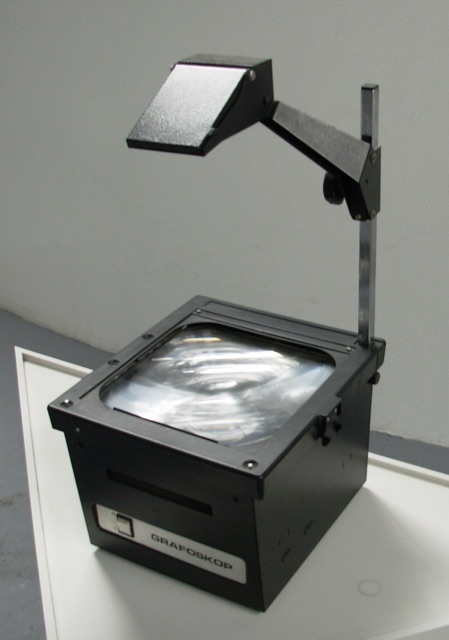
Overhead Projectors
A humming box with a giant mirror arm that threw your teacher's handwriting onto the wall — and, if you were lucky, you were the kid chosen to lay down the next transparency. Overhead projectors ran classrooms for half a century before fading quietly in the 2000s.

Caught Being Good
You held the door for the kindergartners, and suddenly a teacher was pressing a little ticket into your hand: CAUGHT BEING GOOD. Into the jar it went, and on Friday afternoon the whole class held its breath while a name got drawn for the prize box. School surveillance never felt so wonderful.
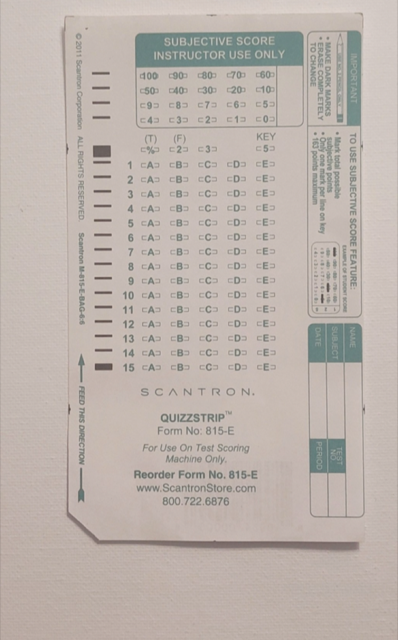
Scantron
The green (or blue, depending on your school) bubble sheet that turned testing into a ritual of dread. The Scantron form—with its perfectly aligned bubbles and #2-pencil-only mandate—wasn't just a testing tool; it was a rite of passage, complete with the terror of erasure shadows and red hash marks on the returned sheet.

Covering Your Textbooks
The first week of school came with homework before you'd learned anything: take home the stack of hardcover textbooks the teacher just issued and cover every single one. You either cut open a brown paper grocery bag and folded it into a snug jacket, or slid on a stretchy fabric cover in a color you actually liked. Then you brought them back the next day for the teacher to check.