Writing Your Name in the School Textbook

A grid stamped inside the front cover: ISSUED TO / YEAR USED / CONDITION. On the first day you wrote your name in the column alongside every kid who'd had your copy before — sometimes going back a decade. You scanned the list for older siblings, anyone you recognized, anyone famous. The condition column warned: New, Good, Fair, Poor — and you'd pay the difference.
For as long as schools have issued textbooks, that front-cover grid has been a running tally. The ritual was standard by the time 90s kids were in elementary school: on distribution day, the teacher would pass around the books, and each student signed their name under the names from previous years. You were writing into history — the handwriting got stranger and looser the further back you went, a timeline of cursive styles and the growing boldness of kids who didn't care if the teacher was watching. Some names were scribbled so hard they tore the page; others were careful and small. You looked for names you recognized: an older sibling from years before, the kid who sat next to you last year, the eighth-grader everyone knew.
The condition column carried its own weight. "New, Good, Fair, Poor" — a hierarchy of wear that you owned. If you damaged the book beyond what was already there, the teacher would note it at year's end and your parents would pay the replacement fee. The column was both a reassurance (look, this book survived seven kids and still works) and a warning: your turn now. The neat handwriting in the "New" and "Good" years gave way to more careless entries in the "Poor" rows — by the time a book reached Poor, maybe kids cared less, or maybe they'd accepted the inevitability. Either way, there was a story in that column.
The ritual quietly faded as schools moved to digital materials and one-to-one devices in the 2000s and 2010s. Fewer issued textbooks meant fewer chances to sign that grid, and the tradition vanished almost without announcement. Where paper textbooks are still handed out, the grid lives on — still asking each student to write their name, still serving as a fragile archive of who came before.
Similar items

Covering Your Textbooks
The first week of school came with homework before you'd learned anything: take home the stack of hardcover textbooks the teacher just issued and cover every single one. You either cut open a brown paper grocery bag and folded it into a snug jacket, or slid on a stretchy fabric cover in a color you actually liked. Then you brought them back the next day for the teacher to check.
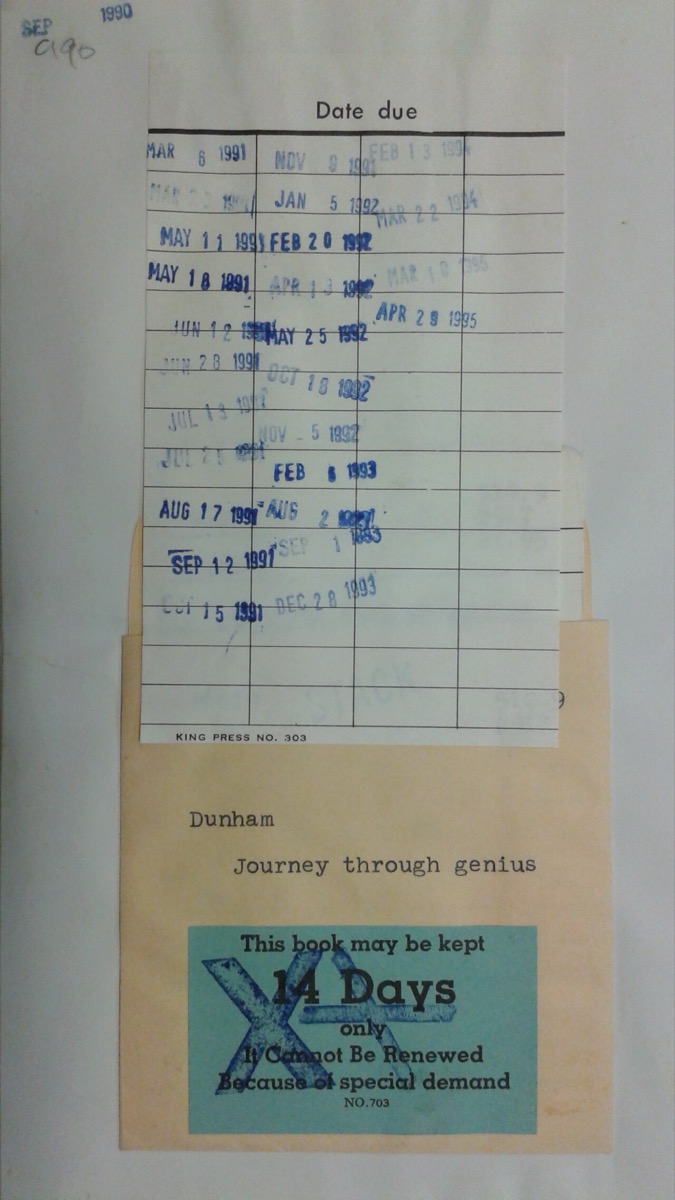
The Library Card & Pocket Checkout
A manila pocket glued inside the back cover of library books, a lined card inside listing every name who'd borrowed the copy before you, stamped with due dates — a fossil record of readers going back years, and you signed in to add yourself to the ledger. Then came barcodes, and 90s kids were among the last to know this ritual.

Eyewitness Books
Visual reference books from Dorling Kindersley that broke the mold of dense gray textbook type. Crisp object photography floating on white pages, labeled and captioned — you didn't read them front-to-back, you wandered them. Within eight years, 18 million copies had sold worldwide; they became the default grab for every school report.

School Assignment Planners
The agenda book your school handed out on the first day — printed with your school's name, a homework grid for every class, and pages of rules and study tips. The Y2K editions came wrapped in a holographic cover that made an irresistible record-scratch sound when you dragged a fingernail across it.