Eyewitness Books

Visual reference books from Dorling Kindersley that broke the mold of dense gray textbook type. Crisp object photography floating on white pages, labeled and captioned — you didn't read them front-to-back, you wandered them. Within eight years, 18 million copies had sold worldwide; they became the default grab for every school report.
Dorling Kindersley was founded in London in 1974 by Christopher Dorling and Peter Kindersley, who pooled £10,000 in savings and built a publishing house on a revolutionary principle: that nonfiction didn't have to be dense columns of type. In 1988, DK launched the Eyewitness series — known in the UK as "Eyewitness Guides" — via a 50/50 joint venture with France's Éditions Gallimard, with U.S. publication through Alfred A. Knopf. The signature look was stark and radically simple: objects photographed on a white background, labeled precisely, with short captions you could enter anywhere. A critic credited DK with reinventing nonfiction by "breaking up the solid pages of grey type," and kids who'd been trained to dread encyclopedias realized these weren't books to memorize — they were books to explore.
The series exploded. Eyewitness Bird and its 54 sibling volumes sold a cumulative 18 million copies within about eight years. By the time you were hitting middle school, the Eyewitness series had become the classroom standard — the shelf every teacher directed you to, the table at the book fair, the cart the librarian wheeled out when you had a report due. A TV adaptation ran from 1995 to 1998 (a DK Vision/BBC Lionheart co-production set in a CGI "Eyewitness Museum" that mimicked the books' stark white aesthetic), airing on PBS in the U.S. with Martin Sheen narrating the first two seasons. The series has now sold over 50 million copies across 160+ titles in 36 languages.
For 90s kids, Eyewitness books were the shortcut to knowledge — you could open any volume to any page and be somewhere else entirely, inside a butterfly, inside the Colosseum, inside the history of costume, with nothing between you and the pictures but a few words. If a dense paragraph lost you, the images carried you forward. That accessibility, and the sheer breadth of the series, made them feel less like school books and more like keys to the world.
Similar items

Scholastic Book Fairs
The ritual: your school gym transforms overnight into a pop-up bookstore of rolling display cases, and you wander the aisles with a wish list and a budget. Scholastic Book Fairs dominated the 90s market, though what kids actually bought — glittery gel pens, novelty pencils, poster books — often had nothing to do with the Goosebumps stacks they wandered past.
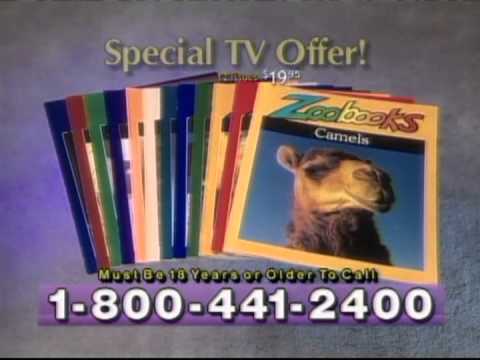
Zoobooks
The glossy wildlife magazine that arrived in your mailbox, each issue a deep dive into a single animal. But the TV commercial — promising a free elephant issue and a tiger poster if you called the 1-800 number — ran on infinite repeat in 90s kids' blocks, embedding itself in the memory of everyone who never got that poster.
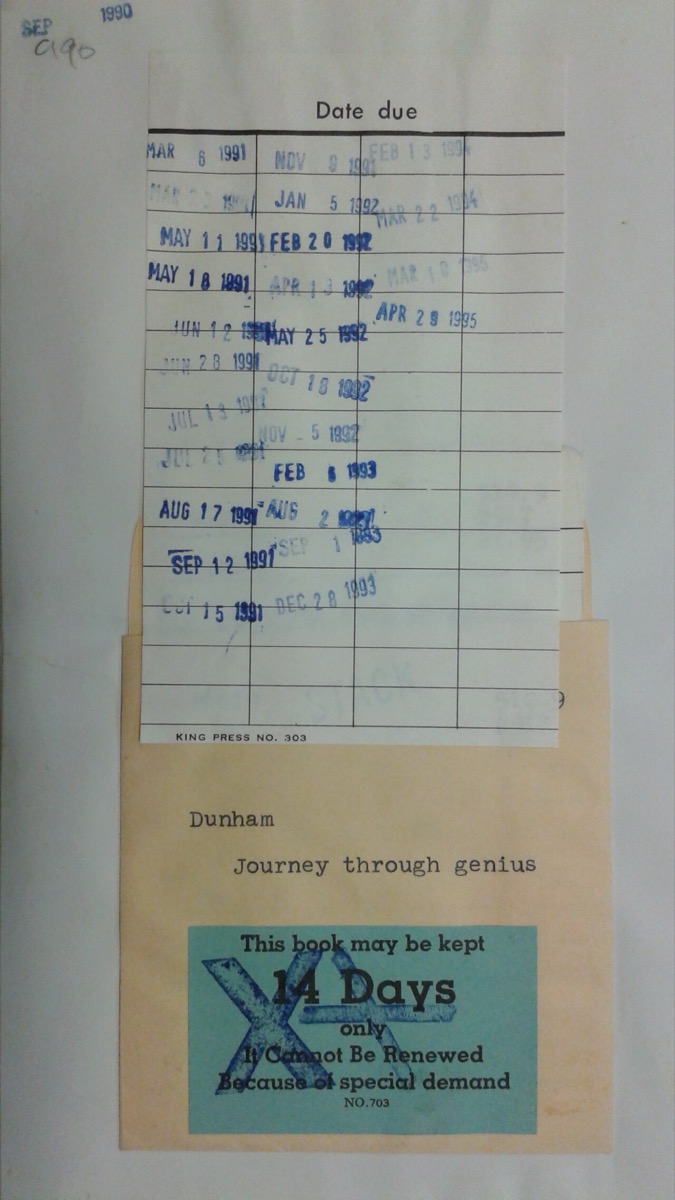
The Library Card & Pocket Checkout
A manila pocket glued inside the back cover of library books, a lined card inside listing every name who'd borrowed the copy before you, stamped with due dates — a fossil record of readers going back years, and you signed in to add yourself to the ledger. Then came barcodes, and 90s kids were among the last to know this ritual.

Writing Your Name in the School Textbook
A grid stamped inside the front cover: ISSUED TO / YEAR USED / CONDITION. On the first day you wrote your name in the column alongside every kid who'd had your copy before — sometimes going back a decade. You scanned the list for older siblings, anyone you recognized, anyone famous. The condition column warned: New, Good, Fair, Poor — and you'd pay the difference.