#Online

12 items

Video thumbnail — Angelfire Hosting Review
Trends 1996–2000s

Angelfire

The free web host where the internet got weird and stayed that way. Angelfire grew into one of the "big three" free-hosting services of the late 90s, offering bare-bones page building for personal fan sites, rants, and niche collections—all with guestbooks, hit counters, and clashing backgrounds.

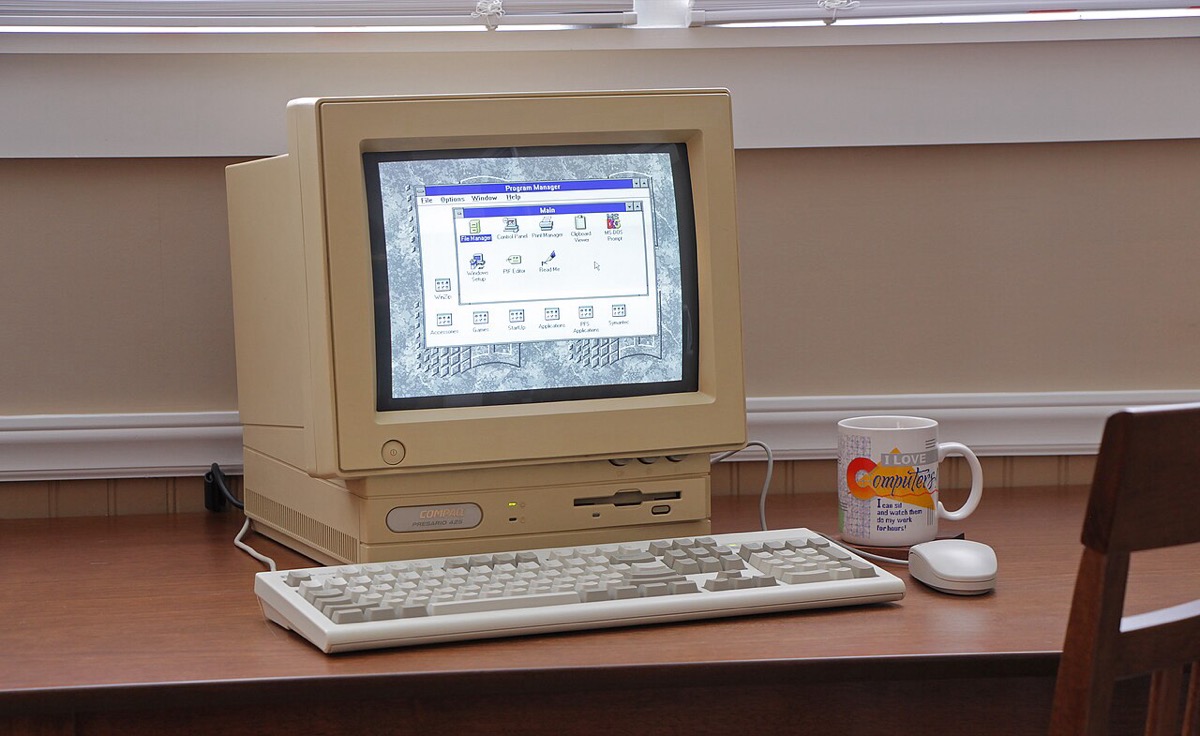
a mid-1990s beige desktop computer — the kind AOL chat rooms were visited on
Trends 1995–2001

AOL Private Chat Rooms

The hidden rooms where 90s internet culture actually lived. Capped at 23 people, joinable only if you knew the name, and greeted by universal "A/S/L?" — private rooms were where friendships, flirtations, and warez trades quietly thrived.

Video thumbnail — Early AOL Commercial (1995)
Tech 1993–2002 peak

AOL

The dial-up gateway that wired up America. AOL's "You've Got Mail" voice, aggressive free-trial CD carpet-bombing, and shift to unlimited $19.95/month pricing triggered the legendary busy-signal crisis — millions of Americans' first taste of the internet.

cashwars
Video Games 1999–2001

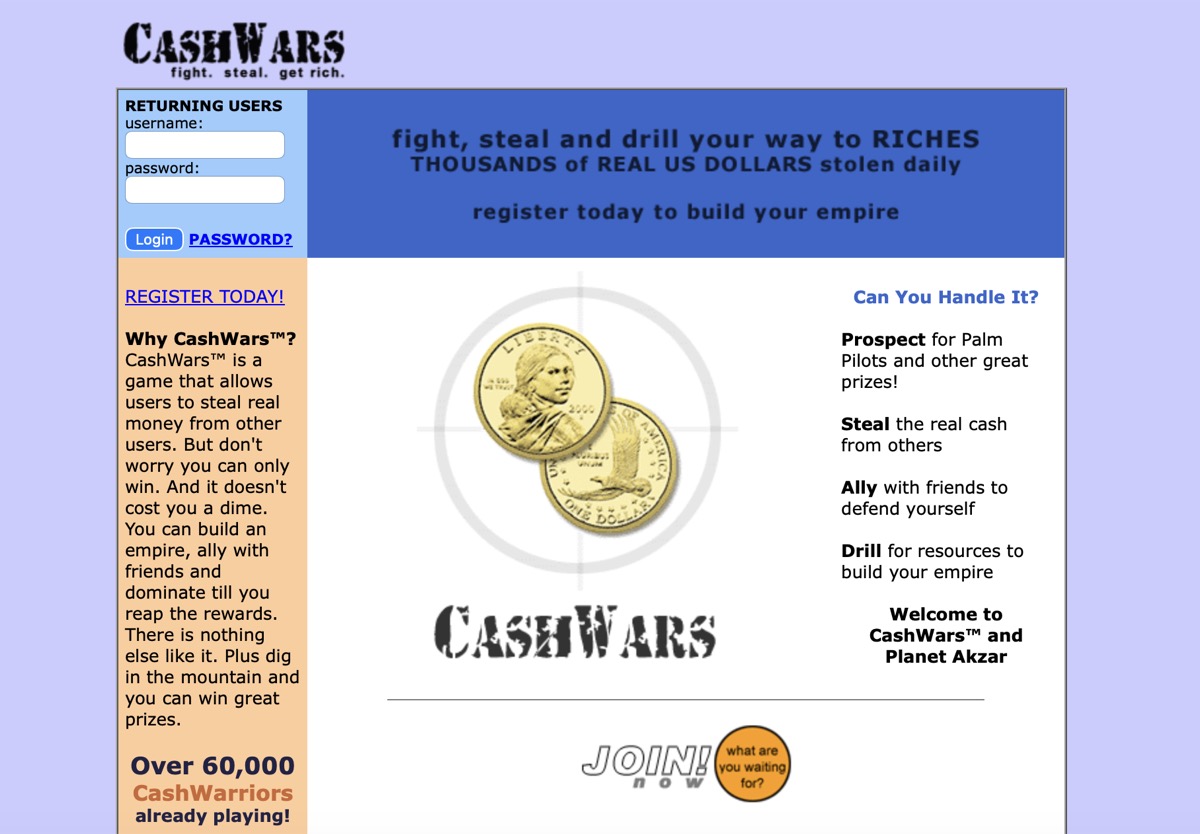
CashWars

A browser-based play-to-earn game where you built an empire in the fictional world of Akzar, drilled for oil barrels, raised stats by spending resources, and raided rival players — with the wild promise that you could cash out and receive a real cheque in the mail.

Video thumbnail — CompuServe Commercial 1996
Tech 1979–1998 peak

CompuServe

The online service before AOL was AOL. CompuServe numbered its users with octal digits, ran tight moderated forums instead of chaotic chat rooms, and invented the GIF. By 1995 it claimed 3 million subscribers — then AOL's cheap flat-rate marketing machine ran it over.

the original YouTube 'Broadcast Yourself' logo (2005–2011)
Trends 2005–2009

Early YouTube

The video platform that made viral content a daily ritual. YouTube launched in 2005 as low-res, ad-free, and gloriously weird—a space where "Lazy Sunday," "Chocolate Rain," and "Charlie Bit My Finger" became the lingua franca of internet culture.

the GeoCities logo — the black 'g' mascot over the blue-and-green wordmark
Trends 1995–2009

GeoCities

The free web hosting empire where the internet learned to be chaotic. GeoCities gave millions of people their first webpage, organized into themed neighborhoods, and established the visual language of under-construction GIFs, MIDI soundtracks, and blinking text that defined the early web.

Video thumbnail — 2003 Neopets TV Commercial
Trends 1999–2008

Neopets

The website where you could adopt a digital pet, battle it in the Battledome, and waste hours playing Flash mini-games to earn Neopoints. Launched by UK students Adam Powell and Donna Williams in 1999, Neopets became a certified after-school phenomenon, drawing tens of millions of users at its mid-2000s peak.

Video thumbnail — AllAdvantage Promo Video (2000)
Trends 1999–2001

Get Paid to Surf

The dot-com fantasy made real: companies would literally pay you to browse the web. Millions signed up for the Viewbar, watched ads while surfing, and actually got checks—until the ad market crashed and the dream evaporated in 2001.

Video thumbnail — Sega Dreamcast 1999 TV Commercial "It's Thinking..."
Video Games 1998–2001

Sega Dreamcast

Sega's last console, a gorgeous white system with a built-in modem that promised arcade quality straight to living rooms. It shipped with one of the most inventive libraries in gaming: Sonic Adventure, Crazy Taxi, Jet Set Radio, and the impossibly niche masterpiece that is Shenmue. The Dreamcast launched with mythical marketing (9/9/99) and died a hero when the PlayStation 2 juggernaut made the economics of console competition impossible.

Video thumbnail — WOW! from CompuServe (1996)
Tech 1996–1997

WOW! by CompuServe

CompuServe's last-ditch answer to AOL — a brightly colored, family-friendly online service with a cartoon interface and unlimited hours for $17.95 a month. It crashed and burned in less than a year, but if you had it, you never forgot it.

the LiveJournal pencil logo and wordmark
Trends 1999–2008

Xanga & LiveJournal

The blogging platforms where a generation over-shared for the first time. LiveJournal and Xanga were where teenagers documented crushes, drama, and bad poetry in semi-public diaries before social networks centralized and monetized the same behavior.