SparkNotes
The night-before-the-essay lifeline. SparkNotes put free study guides for every book you didn't read online in 1999 — teachers dreaded it, everyone bookmarked it, and even Barnes & Noble dumped CliffsNotes from its shelves.
SparkNotes grew out of TheSpark.com, launched January 7, 1999 by four Harvard students — Sam Yagan, Max Krohn, Chris Coyne, and Eli Bolotin. The study guides debuted that April: free online breakdowns of literature, poetry, history, film, and philosophy, with plot summaries, chapter analysis, and themes available instantly at 11 p.m. the night before the essay was due. "No Fear Shakespeare" became the crown jewel, printing the plays' original text side-by-side with modern-language translations.
The old guard noticed. After a 2000 sale to iTurf Inc., Barnes & Noble bought SparkNotes in 2001 for approximately $3.5 million, printed fifty of the guides in paperback — and stopped selling chief competitor CliffsNotes in its stores. The free, online upstart had effectively replaced the yellow-and-black pamphlets a prior generation had hidden inside textbooks.
The site is still running, and students still lean on it. But its defining era is the 2000s, when a school essay on a book you hadn't opened was one browser session away from plausible — and every English teacher in America could quietly tell.
Similar items
The 'You Can't Cite Wikipedia' Speech
Every 2000s student heard the teacher's solemn warning: Wikipedia is not a legitimate source. Every 2000s student had already used it, and would use it again that night. The workaround became a generational skill.
School Assignment Planners
The agenda book your school handed out on the first day — printed with your school's name, a homework grid for every class, and pages of rules and study tips. The Y2K editions came wrapped in a holographic cover that made an irresistible record-scratch sound when you dragged a fingernail across it.
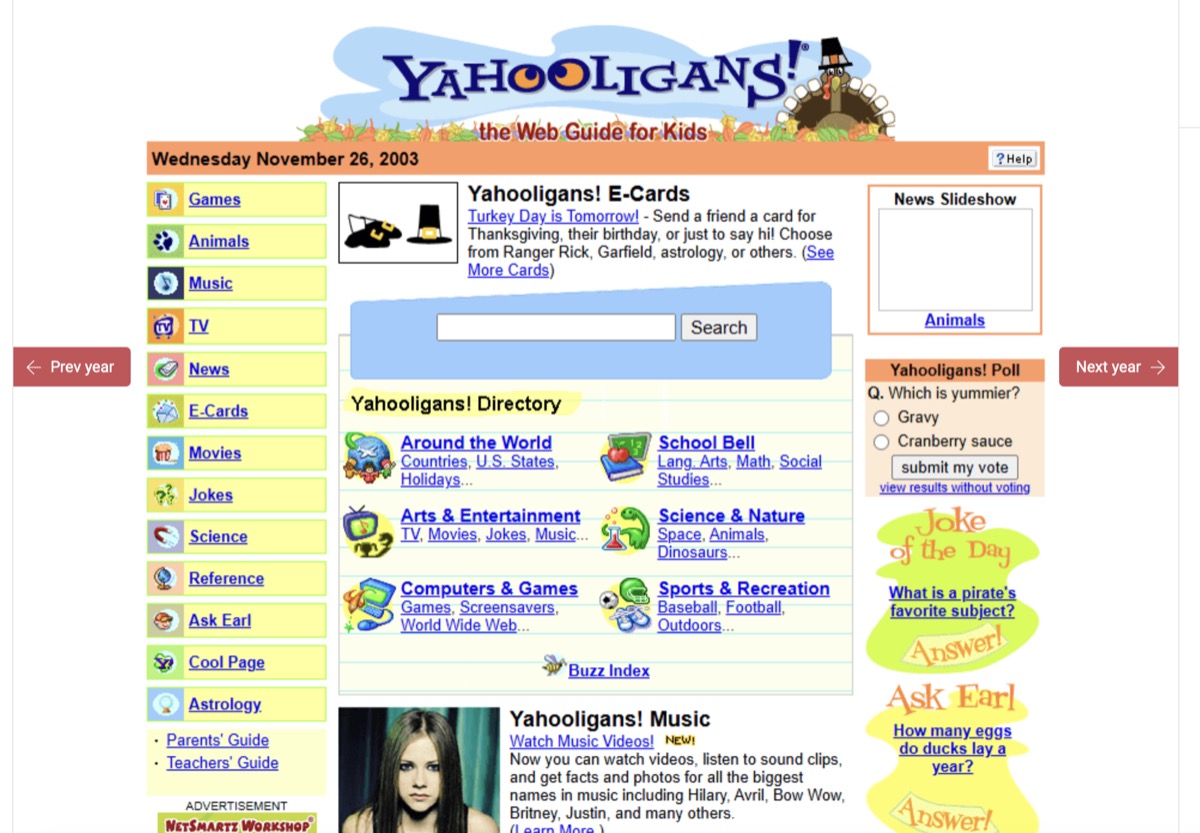
Yahooligans!
The internet with the training wheels on. Yahooligans! was Yahoo's walled garden for kids — a hand-picked web directory where every single link had been screened by an actual former teacher, which is why it was the only homepage your school's computer lab allowed.

Accelerated Reader Points
Finish the book, march to the library computer, pass the quiz, collect the points. Accelerated Reader turned a generation's independent reading into a full-blown economy — with leaderboards, prize walls, and kids doing cold calculations about whether a fat book was worth the point risk.