Study Island
The test-prep site your teacher assigned instead of a worksheet: questions matched to your state's standards, a blue ribbon for every topic you mastered, and a quick game between questions as the bribe for getting them right. Two Vanderbilt fraternity brothers built it for Ohio's proficiency test in 2000; by 2009 it was in 19,000 schools.
Study Island was founded in May 2000 by Cameron Chalmers, a computer scientist, and David Muzzo, an economist, who had met as fraternity brothers at Vanderbilt. The first product was aimed at a single exam, the Ohio Proficiency Test, and the founders said they built it from "the perspective of the student." By 2002 it was in 180 schools across Ohio, North Carolina, New York and Michigan; the company moved to Dallas, and by 2003 it covered ten states and 750 schools.
The model was a web subscription priced, as the company liked to say, at "about as much as a box of crayons" — roughly $3 per student per subject, or $10 for all of them. Students worked through banks of standards-aligned questions in either a standard test format or a game mode that rewarded a right answer with a quick game before the next question, and they earned a Blue Ribbon each time they showed mastery of a topic. Teachers turned the ribbons into contests, which is why a generation remembers counting them. In the 2008–09 school year 8.3 million students in more than 19,200 schools in all fifty states answered 2.8 billion questions, and revenue tripled from $10 million in 2006 to $32 million in 2008.
Providence Equity recapitalized the business in 2007 with the founders staying on, the company was rebranded Archipelago Learning in early 2009, and it went public that November in a $75 million IPO. By 2011 it counted 10.7 million students in 23,000 schools. In May 2012 PLATO Learning bought Archipelago for $291 million and folded it into what is now Edmentum of Bloomington, Minnesota, which still sells Study Island, blue ribbons included.
Similar items

BrainPOP
Tim reads a letter, Moby beeps, and a few animated minutes later the whole class is shouting answers at the quiz. BrainPOP was the website teachers — and especially substitute teachers — put on the projector for any subject under the sun, hosted by a teenager in a topic-appropriate T-shirt and an orange robot who speaks entirely in beeps.
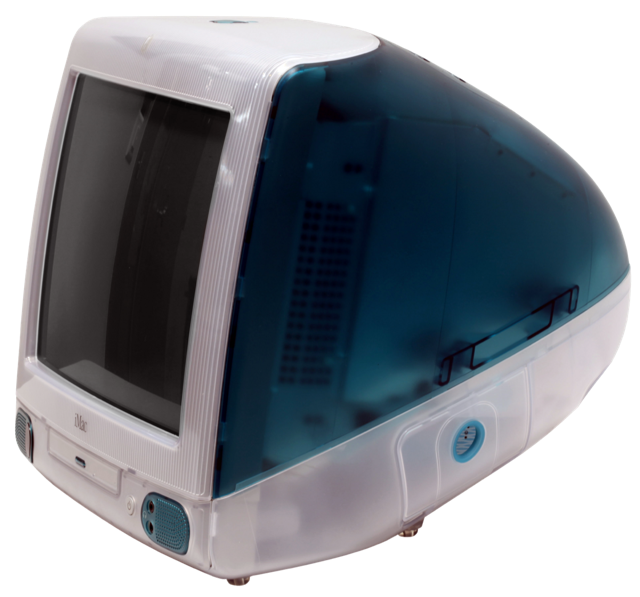
Computer Lab
The weekly pilgrimage down the hall to the room full of beige Apple computers, where you'd slot in a floppy disk, wait, and take turns dying of dysentery on the Oregon Trail. "Computer Day" was equal parts educational software and the first place a lot of kids ever touched a keyboard.
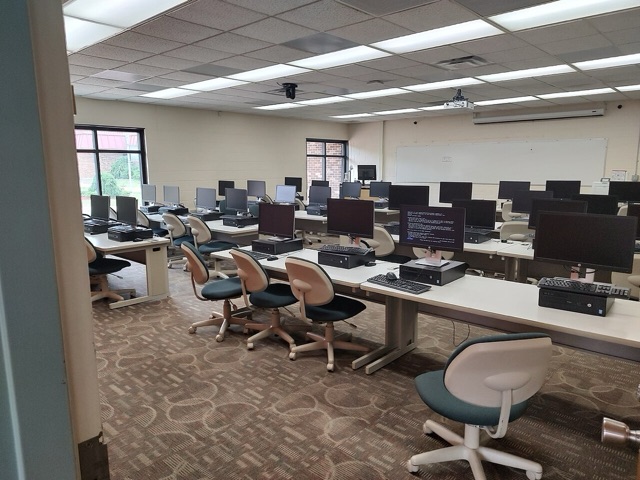
Cool Math Games
The web filter loophole that became a school institution. Cool Math Games' "math" branding kept it off the blocked-site list while every other gaming site got nuked, making it the de facto arcade of every school computer lab in the mid-2000s.

Accelerated Reader Points
Finish the book, march to the library computer, pass the quiz, collect the points. Accelerated Reader turned a generation's independent reading into a full-blown economy — with leaderboards, prize walls, and kids doing cold calculations about whether a fat book was worth the point risk.