#Websites

20 items

Video thumbnail — I Play AddictingGames.com (First Time in 10+ Years)
Trends 2002–2010 peak

AddictingGames.com

The flash-game portal that gave "I'm bored" a URL. AddictingGames launched in 2002 as a constantly updated grid of free browser games, became one of the sites school IT departments most loved to block — and somehow outlived Flash itself.

Placeholder card for Audiogalaxy
Tech 1998–2002

Audiogalaxy

The file-sharing service music nerds still mourn: a website where you queued songs, a tiny program called Satellite that kept hunting for them while you were away, and forums that turned strangers into Italian-prog-rock experts. Audiogalaxy rose when Napster fell in 2001 and went dark on June 17, 2002, the day it settled with the record industry.

Placeholder graphic for eBaum's World
Trends 2001–2008

eBaum's World

The early-2000s comedy and media dump every kid browsed instead of doing homework. Flash cartoons, prank-call soundboards, funny clips, and simple games — all stamped with the site's inescapable watermark, which became the running joke and the scandal at once.

Video thumbnail — Meet Ben Huh, the king of memes
Trends 2008–present

FAIL Blog

A photo of a crooked staircase, a sign with a misspelled word, a skateboarder meeting a handrail, each stamped with one word: FAIL. Launched in January 2008 and bought by the lolcats company that spring, FAIL Blog turned a one-word caption into a noun the whole internet used.

Video thumbnail — The Story of Friendster: The First Social Network's Rise and Fall
Trends 2002–2006 peak

Friendster

The social network you joined before you even knew what a social network was. Millions made their first-ever online "profile" on Friendster — then MySpace came along, and the site that started it all became the cautionary tale.

funbug
Trends 2000–2001

Funbug.com

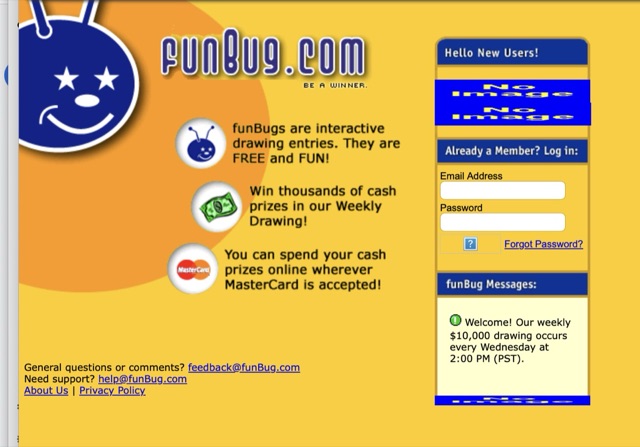
A turn-of-the-millennium site where you played games for a shot at cash, with a $10,000 drawing every Wednesday afternoon and winnings that landed on a funCard MasterCard. It was live by early 2000, folded in the dot-com bust of 2001, and is remembered now mostly as the $3.9 million failure Nick Woodman had before he built GoPro.

Video thumbnail — The Rise and Fall of Gaia Online
Trends 2003–present

Gaia Online

An anime-styled forum where your dressed-up chibi avatar appeared next to every post, and where browsing, posting and playing games earned the gold to dress it. In 2007 its members were making more than a million posts a day.

Video thumbnail — The Hampster Dance website in 1999 in Netscape Navigator 4.04
Trends 1997–2000

The Hampster Dance

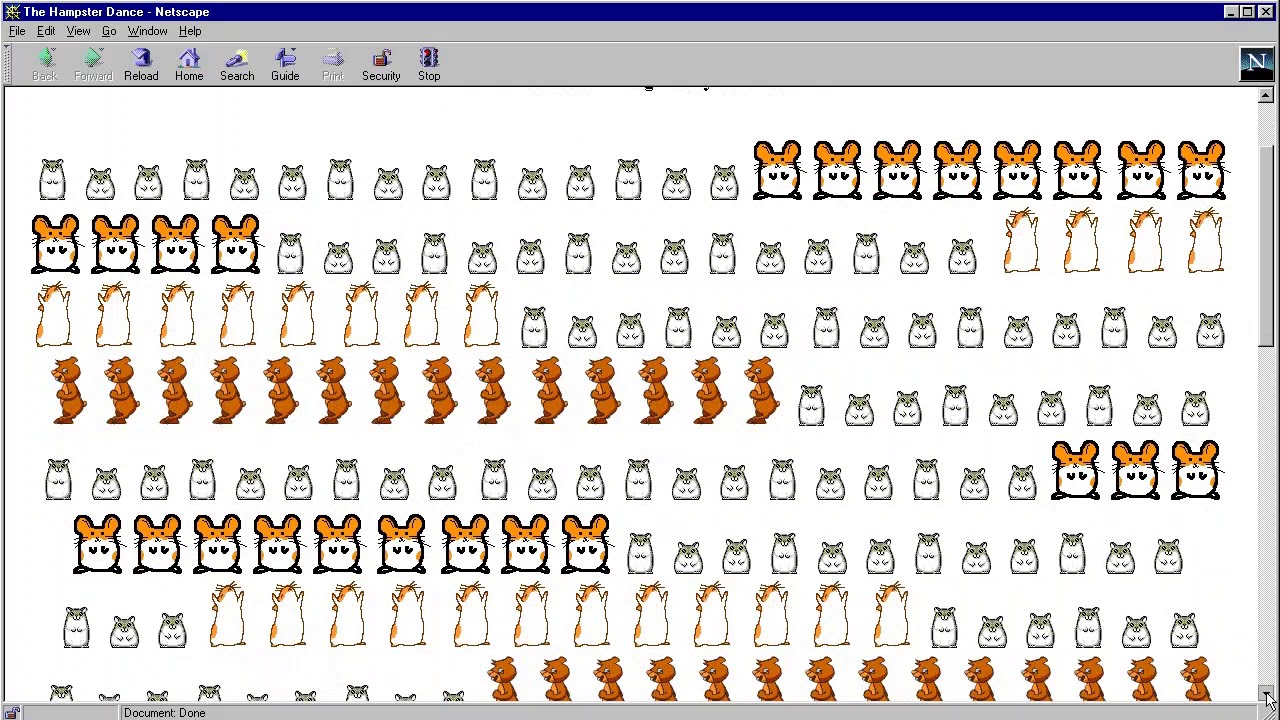
Four animated hamsters repeated ad nauseam, set to a sped-up Disney sample — one of the internet's first viral sensations. Created in 1997 by a Canadian art student as a GeoCities tribute to her pet hamster, The Hampster Dance puttered along unseen until a 1999 email chain sent it stratospheric, spawning hit songs, merch, and a permanent place in internet history.

Video thumbnail — Strong Bad Email #58 - Dragon
Trends 2000–2010 peak

Homestar Runner

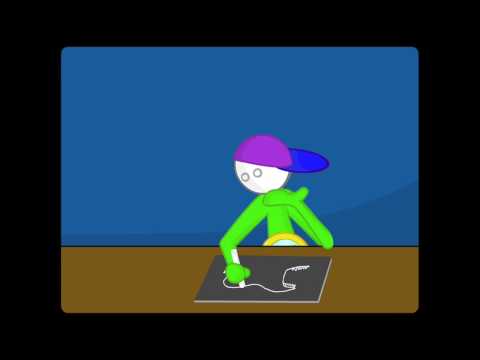
The Flash cartoon empire that ran on merch and goodwill — no ads, ever. The Chapman brothers' site built its voice through Strong Bad's absurd email replies, one of which spawned Trogdor the Burninator, a scribbled one-armed dragon that became internet legend.

Video thumbnail — Millsberry.com
Trends 2004–2010

Millsberry

General Mills' cereal-box virtual town: make a character, earn Millsbucks, furnish a house, and play arcade games named for Reese's Puffs and Lucky Charms. Millsberry ran from 2004 to 2010, the fullest advergame of its era, and signed off by handing every citizen a yearbook.

Video thumbnail — 2003 Neopets TV Commercial
Trends 1999–2008

Neopets

The website where you could adopt a digital pet, battle it in the Battledome, and waste hours playing Flash mini-games to earn Neopoints. Launched by UK students Adam Powell and Donna Williams in 1999, Neopets became a certified after-school phenomenon, drawing tens of millions of users at its mid-2000s peak.

Video thumbnail — Transformers (The 1st Nostalgia Critic Episode!) - Nostalgia Critic
Trends 2007–present

Nostalgia Critic

A man in a black cap and glasses screams at the movies of your childhood. Doug Walker started posting Nostalgia Critic reviews to YouTube on July 3, 2007, got thrown off the site over copyright, built his own, and became the loudest critic of the Flash-era internet.

orkut
Trends 2004–2014

Orkut

Google's first social network — named after the engineer who built it — where you left "scraps" on friends' pages, rated them Trustworthy, Cool, or Sexy, and joined communities for everything. A modest curiosity in America, it became a full-blown national obsession in Brazil and India.

Video thumbnail — Do You Remember Quizilla?
Trends 2002–2014

Quizilla

The website that told you which anime character, color, or boyfriend type you were, then let you prove it on your MySpace page. Quizilla launched on August 4, 2002, was the fourth-biggest teen community online by the time Viacom's MTV Networks bought it in 2006, and closed up shop on October 1, 2014.

sparknotes
Trends 1999–present (peak 2000s)

SparkNotes

The night-before-the-essay lifeline. SparkNotes put free study guides for every book you didn't read online in 1999 — teachers dreaded it, everyone bookmarked it, and even Barnes & Noble dumped CliffsNotes from its shelves.

Video thumbnail — Stickam AD
Trends 2005–2013

Stickam

The live-webcam social network of the MySpace years: a Flash player you could stick on your profile, video rooms with six guest cams, and a who's-live page full of scene kids, emo bands and Andrew W.K. It launched in 2005, was named Nielsen's top video destination for teens in 2008, and shut down on January 31, 2013, with a short goodbye.

Placeholder illustration for Study Island
Trends 2000–present

Study Island

The test-prep site your teacher assigned instead of a worksheet: questions matched to your state's standards, a blue ribbon for every topic you mastered, and a quick game between questions as the bribe for getting them right. Two Vanderbilt fraternity brothers built it for Ohio's proficiency test in 2000; by 2009 it was in 19,000 schools.

Video thumbnail — subservient chicken

Subservient Chicken

A man in a chicken suit stood in a living room on what looked like a live webcam and did whatever you typed: moonwalk, lay egg, do the YMCA. Burger King's Subservient Chicken site, built to sell the TenderCrisp sandwich in April 2004, became the textbook case for viral marketing, and nobody could quite explain it to their parents.

yahooligans
Tech 1996–2006

Yahooligans!

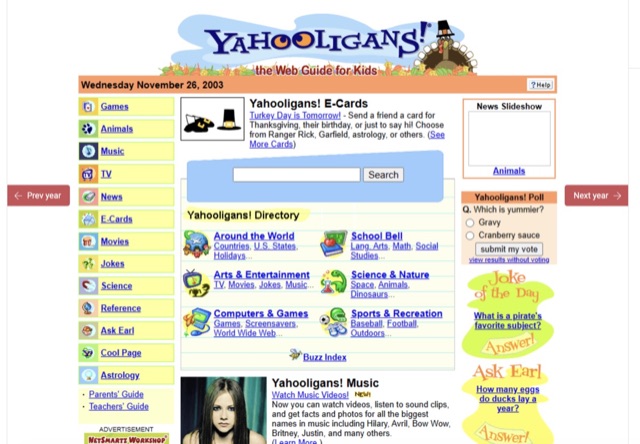
The internet with the training wheels on. Yahooligans! was Yahoo's walled garden for kids — a hand-picked web directory where every single link had been screened by an actual former teacher, which is why it was the only homepage your school's computer lab allowed.

Video thumbnail — Zombo.com flash intro in 1999
Trends 1999–present

Zombo.com

Welcome to Zombo.com. You can do anything at Zombo.com. Anything at all. The only limit is yourself. And then... nothing — the internet's greatest anti-website: pulsing dots, a silky voice making infinite promises, and a quarter-century of delivering absolutely none of them.