SimCity 2000
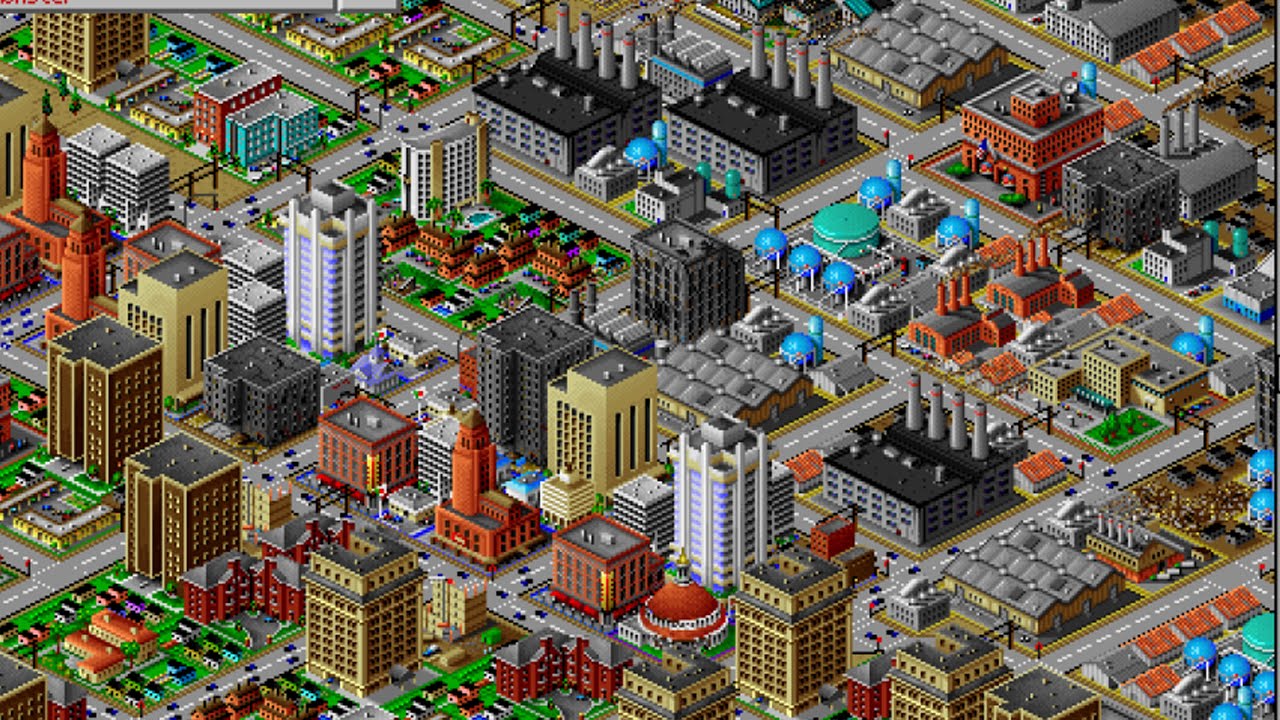
The city-building game that made zoning feel like destiny. SimCity 2000 traded the original's flat grid for a gorgeous isometric view with terrain elevation, underground layers, and a tech tree capped by arcologies — massive self-contained future cities that could blast into space. For a generation of 90s kids on the family PC, it was equal parts urban-planner simulator and disaster-unleashing sandbox.
Maxis co-designers Will Wright and Fred Haslam released SimCity 2000 for the Macintosh in 1993, with DOS and other platform ports following. The shift from the original's top-down perspective to an isometric grid with visible elevation was immediately striking — suddenly you could see the terrain's shape, layer roads over subways over water pipes, and watch infrastructure connect. The feature set exploded: schools, libraries, hospitals, prisons, museums, marinas, and an in-game newspaper that filled your city with lore and in-jokes, including the Maxis team's running llama obsession.
The tech tree culminated in arcologies — massive self-contained cities of the future. Build 300 or more of the top-tier Launch Arcologies and the game rewards you with the "exodus": they blast off into space to found new civilizations, taking their populations with them. Players discovered early that the sandbox's true joy wasn't always steady governance but unleashing disasters — fires, floods, earthquakes, monsters — and watching a carefully built metropolis crumble. And every map began with a phrase that meant nothing at all: "reticulating splines," which Will Wright admitted was included purely because it "sounded cool." It became a Maxis signature carried forward into The Sims.
SimCity 2000 was the default city-building game on family computers through the 1990s, succeeded by SimCity 3000 in 1999. For millions of kids it was a gateway drug to caring about zoning, taxes, and public transit — concepts that seemed impossibly abstract until you had to balance them in pixels, with a llama-obsessed newspaper grading your work.
Similar items

The Sims
Will Wright's dollhouse simulator where you controlled virtual lives, sent them to work, made them fall in love, and then deleted the pool ladder and watched them drown. Launched in February 2000 by Maxis and EA, The Sims became the best-selling PC game of its era—a mania that never ended, spawning sequels that kept the franchise dominant for decades.

SimTower
An elevator game disguised as a skyscraper builder: stack offices, condos, and hotels a hundred floors high, then obsess over elevator schedules while tiny tenants flash red with rage. One of the weirdest, most hypnotic PC sims of the 90s.

Spore
Will Wright's evolution sim promised everything from primordial cell to galactic empire — and its Creature Creator was an all-timer. Then the game itself arrived: shallow where the hype was deep, and wrapped in DRM so hated it drew class-action lawsuits and an Amazon review-bombing for the ages.

RollerCoaster Tycoon
You designed roller coasters and managed an amusement park in this beloved strategy sim. Created almost single-handedly by Chris Sawyer and released in 1999, RollerCoaster Tycoon became a sandbox classic — famous for coaster design and infamous for the player habit of trapping guests. RollerCoaster Tycoon 2 followed in 2002.