Rare Beanie Babies (the misprints and mistakes)

Not the ones Ty retired on purpose, but the accidents: the royal blue Peanut that only shipped for four months, the lobster whose tag said "Punchers," and the Princess bear everybody was sure was a limited edition. For a few years in the late '90s a price guide could turn a $5 elephant into a $2,500 investment, and a surprising number of adults believed it.
The whole craze traces to a color mistake. Beanie Babies had been selling for about $5 apiece for a year and a half with so little interest that stores bought six at a time instead of Ty's twelve-packs, and then on June 3, 1995, Ty released Peanut the elephant in royal blue. About four months later Ty Warner switched the fur to a pale baby blue, after only "a couple thousand" royal blue ones had shipped, according to Zac Bissonnette, who wrote the book on the bubble. Early in 1996 a collector named Peggy Gallagher wrote the first magazine piece about Beanie Babies, for Rosie's Collectors' Bulletin, and leaned on Peanut's rising value; Bissonnette says she made many of the numbers up, and the market then moved to match them. By 1997 a self-published Beanie Baby Handbook valued Peanut at $2,500 and predicted $7,500 by 2008. It sold more than three million copies.
The distinction collectors learned the hard way: retirements were a marketing tool, rarity was an accident. Ty retired characters several times a year and limited stores to 36 of each one per month, which is planned scarcity and nothing more. The genuinely rare pieces were the errors: Pinchers the lobster shipped with tags misprinted "Punchers," and tag misprints in general "sometimes increased the toy's value," as Wikipedia puts it. "People didn't understand that the ones people were making $800 on were really rare," collector Paula Abrinko told Bissonnette. Or, as he told Today about the genuinely rare wingless Quacker, "You don't really hear about those because if you had it, you'd already know." Feeding all of it was Mary Beth's Beanie World, a magazine that printed a secondary-market price list; its first issue in October 1997 had a circulation of 177,000, its second sold 444,045 copies, and one of its ads asked, "How Do You Protect An Investment That Increases By 8,400%?"
Then came Princess. Diana died on August 31, 1997; Ty announced a memorial bear that October, with proceeds going to the Diana, Princess of Wales Memorial Fund, and it reached stores in mid-December. The Memorial Fund's permission came too close to Christmas to meet demand, retailers could order only 12 bears at a time, and the order limit was all anyone heard. On December 24, 1997, The Washington Post found Princess bears selling for $350 and $400 at kiosks in Arlington, Virginia, against a suggested price of $5 to $7. "The biggest myth is that Princess is that she's unusually valuable," Leon Schlossberg of TyCollector.com told Today, which noted that millions were produced the following year; "prices on eBay for Princess are bogus." By the time Ty retired the bear in April 1999 it had reportedly raised $21,880,000 for charity. Even the rarest version, made in Indonesia with PVC pellets rather than the far more common PE pellets, is valued at $100 to $200 in mint condition.
At the peak Beanies made up 10 percent of eBay's sales and people flipped them for as much as ten times retail. Counterfeits arrived in 1997; in late 1997 and early 1998 U.S. Customs seized more than 17,000 fakes at the Chicago and Orlando airports, and one "Royal Blue Peanut" turned up covered in cheap blue pigment. In late summer 1999 Ty announced that every Beanie would be retired at 11:59 p.m. on December 31 and shipped a black bear called The End; a few months later it reversed course with a bear called The Beginning. Mary Beth's magazine published its final issue in August 2001. The royal blue Peanut, the one real accident at the center of it all, is still the exception that keeps the dream alive.
Similar items

Beanie Babies
Ty Warner's small, under-stuffed plush animals launched in 1993 with a genius (and cynical) business strategy: artificial scarcity through deliberate 'retirements' sparked a mid-90s speculative mania. Kids and desperate adults bought price guides, protected tags with plastic sleeves, camped out for McDonald's Teenie Beanies, and treated them as retirement investments before the bubble collapsed around 1999.

Teenie Beanies
When McDonald's put tiny Beanie Babies in Happy Meals in spring 1997, the craze jumped from collector shops to the drive-thru window—100 million toys, gone in two weeks, and a national apology campaign for running out.
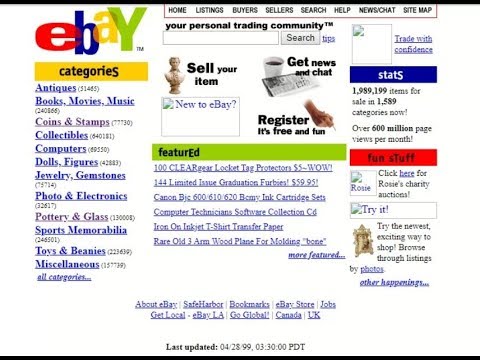
Early eBay
The person-to-person auction era before storefronts and one-click checkout. You photographed your own stuff with a grainy digital camera, hand-wrote the listing in janky HTML, and mailed a check to a stranger whose feedback score was the only thing telling you they could be trusted. Half the thrill was a last-second bidding war; the other half was the box arriving at all.

Baseball Card Collecting
Every kid's shoebox of commons was going to pay for college. Junk-wax-era baseball cards — Topps, Fleer, Donruss, Score, Upper Deck — were printed by the billions while Beckett price guides promised the binder was a portfolio.