#Collectibles

17 items

Video thumbnail — BAKUGAN: BATTLE BRAWLERS COMMERCIALS

Bakugan

2007–2010

The spring-loaded battle-toy franchise from Spin Master and Sega Toys (Bakugan Battle Brawlers), tied to an anime series that launched in Japan in 2007 and on Cartoon Network in the U.S. in 2008. The toys were marble-like orbs that popped open into fierce little figures when rolled onto magnetic metal battle cards — a successor to the Pokémon and Beyblade collect-and-battle craze.

Video thumbnail — BIONICLE 2001 Launch Commercial

Bionicle

2001–2010

LEGO's buildable biomechanical warriors, sold in collectible canisters and wrapped in a sprawling island mythology kids argued about at recess. Part toy, part epic saga — you built the heroes, collected their masks, and followed the lore across comics, books, and films.

Video thumbnail — Crazy Bones Commercial 1998

Crazy Bones

1996–2001

Tiny plastic chunks with names like 'Mosh' and 'Cyclops' that you flicked at one another across playground asphalt. Crazy Bones were the pogs that came after pogs — just as collectible, just as fiercely traded, and just as likely to get you banned from school.

Video thumbnail — Homies: How These Capsule Toys Shaped Chicano Identity

Homies

1998–present

Two-inch figurines from the supermarket vending machine — Smiley, Droopy, Eight Ball and the rest of the barrio crew, each with a stance and a story. You fed the machine pocket change, cranked the knob, and hoped the capsule held the one Homie you were missing.

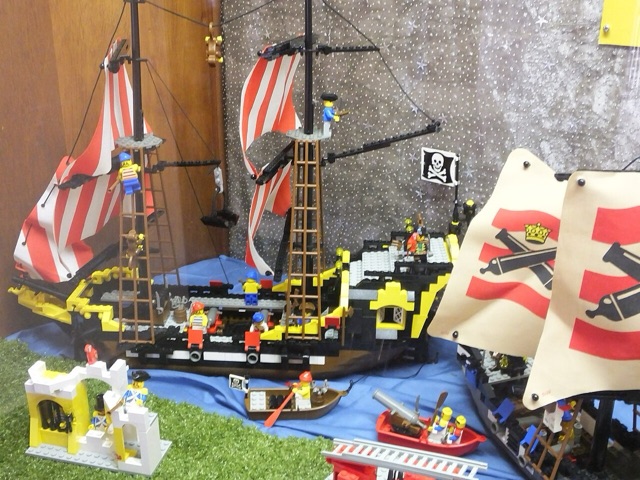
A Lego pirate ship with red-and-white striped sails and a skull-and-crossbones flag, in a display of Lego Pirates sets

Lego Pirates

1989–1997 (original run)

The Lego theme that gave minifigures something other than a plain smile. Starting in 1989, Captain Redbeard and his crew had eyepatches, beards, a hook and a peg leg, and they sailed ships with cloth sails against soldiers in blue coats. The first big ship, the Black Seas Barracuda, is still the one the others are measured against.

Video thumbnail — McDonald's Batman Returns 1992 Commercial

McDonald's Batman Collector Cups

1992–1995

The movie-promo cups and glass mugs that turned a McDonald's run into a Batman artifact. When the Caped Crusader came back to theaters in the '90s, McDonald's turned itself into Gotham City — and a generation kept the glasses in the cupboard for years.

Video thumbnail — Micro Machines 80's Commercials Starring John Moschitta Jr.

Micro Machines

1987–1998

Thumbnail-sized cars, playsets, and whole cities scaled down to fit in your pocket — the whole appeal was how impossibly tiny and detailed they were. Sold by a pitchman who talked so fast you could barely keep up.

Video thumbnail — Mighty Beanz - Original Series 1 Commercial (2003)

Mighty Beanz

2002–2006

Tiny weighted plastic beans with painted faces that flipped, wobbled, and raced down plastic tracks. "Play 'em, race 'em, collect 'em" — a pocketful of these got traded around every 2003 playground.

Video thumbnail — Mr. Bones Candy - (Fleer 1977)

Mr. Bones

1977–1990s

A candy skeleton in a coffin. Each little plastic casket from Fleer held fruit-flavored pieces shaped like bones that snapped together, jigsaw-style, into a full skeleton, if you were lucky enough to get all the parts. It first sold in 1977 and by most accounts was still around in the 1990s, and the empty coffins were kept long after the candy was eaten.

Video thumbnail — 1990's Nestle "Magic Ball" Commercial w/ Disney Characters - Hercules, Simba

Nestlé Magic Ball

1997

A foil-wrapped hollow milk-chocolate ball with a plastic capsule inside, and inside that a tiny Disney figure: Hercules, Simba and the rest of a 24-figure set. Nestlé Magic hit U.S. shelves in 1997 at about a dollar, was pronounced safe by federal toy testers, and was pulled by October anyway, because a 1938 law says candy cannot have a toy inside it.

Video thumbnail — 1991 Puppy Surprise Commercial

Puppy Surprise

1991–early 1990s

"How many puppies?" The plush mother dog with a velcro-sealed belly hiding a litter you couldn't count until you opened her up—three, four, or maybe five. The suspense (and the long odds on getting five) was the whole toy.

Video thumbnail — Ty Beanie Baby Royal Blue Peanut - Fake vs Authentic

Rare Beanie Babies (the misprints and mistakes)

1995–1999

Not the ones Ty retired on purpose, but the accidents: the royal blue Peanut that only shipped for four months, the lobster whose tag said "Punchers," and the Princess bear everybody was sure was a limited edition. For a few years in the late '90s a price guide could turn a $5 elephant into a $2,500 investment, and a surprising number of adults believed it.

Video thumbnail — Wits End Giftique - "Silly Bands" TV Commercial

Silly Bandz

2008–2010

Colorful silicone rubber bands that snapped back into animal and letter shapes when stretched and released, worn stacked on the wrist as a trading currency. Silly Bandz sparked a playground economy so intense, schools across North America banned them to restore order.

Video thumbnail — Spawn and the Birth of Collector Toys | Toysplosion

Spawn Action Figures

1994–1999 peak

Todd McFarlane's hyper-detailed, faintly grotesque action figures based on his Spawn comic — spikes, chains, teeth, and claws painted in a level of detail no toy aisle had ever seen. Aimed at teenage and adult collectors, they made every other action figure suddenly look like a baby toy.

Video thumbnail — Star Wars - The Power Of The Force: Action Figure Commercial

Star Wars: The Power of the Force (1995)

1995–2000

The Star Wars action figures came back in 1995 after ten years off the shelves, and they had been to the gym. Kenner's new Luke Skywalker was built like a bodybuilder and carried a lightsaber so long it was shortened the following year. The line ran until 2000 and carried Star Wars toys from the old trilogy to the new one.

Video thumbnail — Kenner Starting Lineup Basketball Commercial (1988)

Starting Lineup

1988–2001

Kenner's four-inch sports stars in blister packs, each with its own trading card, on toy-store pegs from 1988 on. Kenner shipped them by region, so out-of-town stars were hard to find.

Video thumbnail — Treasure Trolls Dolls Commercial (1992)

Troll Dolls

1959–present

Neon-haired, jewel-bellied good-luck trolls that clipped to pencils and crowded every desk and backpack. Invented by a Danish woodcutter in the 1950s, they rode a huge second wave of popularity in the early 1990s under names like Norfin.