Overhead Projectors
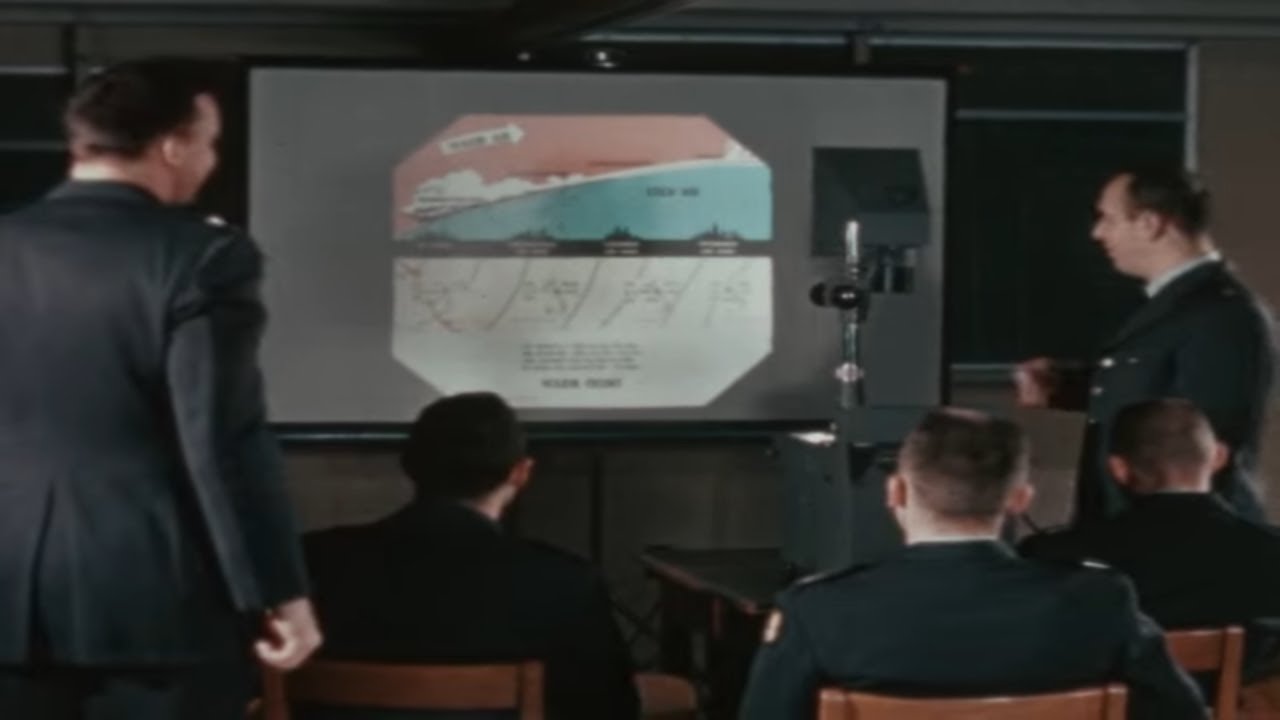
A humming box with a giant mirror arm that threw your teacher's handwriting onto the wall — and, if you were lucky, you were the kid chosen to lay down the next transparency. Overhead projectors ran classrooms for half a century before fading quietly in the 2000s.
Overhead projectors arrived in US military training as early as 1940, during World War II, but schools and businesses didn't widely adopt them until the late 1950s and early 1960s. A turning point came on January 15, 1962, when 3M's Roger Appeldorn presented a cost-effective, foldable version built around a new Fresnel lens made of structured-surface plastic — the flat, ridged lens that made the whole design practical.
The mechanism was elegant: a lamp under a glass platen sent light up through whatever you placed on it, the Fresnel lens redirected that light, and a head mirror and lens focused it onto the wall behind you. Teachers wrote on transparencies — "viewfoils" — with washable wet-erase pens, and those same transparencies got reused year after year, accumulating annotations in the margins. The ritual is what lingered in memory: the hum of the fan, the teacher's giant silhouetted hand gesturing at a concept, the student chosen to lay down the next sheet, the particular chemical smell of the pens.
By the 2000s, all of that began to fade. Document cameras, computer projection systems, and interactive whiteboards arrived with the digital age, and one by one the overhead projectors were wheeled into storage closets. Nothing that replaced them ever let a teacher work a room quite the same way — face to the class, writing as they talked, hand fifteen feet tall on the wall.
Similar items
Filmstrips in Class
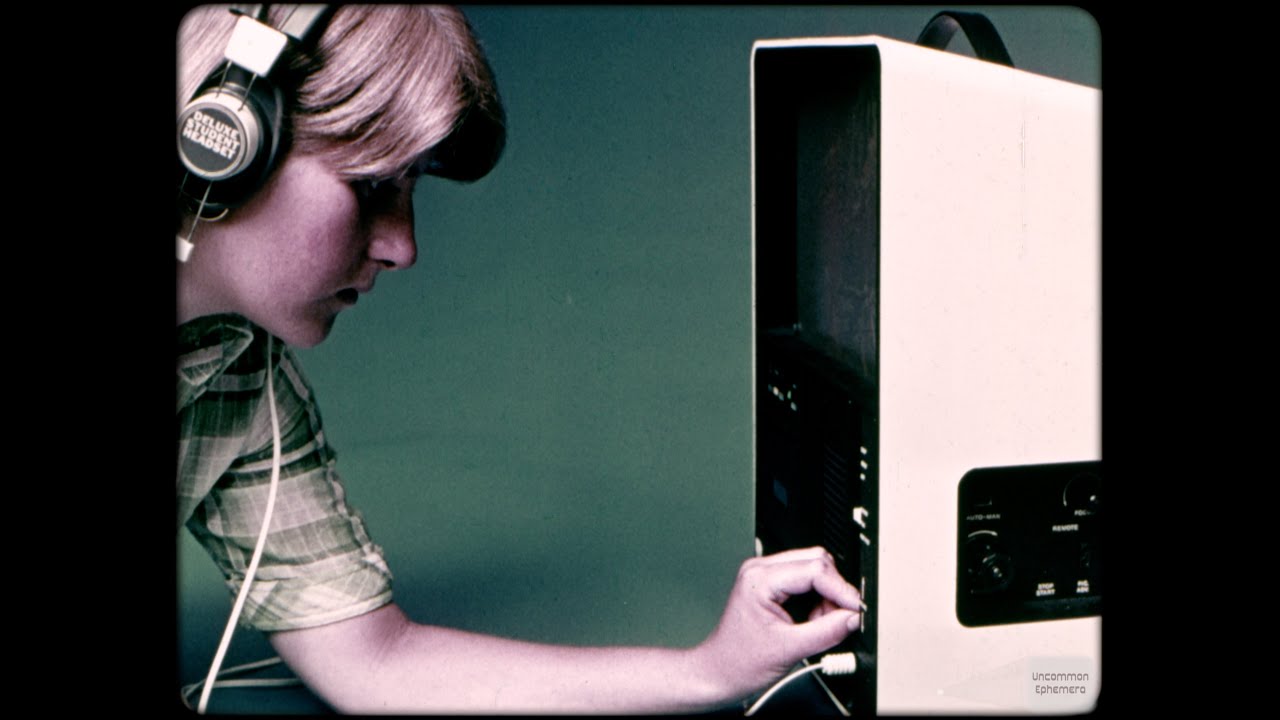
Lights off, projector humming, and a strip of little 35mm frames clicking by one BEEP at a time. Whoever got picked to turn the knob held real power — advance too early and the whole class knew, wait too long and the narrator's beep shamed you from the cassette deck.
Scantron
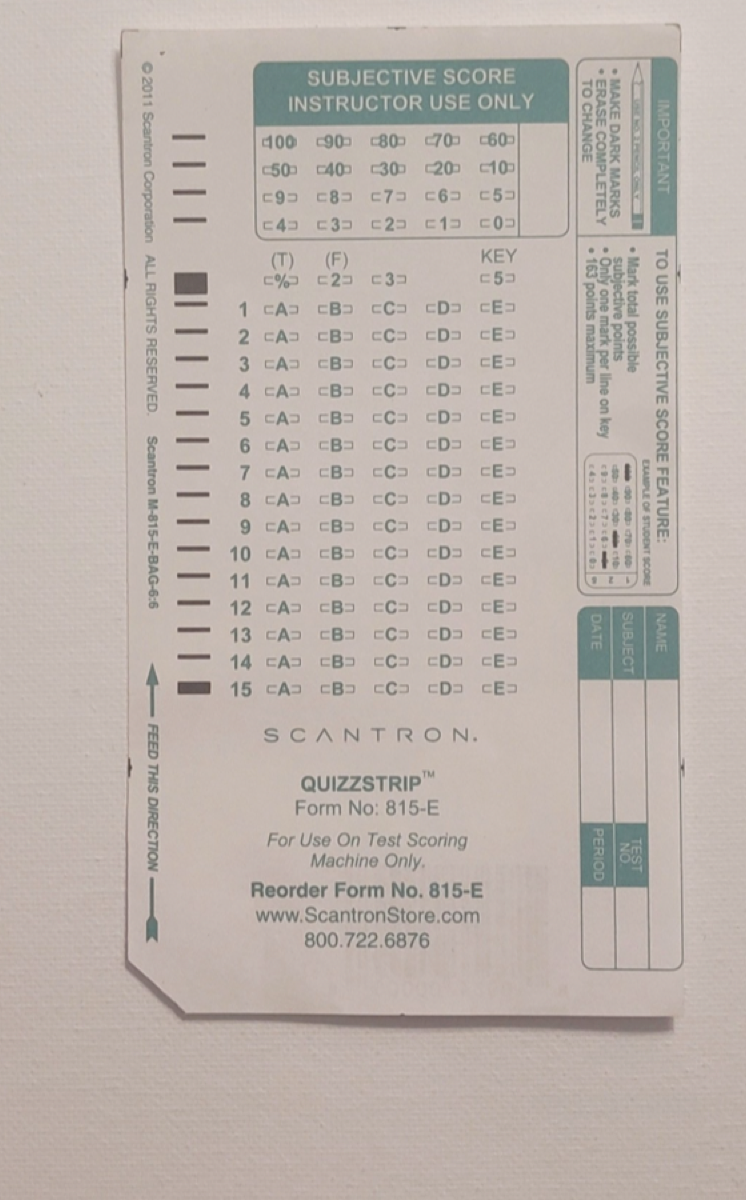
The green (or blue, depending on your school) bubble sheet that turned testing into a ritual of dread. The Scantron form—with its perfectly aligned bubbles and #2-pencil-only mandate—wasn't just a testing tool; it was a rite of passage, complete with the terror of erasure shadows and red hash marks on the returned sheet.
The TV-Cart Day
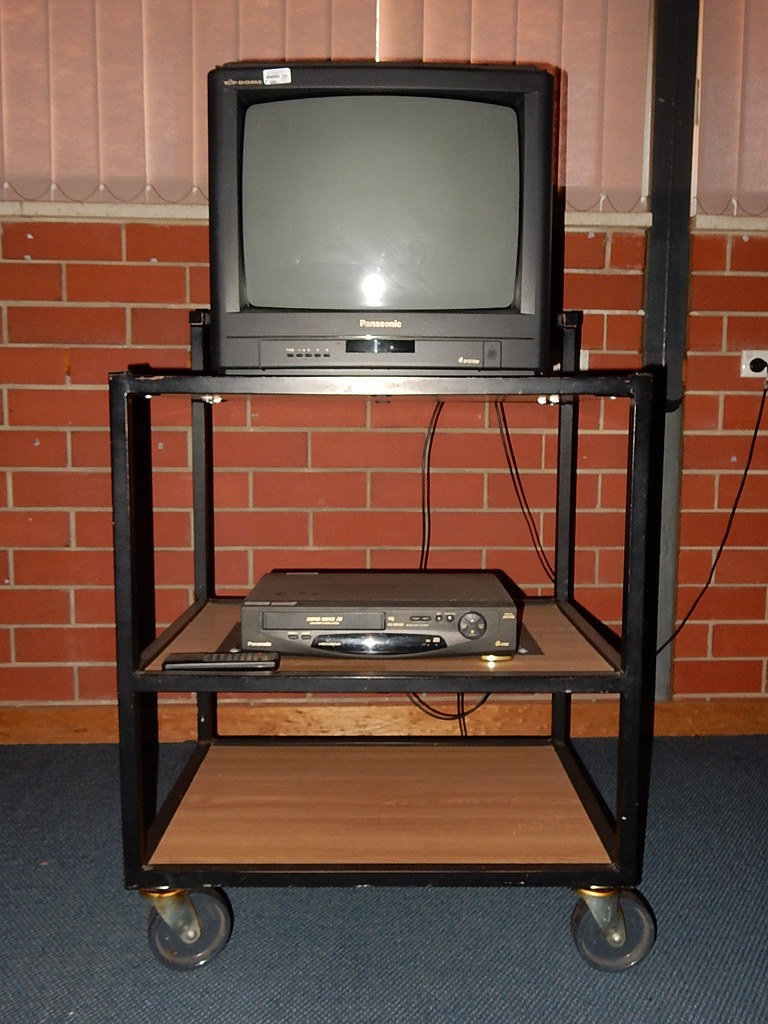
The squeak of wheels in the hallway, the tall metal cart nosing through the classroom door, the TV strapped on top with the VCR on the shelf below — and thirty kids realizing at the same instant that today was not a real school day. No object ever delivered better news than the TV cart.

Card Catalogs
The wall of little wooden drawers that stood between you and every book in the library. Author, title, or subject — you thumbed the worn 3×5 cards, copied a call number onto scrap paper with a golf pencil, and set off into the stacks like you'd been handed a treasure map.