MiniDisc
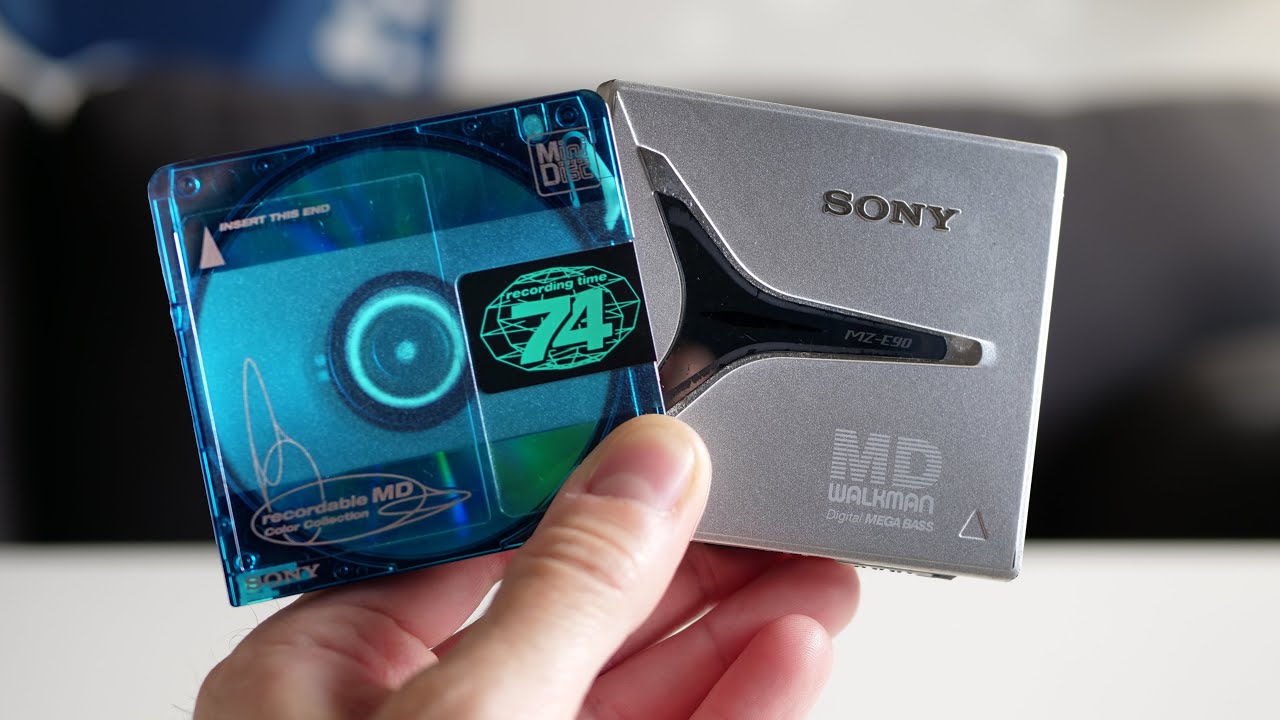
Sony's 1992 answer to the cassette: a recordable digital disc in a plastic shell that let you name tracks, shuffle them around and copy a CD without a hiss, and that played on through a bump thanks to a memory buffer. Japan bought it for twenty years. America shrugged.
MiniDisc was born from a failure. Sony had meant Digital Audio Tape to replace the cassette at home, but by the time DAT launched in 1989 the yen had risen so far that a machine planned at about $400 had to sell for $800 or more, and it was relegated to professionals. Sony wanted a simpler consumer digital format, and Philips, Sony's partner on the compact disc, was building a rival one, the Digital Compact Cassette. Sony announced MiniDisc in September 1992 and shipped it late that year: a small magneto-optical disc in a shell, holding 74 minutes of sound squeezed through Sony's own ATRAC compression, recordable and erasable, with a memory buffer of at least six seconds so that a jolt would not interrupt playback. Because the disc worked like a hard drive with a table of contents, you could name discs and tracks, split, merge, delete and reorder them. The first machine, the MZ-1 recorder, cost $750 in the United States.
The two formats split the market and confused it, a rerun of the videotape war. Sony licensed MD to JVC, Sharp, Pioneer and Panasonic, but in North America chains like Radio Shack pushed DCC instead. In the United States MiniDisc met only limited success: few labels released prerecorded albums on it, the equipment and blanks were expensive, and home decks were rare, so most owners recorded onto a portable from their hi-fi. Then the recordable CD undercut it. Sony had figured CD-R prices would take a decade to fall; blanks were under a dollar by the late 1990s, while the cheapest MiniDisc was still $2 or more. In Japan, though, MD was a mainstream hit, and it did respectably in Europe, so Sony kept building: MDLP long-play modes in 2000, NetMD transfers from a PC over USB in late 2001, and the 1-gigabyte Hi-MD in 2004.
The Rio MP3 player in 1998 and the iPod in 2001 finished the argument. Sony announced the end of MD Walkman shipments in July 2011, stopped making players altogether in 2013 after selling about 22 million of them, and in January 2025 said it would stop making blank discs too. What survives is a small cult and a specific memory: a little clear-shelled disc, a label written in tiny letters, the click of the shutter, and a track title scrolling across a device so small it felt like the future had arrived early and then changed its mind.
Similar items

Walkman
Sony's cassette player made music something you carried: foam-pad headphones, a belt clip, and a pocketful of AA batteries it drained by the week. Born in 1979, it was such a default fact of 90s life that 'Walkman' had long since stopped meaning Sony and started meaning the whole idea.
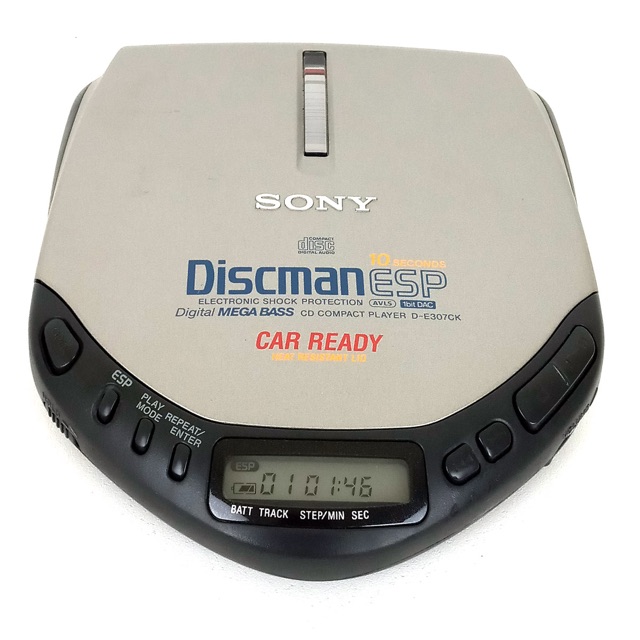
Discman & CD Binders
The ritual of portable CD life: a Sony Discman clipped to your waist or backpack, Electronic Skip Protection bragged on the box, and a zip-up CD binder holding exactly 24 discs — the ones that defined you. CD binders like Case Logic wallets replaced jewel cases, turning your music taste into curated, tangible proof of personality.

Cassette Adapter
A fake cassette with a cord hanging out of it: push it into the car's tape deck, plug the other end into your Discman, and the CD played through the speakers until the next pothole made it skip. The cassette adapter bridged the CD era and the tape-deck car for two decades.
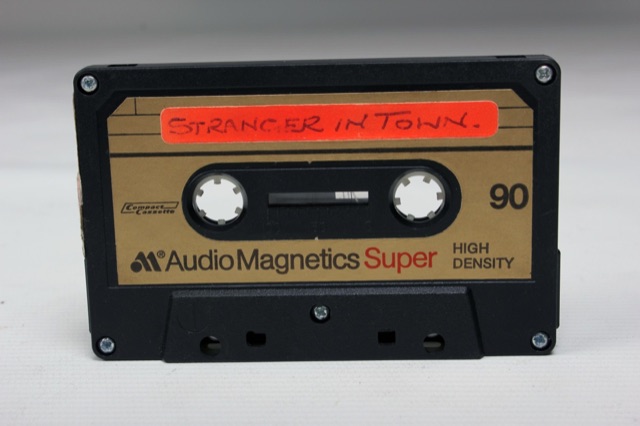
Mixtapes
The compact cassette made music personal; the Walkman made it portable; and the mixtape made it meaningful. A hand-labeled tape was a love letter, a friendship offering, an identity statement — hovering over the record button to catch a song off the radio, agonizing over track order, building the perfect sequence for someone who mattered.