iPod Shuffle

A gum-stick iPod with no screen: you loaded it with iTunes' AutoFill, hung it around your neck, pressed play and took what it gave you. Announced in 2005 as the first iPod under $100, sold with the tagline "Life is random." It bet that surrendering control of your music could feel like freedom — which is roughly how everyone listens now.
On January 11, 2005, at the Macworld Expo in San Francisco, Apple introduced something radical by subtraction: an iPod with nothing to look at. No screen, no click wheel, no playlists on the go. Steve Jobs pitched it plainly — "iPod shuffle is smaller and lighter than a pack of gum and costs less than $100" — and the price was the headline: billed as the "First iPod Under $100," it cost $99 for the 512 MB model (up to 120 songs) or $149 for 1 GB (up to 240). It was Apple's first flash-memory iPod, and the first one whole school buses could afford.
The design was a philosophy. You plugged the stick straight into a USB port, let iTunes' new AutoFill pick songs from your library at random, then wore it on the included lanyard around your neck and pressed play — no way to see what was playing, about 12 hours of battery, your own music arriving as a surprise. Apple's ad campaign leaned all the way in with the tagline "Life is random." What sounded like spin was a genuinely new way to listen — your library, dealt back to you like a hand of cards.
In its second generation, announced September 12, 2006, the Shuffle found its final form: a tiny brushed-aluminum clip-on that Apple called the "world's smallest digital music player" and "the most wearable iPod ever." Clipped to a waistband, a backpack strap, a gym shirt — it stopped being a gadget you carried and became something you wore. The line ran through four generations before Apple discontinued it on July 27, 2017, the little sibling of the iPod family from start to finish.
Its real legacy is the bet it made. The Shuffle wagered that giving up control — no screen, no choosing, just trust — could feel like freedom, and a generation took the deal. That's more or less how listening works now, except the algorithm does the shuffling and calls it a recommendation. The Shuffle got there first, for a hundred bucks, on a string around your neck.
Similar items

iPod
Steve Jobs unveiled the iPod on October 23, 2001, promising "1,000 songs in your pocket." The original model packed a 5GB hard drive, mechanical scroll wheel, and FireWire connection—Mac-only, $399. The click wheel, iTunes Music Store (2003), and later Windows support made it the gateway device to digital music and one of the most influential electronics ever built.
Early MP3 Players
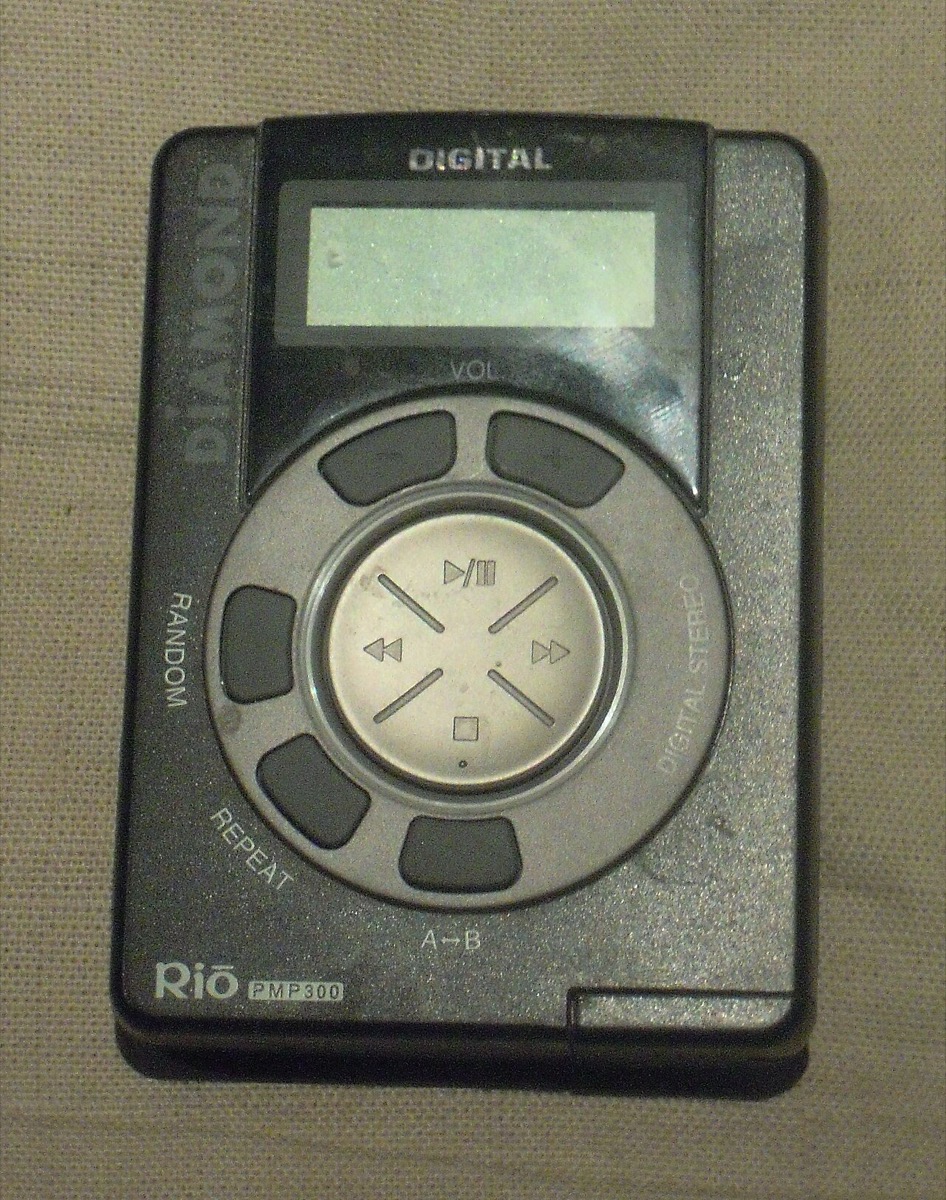
The flash-memory bricks that freed your MP3s from the desktop. Diamond's Rio PMP300, arriving in September 1998 at $200, was the first MP3 player that actually caught on — deck-of-cards sized, running forever on one AA battery, holding maybe eight or ten songs. No moving parts meant no skips, a revelation after a decade of portable CD players. The RIAA sued to kill it; the courts sided with you instead.

Microsoft Zune
Microsoft's answer to the iPod arrived in November 2006 — thicker, later, and available in brown. The Zune became tech's favorite punchline, but the punchline hid real ideas: wireless song-sharing, a subscription music pass years before streaming won, and a UI so good it became the design language of Windows Phone.

Creative Zen & Nomad Jukebox
Your Nomad Jukebox or Creative Zen sounded better than any iPod — more formats, zero iTunes, pure PC-forum credibility — and it battled the white earbuds in every comment thread of the 2000s. Then came the wildest ending in the MP3 wars: Creative sued Apple over a music-navigation patent, and Apple paid $100 million to settle.