Early MP3 Players
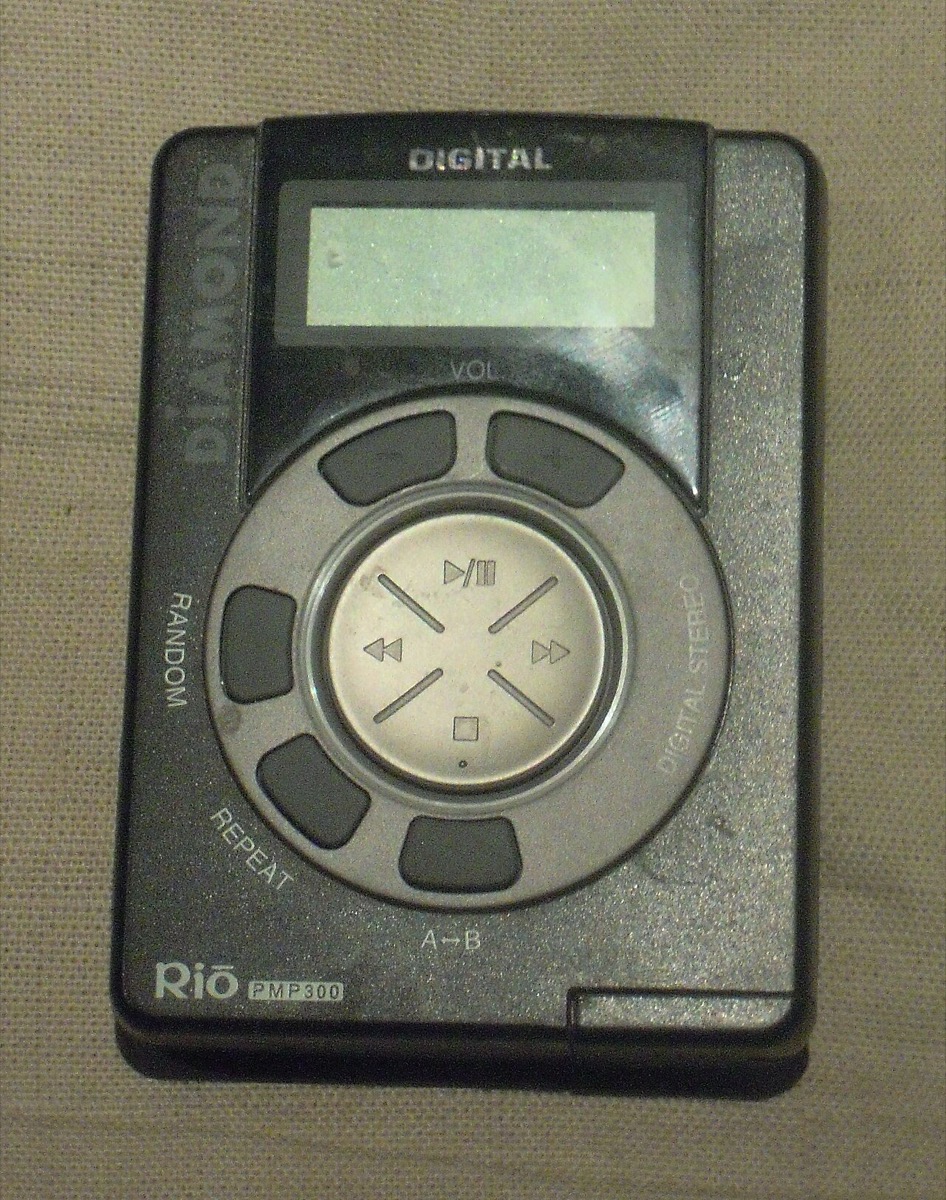
Photo credit: Photo: Targaryen, CC0, via Wikimedia Commons
The flash-memory bricks that freed your MP3s from the desktop. Diamond's Rio PMP300, arriving in September 1998 at $200, was the first MP3 player that actually caught on — deck-of-cards sized, running forever on one AA battery, holding maybe eight or ten songs. No moving parts meant no skips, a revelation after a decade of portable CD players. The RIAA sued to kill it; the courts sided with you instead.
The very first portable MP3 player, Eiger Labs' MPMan, shipped in early 1998, but Diamond Multimedia's Rio PMP300 in September 1998 was the device people actually bought. At $200, the size of a deck of cards, it held 32 MB of audio — roughly thirty minutes of music at 128 kbit/s, call it eight to ten songs — and ran for 8–12 hours on a single AA battery. It loaded music over a parallel-port cable connection to your PC, and because it had no moving parts, it never skipped — an enormous advantage over the Walkman and Discman legacy that had defined portable music for decades.
The RIAA attacked immediately. In October 1998, the music industry sued Diamond, claiming the Rio violated the 1992 Audio Home Recording Act (AHRA), and a temporary restraining order briefly issued mid-October before the court denied it on October 26. The battle played out in the appeals court in 1999, which ruled that "space shifting" — copying music you own from one format to another for personal use — was fair use. The verdict legalized the entire category and cleared the runway for all the MP3 players that followed, most crucially the iPod. The Rio sold roughly 200,000 units on the back of the lawsuit publicity and the freedom it represented.
Rivals piled in between 1999 and 2001 — Sensory Science's RaveMP line, iriver, RCA's Lyra and others — with 64 MB models doubling capacity and memory-card slots stretching it further, all of it fed by Napster folders and Winamp playlists. Then the iPod arrived in October 2001 with a 5 GB hard drive — a thousand songs in your pocket — and within a few years the flash-brick era was over. What lingers is the ceremony it forced: deciding, every single morning, which eight songs deserved to leave the house with you.
Similar items

iPod
Steve Jobs unveiled the iPod on October 23, 2001, promising "1,000 songs in your pocket." The original model packed a 5GB hard drive, mechanical scroll wheel, and FireWire connection—Mac-only, $399. The click wheel, iTunes Music Store (2003), and later Windows support made it the gateway device to digital music and one of the most influential electronics ever built.

LimeWire & Napster
The lawless era of free music: you queued up a download that would take three hours on dial-up, crossed your fingers it wasn't mislabeled, and hoped even harder it wasn't a virus. Napster and LimeWire were the P2P revolution that detonated the music industry, made kids into accidental outlaws, and eventually gave way to iTunes.

Winamp
The media player that ran the MP3 era. Winamp's dark little window with the glowing green equalizer, endlessly customizable skins, and the MilkDrop visualizer pulsing to your music was where a generation organized its first ripped-and-downloaded music collection — and yes, it really whipped the llama's ass.
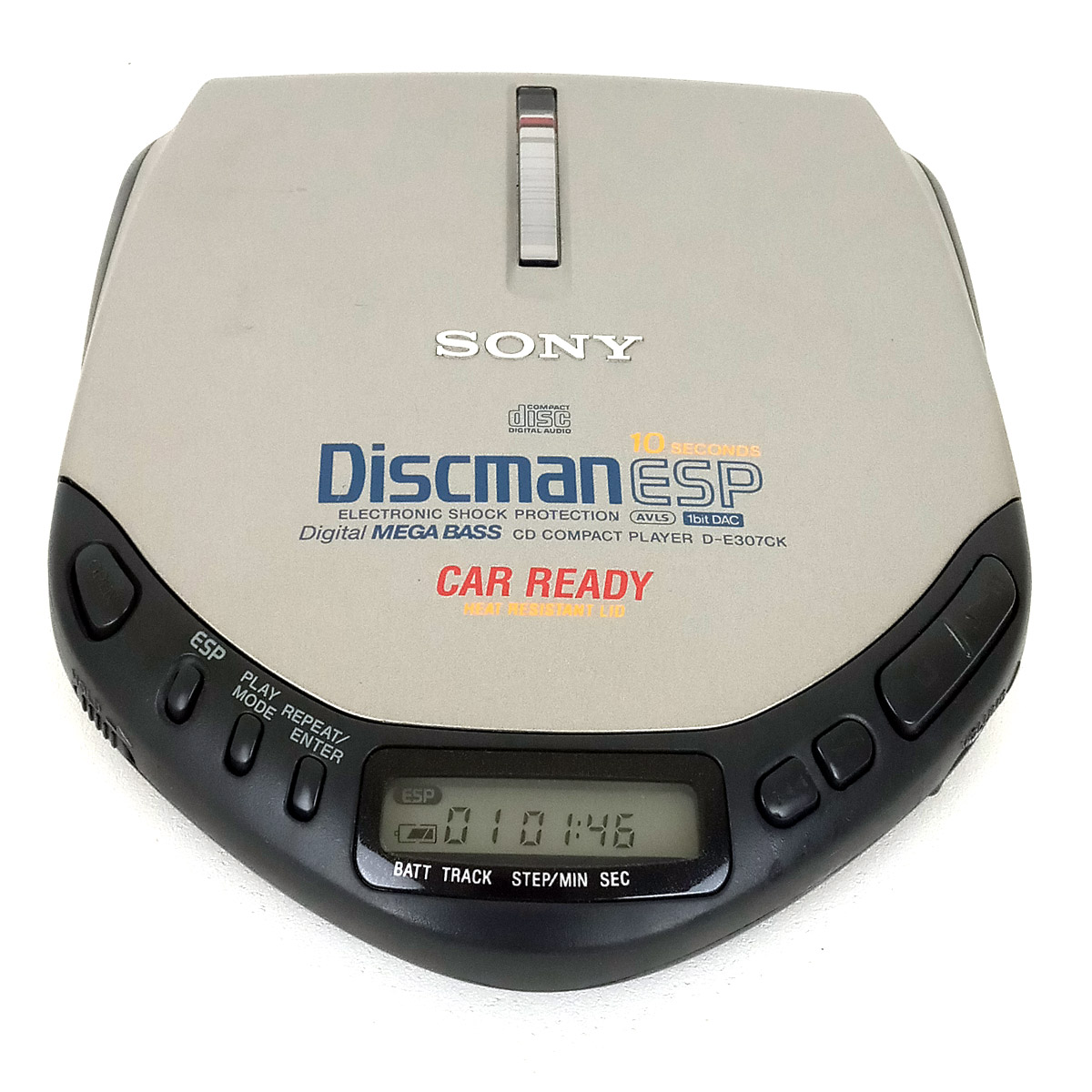
Discman & CD Binders
The ritual of portable CD life: a Sony Discman clipped to your waist or backpack, Electronic Skip Protection bragged on the box, and a zip-up CD binder holding exactly 24 discs — the ones that defined you. CD binders like Case Logic wallets replaced jewel cases, turning your music taste into curated, tangible proof of personality.