iPod nano

The iPod that came out of Steve Jobs's watch pocket. Thinner than a pencil, an ounce and a half, a thousand songs — and a screen that scratched so easily the lawsuits started within six weeks.
Apple introduced the iPod nano on September 7, 2005, as the replacement for the iPod Mini, a swap many watchers called risky; Jobs argued that competitors were catching up to the Mini and the nano would prove more popular still. He unveiled it by pointing at the small watch pocket in his jeans — "Ever wonder what this pocket is for?" — and the ads sold the size: 1.5 ounces, "thinner than a standard #2 pencil," flash memory instead of a hard drive. It came in black or white, $199 for 2 GB (about 500 songs) or $249 for 4 GB (1,000), and Jobs called it "the biggest revolution since the original iPod." Design work had started only nine months before launch. Apple sold silicone "tubes" to add color and guard against scratches, and a lanyard with the earphones built in.
The nano sold its first million units in 17 days and helped push Apple to a record billion-dollar profit in 2005. Then the screens. Within days owners reported scratches so fine and so many that the display went unreadable, some from microfiber cloths, and some screens cracked outright. On September 27 Apple said "less than 1/10 of 1 percent" had shipped with faulty screens, agreed to replace the cracked ones, denied the nano scratched more than earlier iPods, and began shipping a protective sleeve. A class action followed in October, with similar suits in Mexico and the U.K.; by early 2009 a settlement was in the works, with a suggested $22 million set aside.
The second generation, in September 2006, answered with the Mini's scratch-resistant anodized aluminum and its colors, a 24-hour battery and a Product Red edition that sent $10 per U.S. unit to the charity. After that the nano changed shape almost every September: short and wide with a video screen in 2007, tall again in nine "Nano-chromatic" colors with shake-to-shuffle in 2008, a video camera and FM radio in 2009 — the last click-wheel nano — then a square touchscreen in 2010 that accessory makers strapped to wristbands as a watch.
The original had one more chapter: in November 2011 Apple opened a replacement program for first-generation nanos over overheating batteries, after incidents in Japan that included charred tatami mats. The seventh and final nano arrived in September 2012, and Apple discontinued the line, alongside the iPod Shuffle, on July 27, 2017.
Similar items

iPod
Steve Jobs unveiled the iPod on October 23, 2001, promising "1,000 songs in your pocket." The original model packed a 5GB hard drive, mechanical scroll wheel, and FireWire connection—Mac-only, $399. The click wheel, iTunes Music Store (2003), and later Windows support made it the gateway device to digital music and one of the most influential electronics ever built.

iPod Shuffle
A gum-stick iPod with no screen: you loaded it with iTunes' AutoFill, hung it around your neck, pressed play and took what it gave you. Announced in 2005 as the first iPod under $100, sold with the tagline "Life is random." It bet that surrendering control of your music could feel like freedom — which is roughly how everyone listens now.
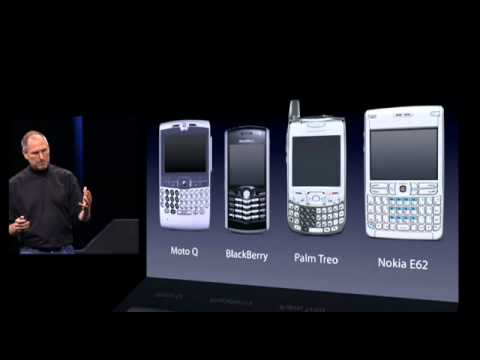
iPhone Launch (2007)
"Today, Apple is going to reinvent the phone." Steve Jobs said it on January 9, 2007, and by June 29 thousands were camped outside stores to find out if he meant it. The lines, the keynote, the $599 price tag — the moment phones changed overnight.

Microsoft Zune
Microsoft's answer to the iPod arrived in November 2006 — thicker, later, and available in brown. The Zune became tech's favorite punchline, but the punchline hid real ideas: wireless song-sharing, a subscription music pass years before streaming won, and a UI so good it became the design language of Windows Phone.