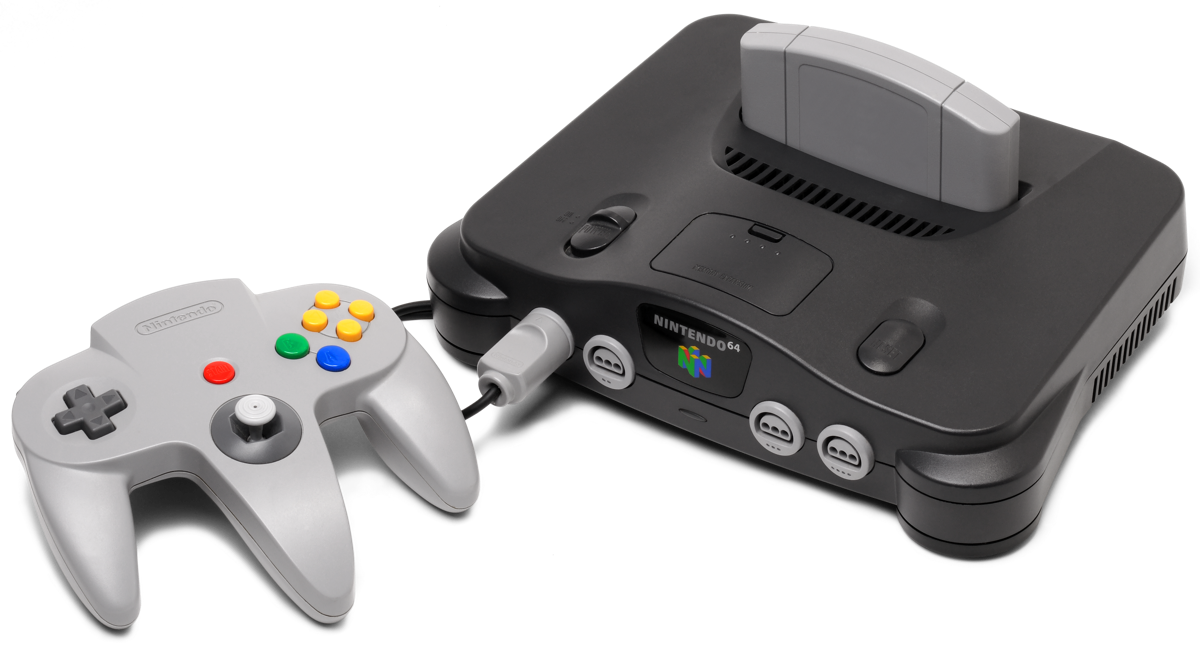
Every December, lists go round of the hot toy of each Christmas past, usually one toy a year with one price beside it. We wanted to take a single year and price its best-sellers from what was put on paper that year: catalogs, newspapers and a press release. The year is 1996, thirty Christmases ago.
That year has a ready-made list. On December 8, 1996, a newspaper in Twin Falls, Idaho printed the year’s ten best-selling toys from a survey of retailers by the trade magazine Playthings. We looked for a 1996 price for all ten in a store’s Christmas catalog, the LEGO company’s own holiday catalog, local newspapers, news reports and Nintendo’s own press release, then ran each price through the Bureau of Labor Statistics’ inflation calculator.
The short version: Tickle Me Elmo was $27.99 in JCPenney’s 1996 Christmas catalog, and a Newsday report that December called it “the $28 Tickle Me Elmo”. The Nintendo 64 had a suggested retail price of $199.95 in Nintendo’s launch-day press release, and the Associated Press reported that it cost “about $200 in stores”. Two shops had Beanie Babies at $5 each. In October 2026 dollars those three prices are $59.56, $425.51 and $10.64.
The ten best-selling toys of 1996, and what each cost
The list comes from The Times-News of Twin Falls, Idaho, for Sunday, December 8, 1996. It ran on page D-2 as a box headed “Top 10 Bestselling Toys”, beside a story about parents, children and the season’s hot toys, and its credit line reads “Source: Playthings magazine 1996 survey of retailers”. We have not seen the magazine itself. The order and the makers’ names below are as the newspaper printed them, and because the box ran on December 8, the survey predates the last weeks of Christmas shopping.
Swipe the table sideways to see every column.
| Rank and toy | A price printed in 1996 | Where it was printed | In October 2026 dollars |
|---|---|---|---|
| 1. Barbie (Mattel) | $16.99 for a Jewel Hair Mermaid Barbie doll | JCPenney Christmas Catalog 1996, page 492, with a $2 maker's rebate for dolls bought by November 15 | $36.16 |
| 2. Star Wars (Hasbro) | $19.99 for a set of four 4-inch Shadows of the Empire figures; $99.99 for a set of four 12-inch figures: Luke Skywalker, Han Solo, Darth Vader and Obi-Wan Kenobi | JCPenney, page 567 | $42.54 and $212.79 |
| 3. Nintendo 64 (Nintendo) | $199.95; "about $200 in stores" | Nintendo's launch-day press release of September 29, 1996; an Associated Press report of December 3. We did not find it in JCPenney's catalog | $425.51 |
| 4. Baby Go Bye Bye (Hasbro) | $24.99 for the doll with its backpack carrier, bottle and brush | JCPenney, page 498, where it is sold under the Kenner name | $53.18 |
| 5. Batman (Hasbro) | $14.99 for a 12-inch Aerial Action Batman with a parachute; $19.99 for a three-pack of Total Justice figures | JCPenney, pages 514 and 558 | $31.90 and $42.54 |
| 6. Saturn (Sega) | $229.99 with the game Bug!; "about $200" | JCPenney, page 582, a price good "only till 12/31/96" and $249.99 after; the Associated Press, December 3 | $489.43; $425.61 for $200 |
| 7. Tickle Me Elmo (Tyco) | $27.99; "the $28 Tickle Me Elmo" | JCPenney, page 514; a Newsday report printed in The Times-News on December 20 | $59.56 |
| 8. Beanie Babies (Ty, Inc.) | $5 each | Town Topics of Princeton, New Jersey, November 20; a Jan's Hallmark advertisement in the Granite City Press-Record of Illinois, November 21 | $10.64 |
| 9. Wild West LEGO system (LEGO) | $93.00 for Fort Legoredo; $54.00 for Gold City Junction; $44.00 for Bandit's Secret Hideout; $27.50 for Sheriff's Lock-Up | LEGO Shop At Home's Holiday 1996 catalog, pages 4 and 5 | $197.91; $114.92; $93.63; $58.52 |
| 10. Bananas in Pajamas (Tomy) | $29.99 for a 16-inch B1 doll that sings its jingle when a hand is squeezed | JCPenney, page 513 | $63.82 |
We read every catalog and newspaper price in this table from a scan of the printed page. The Associated Press report is from the Los Angeles Times’ own archive, and Nintendo’s press release from an archived reprint. Seven of the ten rows have a price from one book, the JCPenney Christmas Catalog 1996, which is on the Internet Archive. We could not find the other three in it: the Nintendo 64, Beanie Babies and the LEGO Wild West sets.
Two cautions. A catalog price is one seller’s price, and stores set their own; our Game Boy price article found three chains charging three different amounts for the same handheld. And several names on the list are whole toy lines, so the price beside them is for one product in the line that we could find in print. The catalog sells both kinds of Star Wars figure above in sets of four, for instance, which works out to about $5 for a small figure and about $25 for a large one. Kenner’s relaunched small figures have their own entry here, Star Wars: The Power of the Force; we did not find a 1996 price for one sold on its own.
What Tickle Me Elmo cost in 1996: $27.99, $28, $28.99 or $39.95
JCPenney’s catalog has Tickle Me Elmo on page 514, under the heading “Sesame Street toys from Tyco”:
“Tickle his tummy once to make him giggle, twice to make him laugh longer. Tickle him a third time and he shakes with laughter!”
The price is $27.99, batteries included. The page does not treat Elmo as its star. He is the fourth of four Sesame Street listings, and the big photograph at the top of the page, with a large-type price beside it, is of Talking Farmer Ernie and Talking Big Bird, at $24.99 each. Many rebate offers in the catalog require a purchase by November 15, 1996, so the book was printed well before the December rush.
By December the price was the least of it. A Newsday report, printed in The Times-News on December 20, said that “few children are asking Santa Claus for the $28 Tickle Me Elmo” and quoted a Tyco Preschool spokesman: “This is an adult-driven craze.” The same report said the doll was “fetching close to $2,000 on the black market, according to toy industry experts”, and that asking prices in that Wednesday’s Newsday classified advertisements “ranged from $275 to $2,000”. At Toys “R” Us, it said, customers were getting rain checks that the chain did not expect to finish honoring until April.
The reports of the time also say how far the orders missed. A Los Angeles Times column of December 16 said that Tyco, going by early store orders, “had anticipated selling about 300,000”, and had since raised production to 50,000 Elmos a week. Newsday quoted Ron Dubren, one of the toy’s two inventors, as saying the company produced 400,000, “which was what retailers initially ordered”. In both reports Tyco was hoping to reach 1 million by Christmas. Newsday put the estimated holiday demand at 2 million.
Stores did not all charge $28. On December 20 the Puzzle Zoo toy store in Santa Monica drew a crowd of 250, the Los Angeles Times reported, and picked 50 shoppers by lottery for the chance “to pay $39.95 for a doll”. That is $85.02 today. A reader’s letter in the same paper on Christmas Day called Elmo “a $29.95 toy”.
One more figure was printed just after the season. People magazine’s issue of January 13, 1997 said scalpers were “asking as much as $1,500 at year’s end, though Elmo retails for a mere $28.99”. That is the price Wikipedia’s article gives, citing People, and the one in our own Tickle Me Elmo entry. It is $61.69 today. So the prices printed for one doll that winter run $27.99, $28, $28.99, $29.95 and $39.95, depending on who was selling it or writing about it.
What the Nintendo 64, Saturn and PlayStation cost at Christmas 1996
Nintendo’s press release dated September 29, 1996 said the Nintendo 64 “launches in the U.S. today at a manufacturer’s suggested retail price (MSRP) of $199.95”, and gave Super Mario 64 a suggested price of $69.95, which is $148.86 today. We went through the console’s figure in our comparison of the N64 with ModRetro’s M64. The Los Angeles Times review of September 30 rounded it: “At $200, the cartridge-based Nintendo 64 delivers blistering speed and tack-sharp graphics”.
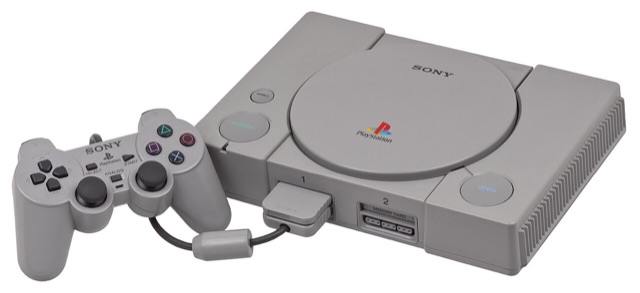
An Associated Press report of December 3, which the Los Angeles Times ran under the headline “Video Games Back at Top of Shopping Lists”, priced all three consoles for Christmas shoppers. Of the Nintendo 64 it said: “The system costs about $200 in stores, with each game tacking on an additional $70 on average.” Of the PlayStation and the Saturn: “Both game players retail for about $200, with games costing an average of about $50 each.” The report opens with Super Mario 64, which it calls “a big hit this holiday season”.
The Nintendo 64 was also hard to find. On October 13, 1996, Target ran a notice in The Times-News: “Due to an unprecedented demand for Nintendo 64 and the manufacturer’s inability to ship sufficient product, only limited quantities of the Nintendo 64 system and games advertised in this week’s Target advertising supplement will be available.”
JCPenney’s catalog shows what one seller did with the other two. Page 582 has the Sega Saturn at $229.99 with the game Bug! in the box, a price marked “only till 12/31/96”, with $249.99 printed as the price after that. Saturn games on the page run from $29.99 to $59.99. The same page has a section for the PlayStation (the catalog spells it “Play Station”) that sells five games, from $29.99 to $54.99, and controllers. The console is not on the page, and we did not find it elsewhere in the catalog.
Four pages earlier, on page 578, the catalog has two Game Boys at one price: the original with Tetris at $59.99, and the smaller Pocket Game Boy at $59.99. That is $127.66 today.
Three more toys from the 1996 JCPenney catalog
These were not on the Playthings list, but each has an entry here and a price in the same book.
Swipe the table sideways to see every column.
| Toy | 1996 price | Catalog page | In October 2026 dollars |
|---|---|---|---|
| Talking Buzz, a 12-inch Buzz Lightyear from Toy Story | $27.99 | 504 | $59.56 |
| Sky Dancers Pretty Lights set: a launcher and two dancers | $24.99 | 497 | $53.18 |
| Snacktime Cabbage Patch Kid | $44.99, with a $5 maker's rebate for dolls bought by November 15 | 500 | $95.74 |
Talking Buzz cost exactly what Tickle Me Elmo did, ten pages earlier in the same catalog. Next to it on page 504 is a soft Mr. Potato Head at $14.99, and the Associated Press report has a line on that: “the video release of ‘Toy Story,’ the box-office hit from last Christmas, has awakened interest in classic toys like Mr. Potato Head and Slinky Dog”. The same report lists Mattel’s Cabbage Patch Kids, “especially its new SnackTime Kid”, among the strong contenders in dolls, and puts Goosebumps and anything tied to Space Jam on children’s wish lists.
What we could not price from 1996 print
Holiday Barbie is the gap we most wanted to fill. The Associated Press said on December 3 that “Holiday Barbie is having another big year, with inventories already low” in parts of the country. JCPenney’s catalog sells 1996 Holiday Barbie keepsakes: an ornament at $12.99 on page 489, and a plate at $30.00 and another ornament at $12.50 on page 332. We did not find the doll itself in the catalog, or its price in anything else printed that year. The table’s Barbie row is a doll from the toy pages instead.
The other gap is the Playthings magazine itself. The ranking is as one newspaper printed it, and we could not check it against the trade magazine’s own pages.
How the 1996 prices were converted to 2026 dollars
Every figure in the right-hand columns comes from the Bureau of Labor Statistics’ CPI Inflation Calculator, set from December 1996 to October 2026. We ran it on November 18, 2026. By that measure $200 in December 1996 has the buying power of $425.61 in October 2026.
The calculator follows consumer prices in general, not toy prices. So the 2026 figure says what a 1996 price tag would feel like in a 2026 wallet. It does not say what the toy would sell for today.
Sources
- JCPenney Christmas Catalog 1996 (pages 332, 489, 492, 497, 498, 500, 504, 513, 514, 558, 567, 578 and 582) · J.C. Penney Company, via the Internet Archive
- LEGO Shop At Home, Holiday Magic Catalog, Holiday 1996 (pages 4 and 5) · The LEGO Group, via the Internet Archive
- The Times-News, December 8, 1996, page D-2: Top 10 Bestselling Toys (source: Playthings magazine 1996 survey of retailers) · The Times-News, Twin Falls, Idaho, via the Internet Archive
- Nintendo 64 launch-day press release, September 29, 1996 (reprinted with Super Mario 64's ad blurbs) · Nintendo of America, via MobyGames
- Tyco: Adults are source of Elmo-doll craze (Newsday; The Times-News, December 20, 1996, page D-2) · The Times-News, Twin Falls, Idaho, via the Internet Archive
- Video Games Back at Top of Shopping Lists (Associated Press, December 3, 1996) · Los Angeles Times
- New Nintendo 64 Is a Technical Wonder (Aaron Curtiss, September 30, 1996) · Los Angeles Times
- Town Topics, November 20, 1996 (profile of the shop Neat Stuff) · Town Topics, Princeton, New Jersey, via the Internet Archive
- Granite City Press-Record, November 21, 1996 (Jan's Hallmark advertisement) · Granite City Press-Record, Granite City, Illinois, via the Internet Archive
- CPI Inflation Calculator ($27.99 in December 1996, in October 2026 dollars) · U.S. Bureau of Labor Statistics
Show all 16 sources Show the first 10 only
- The Times-News, October 13, 1996 (Target notice about the Nintendo 64) · The Times-News, Twin Falls, Idaho, via the Internet Archive
- Frenzied Toy Quest Doesn't Tickle This Mom (Sandy Banks, December 16, 1996) · Los Angeles Times
- Quest for Elmo Tickles Consumers' Fancy in Many Ways (Duke Helfand, December 21, 1996) · Los Angeles Times
- Elmo Toy (reader's letter, December 25, 1996) · Los Angeles Times
- Just Tickled (January 13, 1997, vol. 47 no. 1) · People, via the Internet Archive's Wayback Machine
- Tickle Me Elmo: the version of November 1, 2026, current on November 18 · Wikipedia
In this article

Tickle Me Elmo
1996
The furry red monster that laughed when you tickled it — and triggered a holiday stampede that redefined toy panic. Released in July 1996 at $28.99, Tickle Me Elmo became the blueprint for every must-have frenzy to follow, complete with store stampedes and thousand-dollar scalper asks.

Nintendo 64
1996–2002
Nintendo's leap into three dimensions, the N64 brought 3D polygon gaming into living rooms with its quirky three-pronged controller and a cartridge library anchored by Super Mario 64 and The Legend of Zelda: Ocarina of Time. Its rumble pak added tactile feedback, while its four controller ports made it the console of couch multiplayer legends.

Beanie Babies
1993–1999
Ty Warner's small, under-stuffed plush animals launched in 1993 with a genius (and cynical) business strategy: artificial scarcity through deliberate 'retirements' sparked a mid-90s speculative mania. Kids and desperate adults bought price guides, protected tags with plastic sleeves, camped out for McDonald's Teenie Beanies, and treated them as retirement investments before the bubble collapsed around 1999.

Barbie
1959–present
Ruth Handler's fashion doll was already three decades old when the 90s arrived — then had one of its biggest decades anyway. 1992 alone delivered Totally Hair Barbie, the best-selling Barbie of all time, and the 'Math class is tough!' scandal. Every toybox had at least one; every sibling war featured a hostage.

Star Wars: The Power of the Force (1995)
1995–2000
The Star Wars action figures came back in 1995 after ten years off the shelves, and they had been to the gym. Kenner's new Luke Skywalker was built like a bodybuilder and carried a lightsaber so long it was shortened the following year. The line ran until 2000 and carried Star Wars toys from the old trilogy to the new one.

Sega Saturn
1994–1998
Sega's answer to the PlayStation: a cartridge-free arcade powerhouse with dual processors, a CD-ROM drive, and a cult library of 3D fighters and dreamers. The Saturn dominated Japan but stumbled spectacularly in the West after Sega's infamous E3 surprise launch—a retailer and developer betrayal that became business-school legend.
PlayStation
1994–2006
The grey box that took gaming off the cartridge and onto the CD — and took it away from Nintendo and Sega while it was at it. Sony's first console arrived in Japan at the end of 1994 and in America the following September, and it made a generation fluent in memory cards, load screens, and demo discs. It started as a Nintendo project that Nintendo walked away from.

Game Boy
1989–1998
The grey brick: four AA batteries, a pea-green screen you had to angle toward a lamp, and Tetris in the box. It was outgunned on paper by every colour handheld it faced, and it buried all of them. Nintendo kept the line it started alive until 2003.
Super Mario 64
1996–1997
The game that showed the world what 3D could be. Super Mario 64 launched the Nintendo 64 by dropping Mario into an open, explorable castle, and its analog-stick control and swooping camera quietly wrote the rulebook every 3D platformer would follow.

Toy Story
1995–1996
Pixar's Toy Story was the first fully computer-animated feature film, directed by John Lasseter and starring Tom Hanks and Tim Allen as mismatched toys Woody and Buzz. Released November 1995, it reinvented animation and launched a franchise that still dominates 30 years later.

Sky Dancers
1994–2000
Galoob's pull-string flying fairy dolls: yank the cord and the foam-winged doll spun into the air and across the room — often straight into someone's face. Recalled by the millions in 2000.

Cabbage Patch Snacktime Kids
1996–1997
The Cabbage Patch doll that "ate" its own plastic snacks—and became a holiday-season horror story when it wouldn't stop. With no off switch and no reverse, the motorized mouth kept pulling in whatever it caught, including kids' hair and fingers, and Mattel yanked it from shelves weeks after Christmas 1996.

Toys "R" Us
1957–2018
The cathedral of childhood shopping. Charles Lazarus's toy superstore — the backwards "R," aisle upon aisle of Christmas lists waiting to happen, and Geoffrey the Giraffe's unmissable jingle — defined how kids experienced wanting. Then a leveraged buyout, five billion in debt, and a 2018 collapse ended the era.