WWJD Bracelets
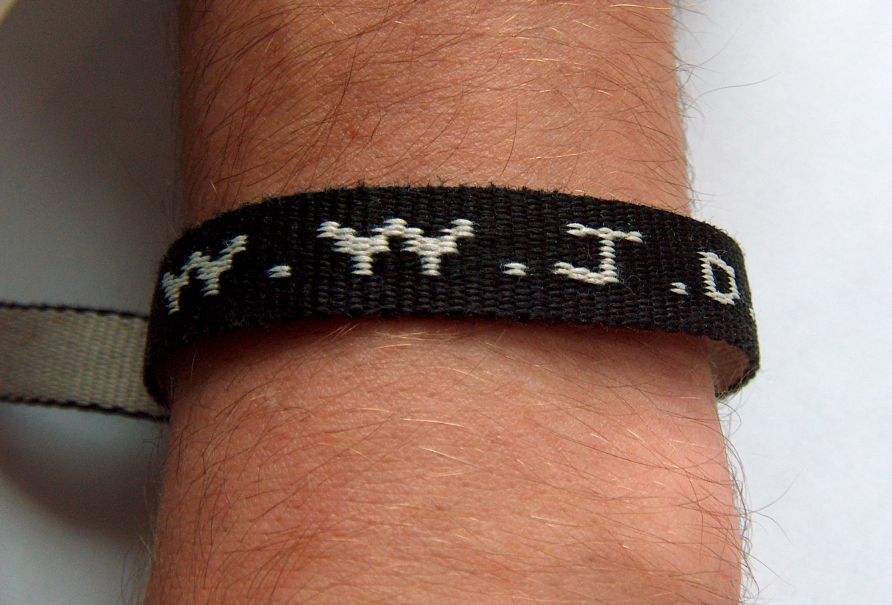
Four woven letters on every other wrist in homeroom: What Would Jesus Do? A Michigan youth leader's craft project for her church kids became one of the decade's biggest accessory fads — worn devoutly by some, worn because everyone else had one by the rest.
The question is a century older than the bracelet. "What Would Jesus Do?" was the subtitle of In His Steps, an 1896 novel by Topeka minister Charles Sheldon that became one of the best-selling books ever printed — helped along by an early publisher's copyright mistake. The wristband came in 1989, when Janie Tinklenberg, a youth leader at Calvary Reformed Church in Holland, Michigan, had cloth bracelets stitched with the abbreviation as a small, wearable reminder for the teenagers in her group.
Demand snowballed far beyond one church. Through the mid and late 1990s the bracelets went from Christian bookstores to mall kiosks to every school hallway in America, and estimates of how many were made run from 15 million to 50 million. The four letters jumped hosts too — keychains, T-shirts, bumper stickers — and spawned answer-merchandise like the FROG ("Fully Rely On God") bracelet. Tinklenberg herself famously never saw a dime of it; the fad she started was commercialized largely without her.
Like any accessory that saturates that completely, WWJD eventually tipped from sincere to punchline, and the bracelets migrated to junk drawers and youth-room couches in the early 2000s. The afterlife is real, though: the woven originals now circulate as thrift-store and online finds, picked up by a new generation sometimes ironically, sometimes not.
Similar items
Livestrong Bands
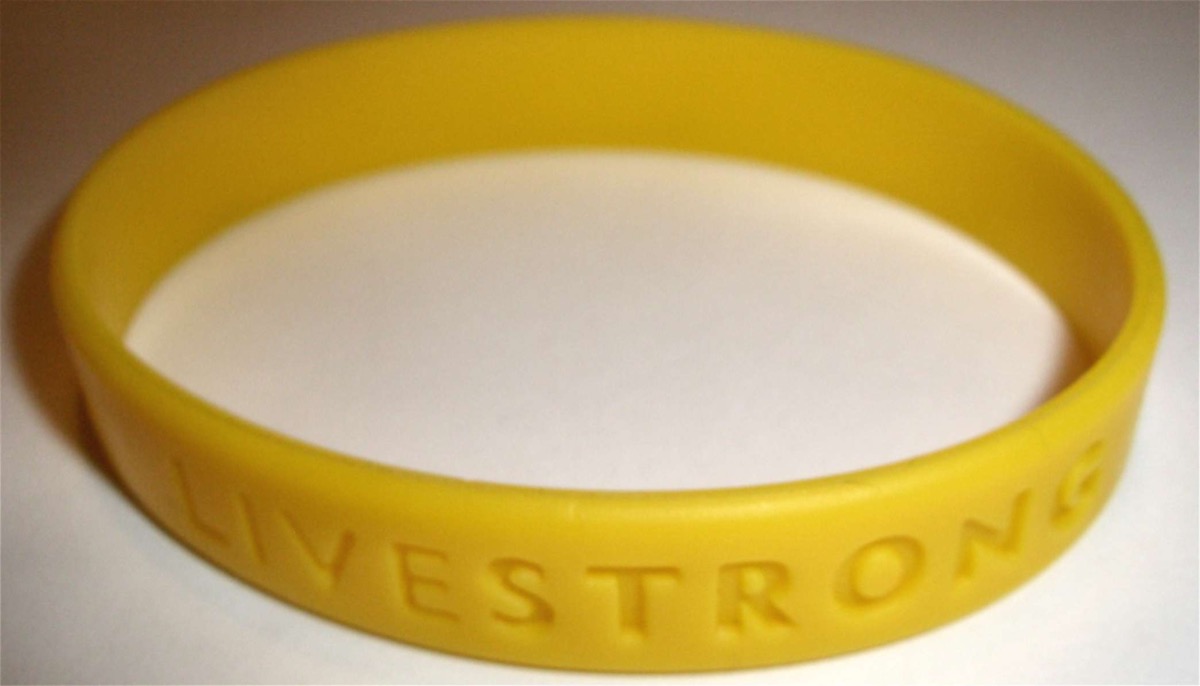
The yellow silicone gel wristband launched in 2004 by the Lance Armstrong Foundation with Nike, sold for $1 to support people affected by cancer. Tens of millions sold, and it ignited the entire cause-awareness rubber-bracelet craze—soon every color stood for a different charity, and everyone stacked them on their wrists like a visible moral portfolio.
Power Bead Bracelets
Stretchy bracelets of round semi-precious stone beads, each color supposedly granting something—happiness, luck, smarts, money—according to the little card on the rack. Stacked a dozen deep on every late-90s wrist, powers pending.

Jelly Bracelets
Thin, neon plastic hoops that came in every color imaginable and were stacked up the arm like jewelry—the fashion accessory that cost almost nothing and became trading currency on every playground. Sparked by Madonna's 1980s stacked-arm look, they dominated the early 80s and stayed essential into the 90s, cheap enough to lose constantly and buy again without guilt.
Friendship bracelets
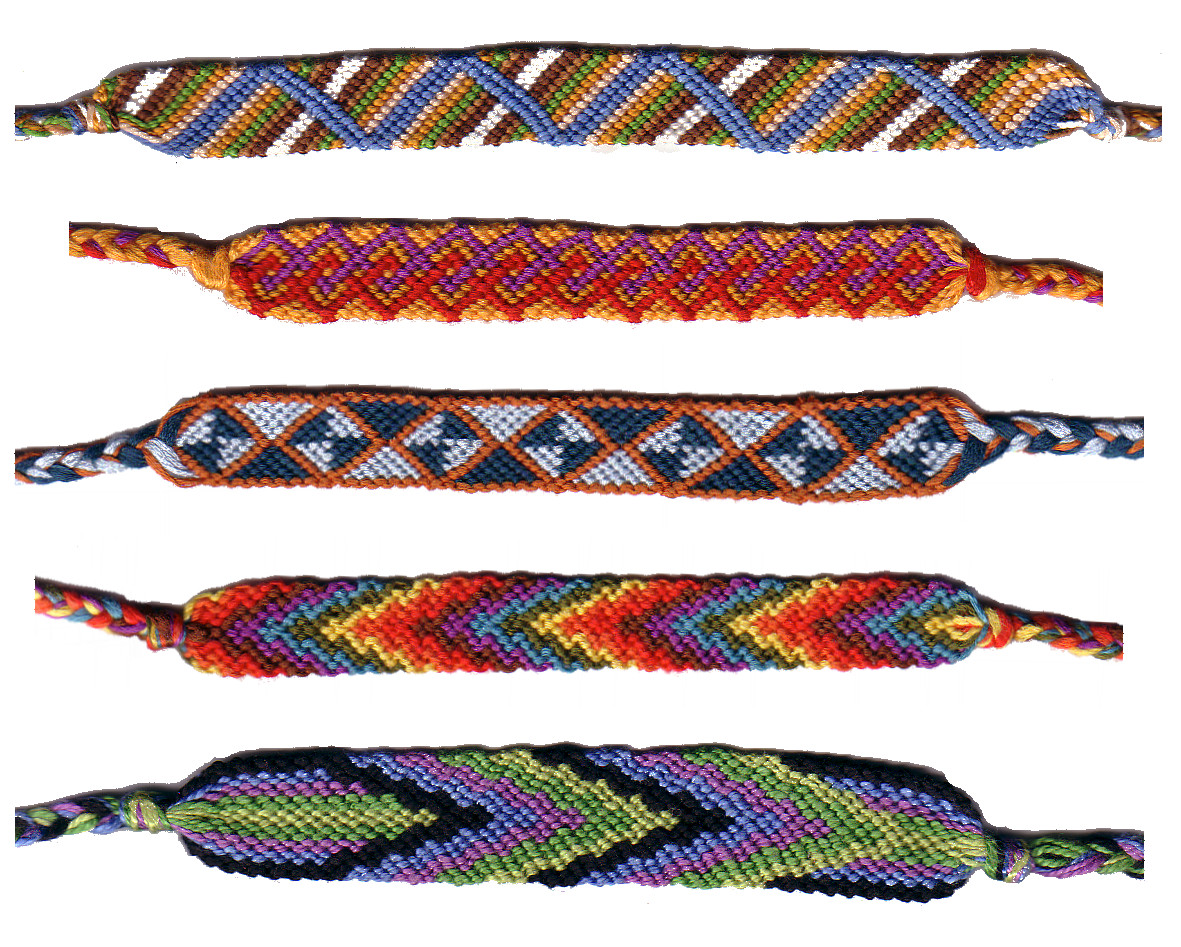
Embroidery floss, a safety pin through your jeans, and forty minutes of tiny knots: the candy-stripe band you made at camp or recess and tied onto a friend's wrist for keeps. The rules were sacred — they make a wish, and it comes true only when the bracelet finally falls off on its own.