Power Bead Bracelets
Stretchy bracelets of round semi-precious stone beads, each color supposedly granting something—happiness, luck, smarts, money—according to the little card on the rack. Stacked a dozen deep on every late-90s wrist, powers pending.
Power bead bracelets—karma beads, if you shopped somewhere fancier—were simple stretchy loops of uniform round stone beads: hematite, amethyst, jade, rose quartz, mother-of-pearl. The hook was the little card that came with them, assigning each stone a power: happiness, intelligence, luck, love, money. The meanings varied wildly from card to card, which bothered exactly no one. They surfed the late-90s new-age wave—the same current that carried feng shui and aromatherapy into the mall—and the fad is often credited to New York jewelry designer Zoe Metro, profiled in the Washington Post at the craze's height in June 2000.
Unusually for a schoolyard fad, this one started with adults and trickled down to teens and tweens, who promptly did what adults wouldn't: stacked them a dozen deep up the forearm, mixing powers like a starter Pokémon team. Knockoffs hit every drugstore register and gas-station counter, the market flooded, and by about 2001 the powers had worn off. But the blueprint—cheap, stackable, collectible wrist stuff—came back again and again, from Livestrong bands to Silly Bandz.
Similar items
Livestrong Bands
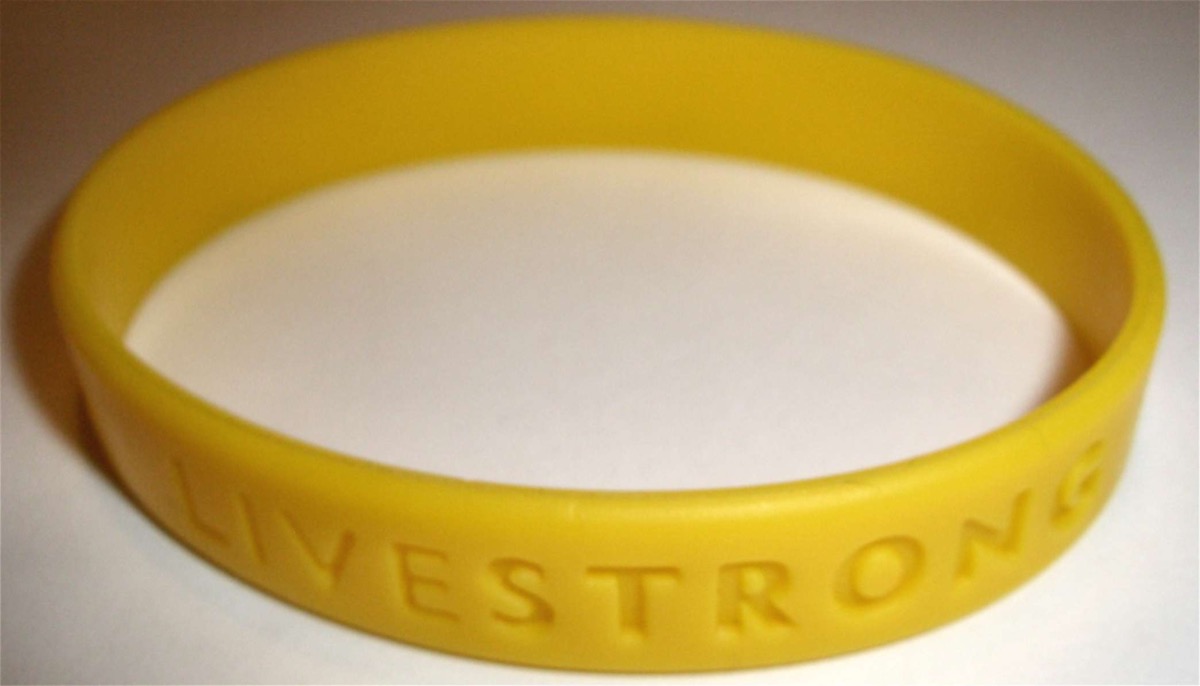
The yellow silicone gel wristband launched in 2004 by the Lance Armstrong Foundation with Nike, sold for $1 to support people affected by cancer. Tens of millions sold, and it ignited the entire cause-awareness rubber-bracelet craze—soon every color stood for a different charity, and everyone stacked them on their wrists like a visible moral portfolio.

Silly Bandz
Colorful silicone rubber bands that snapped back into animal and letter shapes when stretched and released, worn stacked on the wrist as a trading currency. Silly Bandz sparked a playground economy so intense, schools across North America banned them to restore order.
Jelly Bracelets
Thin, neon plastic hoops that came in every color imaginable and were stacked up the arm like jewelry—the fashion accessory that cost almost nothing and became trading currency on every playground. Sparked by Madonna's 1980s stacked-arm look, they dominated the early 80s and stayed essential into the 90s, cheap enough to lose constantly and buy again without guilt.

Clay Pendant Necklaces
Handmade-looking polymer clay pendants—suns with faces, crescent moons, yin-yangs—strung on hemp or black leather cord. Cheap enough to buy at a boardwalk kiosk, earthy enough to feel like you'd made it yourself. The unofficial jewelry of late-90s beach towns and mall food courts.