U2
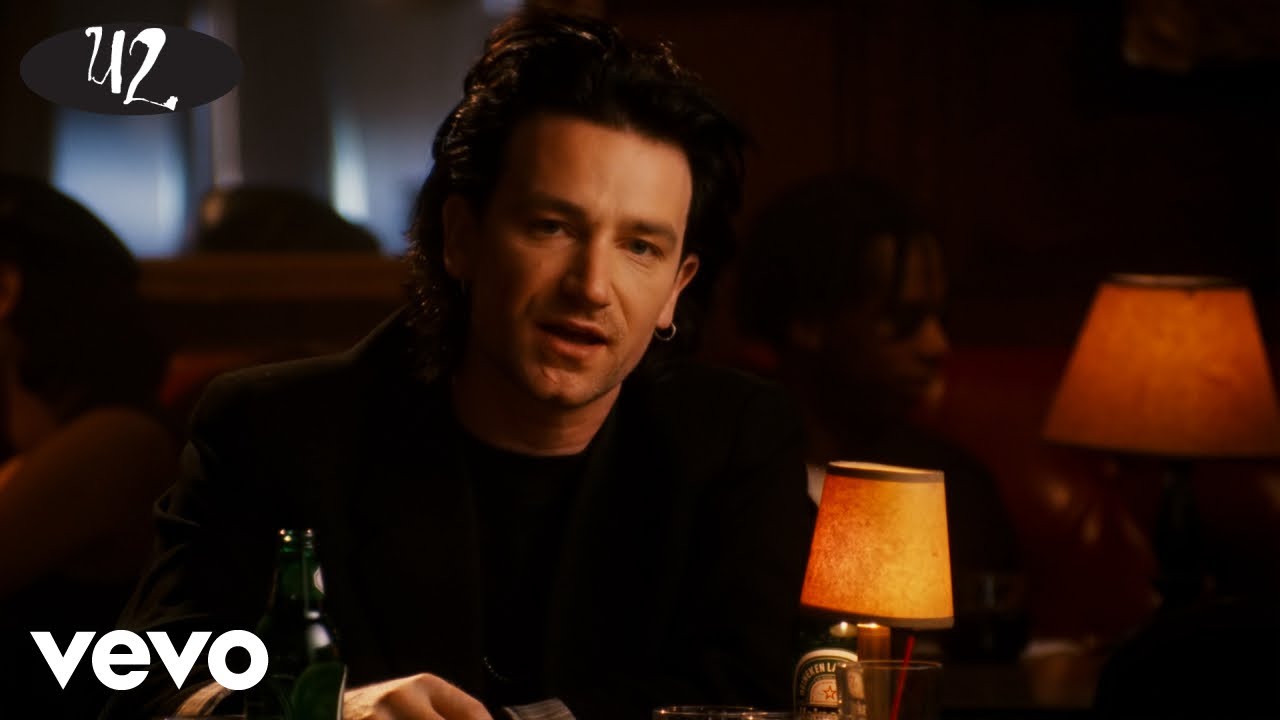
Dublin's titanic arena-rock band, who peaked once in the 1980s and reinvented themselves entirely in the 1990s as ironic multimedia spectacle. The Nineties U2 was fearless—Berlin studios, video walls the size of buildings, prank calls to the White House. They nearly broke up, then wrote "One" and changed everything.
Fourteen-year-old drummer Larry Mullen Jr. posted a notice on the bulletin board at Mount Temple Comprehensive School in Dublin in September 1976, looking for musicians to form a band. Bono, The Edge, and Adam Clayton were among those who answered, and the first practice happened in Mullen's kitchen. Over the following decade they became one of the planet's biggest acts — The Joshua Tree (1987) made them arguably the biggest band in the world. What came next was an act of radical reinvention.
Achtung Baby, recorded partly at Berlin's Hansa Studios starting in October 1990 with producers Daniel Lanois and Brian Eno, nearly destroyed the band. Weeks of tension and creative friction almost tore them apart until an improvisational breakthrough—the writing of "One"—gave them the keystone. "One" and "Mysterious Ways" became the sound of their rebirth. The accompanying Zoo TV tour (1992–93) was unlike any stadium rock tour before it: walls of video screens flashing text and pop-culture clips, a lighting rig partly assembled from junked Trabant cars, in-show prank phone calls (including one to the White House of George H.W. Bush), and Bono cycling through personas—The Fly, the devil-horned MacPhisto—that turned irony itself into stadium spectacle.
Zooropa (July 1993), written during a brief break from the tour, pushed the experiment further; Johnny Cash sang the album's closer, "The Wanderer." Pop arrived in March 1997, its PopMart tour announced with a press conference in the lingerie section of a Kmart — and the tour rolled across stadiums beneath a 100-foot golden arch, a 40-foot mirrorball lemon parked beside the stage. By the late Nineties, the irony had exhausted itself.
The 2000s saw a return to earnestness. All That You Can't Leave Behind (October 2000) and its lead single "Beautiful Day" topped the charts in Ireland, the UK, Australia, and Canada. Then came the Super Bowl XXXVI halftime show on February 3, 2002—the names of the September 11 victims projected on a backdrop, and Bono opening his jacket at the end to reveal an American flag in the lining—a moment widely remembered as one of television's greatest halftimes.
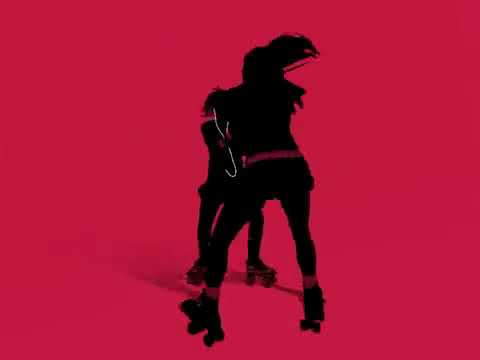
Then the Apple partnership: "Vertigo" powered the silhouette iPod/iTunes ad campaign in 2004, and Apple issued a U2 Special Edition iPod bundled with a digital box set on the iTunes Store. From the 1976 kitchen start to the 2004 iPod ads, U2 had lived at least two complete lives.
Similar items
iPod
Steve Jobs unveiled the iPod on October 23, 2001, promising "1,000 songs in your pocket." The original model packed a 5GB hard drive, mechanical scroll wheel, and FireWire connection—Mac-only, $399. The click wheel, iTunes Music Store (2003), and later Windows support made it the gateway device to digital music and one of the most influential electronics ever built.
Limp Bizkit
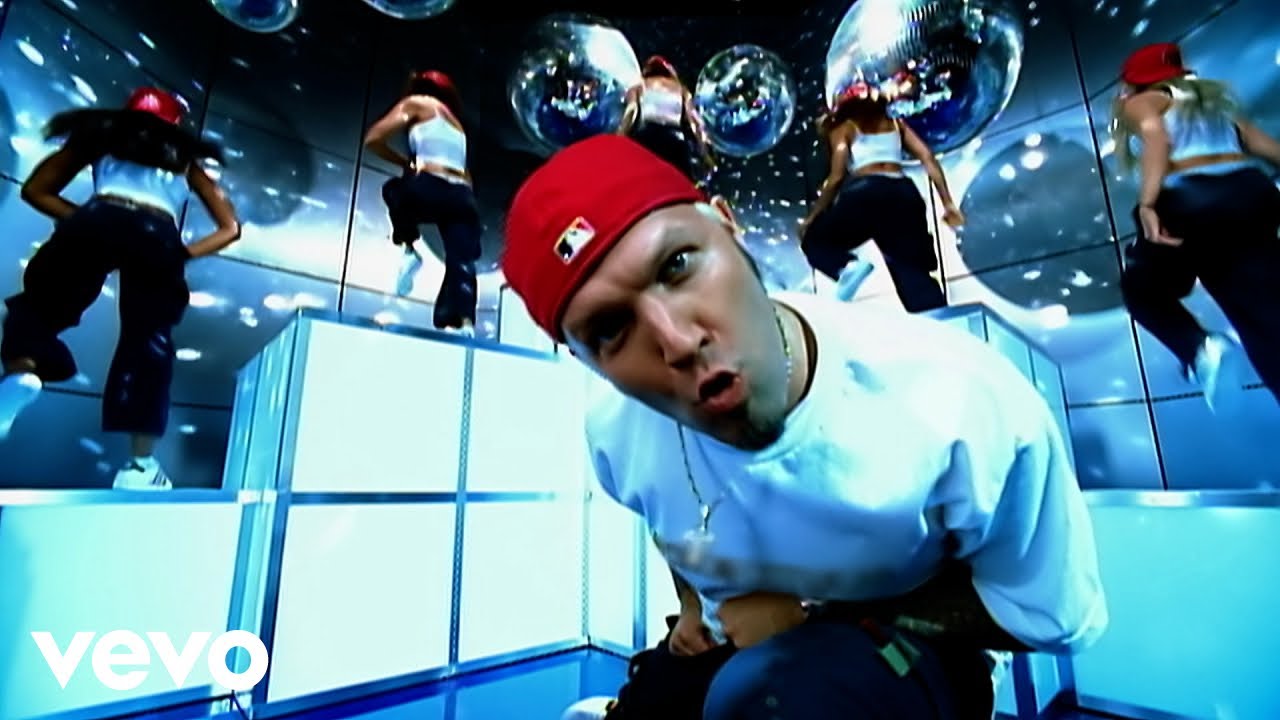
The Jacksonville metal band that defined nu-metal's MTV dominance. Fred Durst's backwards red Yankees cap and Wes Borland's shock-value body paint made them impossible to ignore. They broke through with a cover of George Michael's "Faith" reimagined as down-tuned metal. They became the sound of late-90s TRL, then evaporated just as fast.

Phish
The Vermont jam band that never had a hit single and never needed one. While the radio played everyone else, Phish built an empire out of marathon two-set shows, fan-taped cassettes traded hand to hand, and festivals so big they were briefly the largest concerts in America.

R.E.M.
From college-radio cult band to the thinking fan's arena colossus — R.E.M. was the bridge between the 1980s underground and the 1990s alternative explosion. "Losing My Religion" and "Everybody Hurts" became anthems for a generation, and the Athens, Georgia quartet proved that you could be smart, cryptic, and absolutely massive all at once.