Limp Bizkit
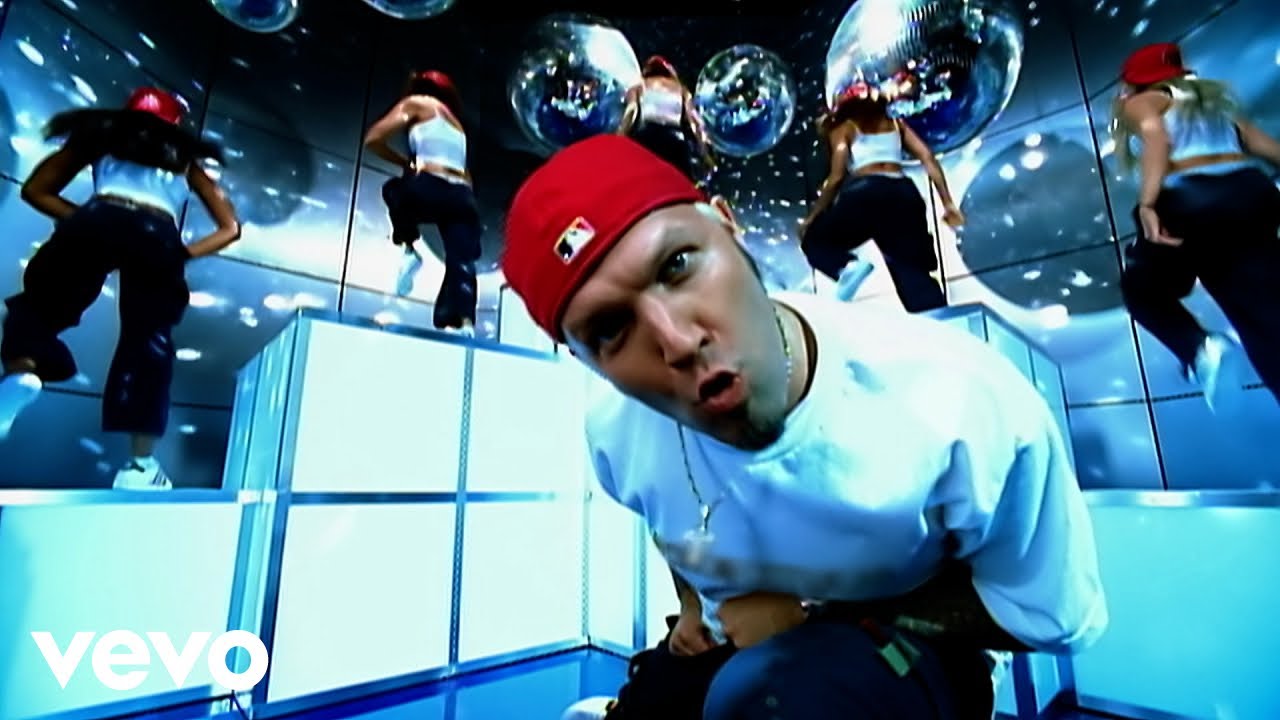
The Jacksonville metal band that defined nu-metal's MTV dominance. Fred Durst's backwards red Yankees cap and Wes Borland's shock-value body paint made them impossible to ignore. They broke through with a cover of George Michael's "Faith" reimagined as down-tuned metal. They became the sound of late-90s TRL, then evaporated just as fast.
Limp Bizkit formed in 1994 in Jacksonville, Florida, founded by vocalist Fred Durst and bassist Sam Rivers, soon joined by drummer John Otto and then guitarist Wes Borland; DJ Lethal arrived later on turntables. Durst's signature look—the backwards red Yankees cap—became an icon of the era. Borland was the visual extremist, performing in body paint, elaborate costumes, and custom black contact lenses, sometimes taking the stage nearly bare-bodied with his entire head painted black.
Their 1997 debut Three Dollar Bill, Y'all$ introduced the heavy sound, but it was its cover of George Michael's "Faith"—released as a single in October 1998—that cracked mainstream radio. The arrangement started quietly, then detonated into down-tuned metal with Lethal scratching over the chorus—a bridge by which millions of rock kids arrived at nu-metal. The cover became the radio hit that broke them wide open.
Significant Other arrived in 1999 and hit No. 1. Woodstock '99 in July solidified their dominance: their performance of "Break Stuff" became the festival's most notorious moment, as fans tore plywood from the walls—an image that came to define the festival's collapse. In October 2000, Chocolate Starfish and the Hot Dog Flavored Water released with over one million US copies sold in its first week (400,000 on day one alone), setting a record for the biggest first week ever for a rock album at the time.
The band owned the MTV/TRL era completely, and their fall was just as fast. Borland quit in October 2001. Results May Vary arrived in 2003 to largely unfavorable reviews despite reaching No. 3 on the Billboard 200. Few acts were so completely of their moment, and few dated quite so fast—which is precisely why they've become such a vivid time capsule.
Similar items
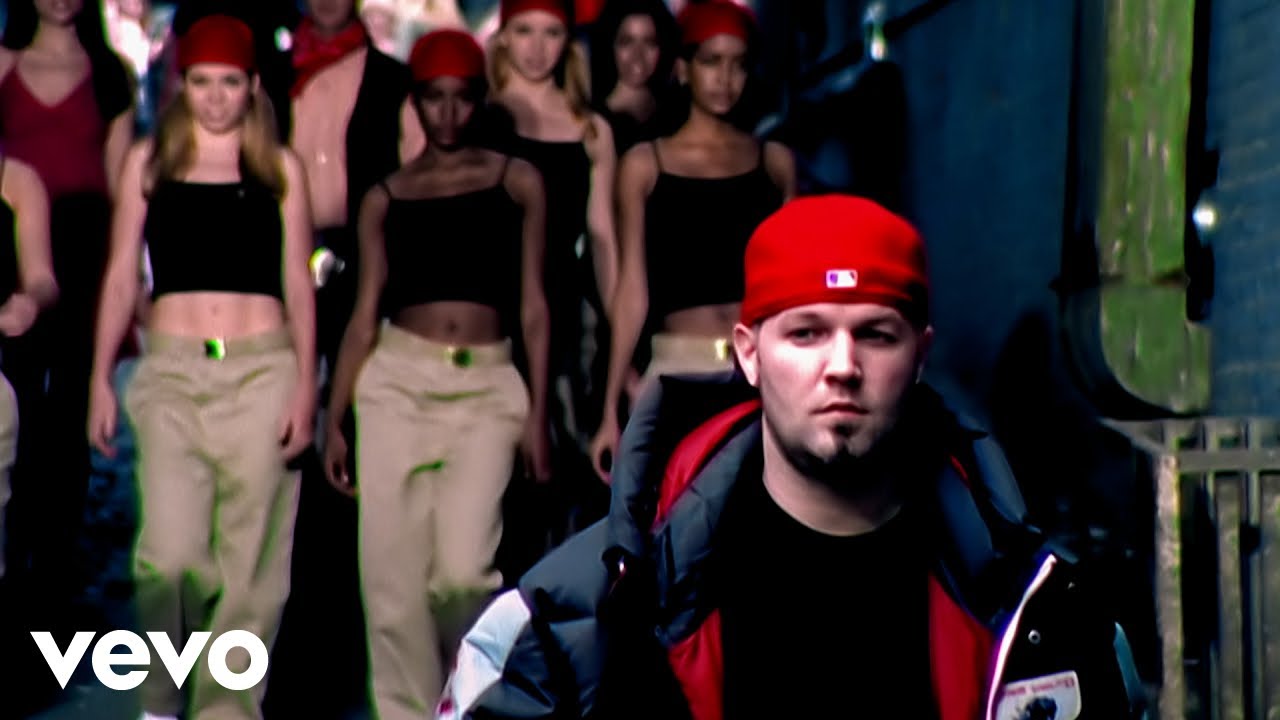
Limp Bizkit — Significant Other
The nu-metal manifesto that defined 1999. Limp Bizkit's second album landed at #1, Fred Durst's backward red cap became iconic, and Woodstock '99 proved the kids were decidedly not alright.

Faith (Limp Bizkit cover)
George Michael's 1987 hit "Faith" was a four-week No. 1 and a defining pop moment of the '80s. Limp Bizkit took it and weaponized it: quiet verse, explosive down-tuned chorus, turntable scratches. The cover became the radio hit that broke the band to the mainstream.

Phish
The Vermont jam band that never had a hit single and never needed one. While the radio played everyone else, Phish built an empire out of marathon two-set shows, fan-taped cassettes traded hand to hand, and festivals so big they were briefly the largest concerts in America.

R.E.M.
From college-radio cult band to the thinking fan's arena colossus — R.E.M. was the bridge between the 1980s underground and the 1990s alternative explosion. "Losing My Religion" and "Everybody Hurts" became anthems for a generation, and the Athens, Georgia quartet proved that you could be smart, cryptic, and absolutely massive all at once.