Three Days Grace

Three guys from Norwood, Ontario whose demo of "I Hate Everything About You" got them a Jive deal and then never left rock radio: 45 weeks on the Modern Rock chart, nine-times platinum, a billion Spotify streams. Three Days Grace turned Adam Gontier's rehab notebooks into One-X and became the angst band of every mid-2000s locker.
The band began as Groundswell, five mostly high-school-age kids in Norwood, Ontario, who made one album in 1995 and broke up by the end of the year. In 1997 singer Adam Gontier, drummer Neil Sanderson and bassist Brad Walst regrouped as Three Days Grace, the name a question about whether you could change your life with only three days to do it. In Toronto they handed years of material to producer Gavin Brown, who picked out what he called "the golden nuggets" and shaped a demo. EMI Music Publishing Canada wanted to hear more, so with Brown producing they wrote "I Hate Everything About You." Jive Records signed them on it.
Released April 28, 2003, as their first single, the song opens on a riff recorded through a Yamaha acoustic and builds to a chorus about a love-hate relationship, or, as Gontier also put it, about dependence and bad influences. It stalled at number 55 on the Hot 100 but hit number four on Mainstream Rock and number two on Modern Rock, stayed on those charts for 46 and 45 weeks respectively. It is certified nine times platinum, and in June 2025 it passed a billion streams on Spotify. Scott Winig's video, three teenagers' worst days ending in a smashing spree, premiered on MTV that June and is the only one with the band as a trio; guitarist Barry Stock joined in late 2003. The album, released July 22, went triple platinum, and Spin dismissed it as "generic Canadian gripe rock."
By the end of that tour Gontier was addicted to OxyContin, and in 2005 he checked into Toronto's Centre for Addiction and Mental Health, writing lyrics in treatment. They became One-X, produced by Howard Benson and released June 13, 2006: number five on the Billboard 200, five times platinum, with "Animal I Have Become" spending seven weeks at number one on Mainstream Rock and "Pain" reaching number 44 on the Hot 100, still their highest. Gontier then played free shows at treatment centres and shelters. The band toured with Staind and Breaking Benjamin, and Life Starts Now debuted at number three in 2009.
Gontier quit abruptly in January 2013, weeks before a tour with Shinedown, and Brad Walst's younger brother Matt took over the microphone. In 2024 Gontier rejoined, making the band a dual-vocal five-piece for Alienation in 2025.
Similar items

"It's Been Awhile"
The post-grunge confession that owned rock radio in 2001: Aaron Lewis's slow-burning inventory of a wasted year, a then-record sixteen weeks atop the Modern Rock chart, and a Fred Durst-directed video that ends with a dropped cigarette burning the apartment down. It carried Staind from Springfield, Massachusetts clubs to a number-one album.

"Blurry"
Wes Scantlin, alone in a Hollywood Boulevard hotel room and missing his son, reworked an old Kansas City song into "Blurry." Fred Durst's label had signed him and replaced his entire band; the result was 2002's biggest rock song in America, number five on the Hot 100, with a video of Wes watching his boy get driven away.
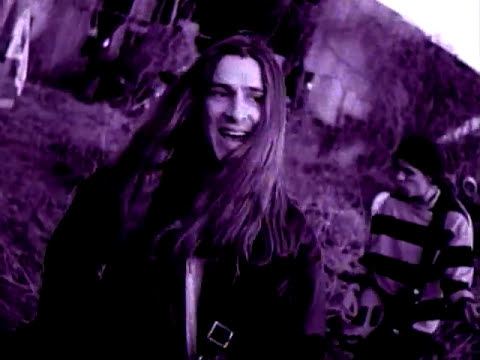
Collective Soul
The Georgia band that went from a basement demo to "Shine," eight weeks at No. 1 on rock radio in 1994. Ed Roland sang its "yeah" into an empty toilet-paper tube, and the "heaven" in its chorus got them mistaken for a Christian band. "December," "The World I Know" and "Heavy" kept them on rock radio for the rest of the decade.

Garbage
Three Madison, Wisconsin, producers, one Scottish singer, and the bad-mood pop that MTV could not stop playing. Garbage's "Only Happy When It Rains" and "Stupid Girl" made Shirley Manson the alt-rock frontwoman of 1996, Version 2.0 went to number one in Britain, and they even sang a Bond theme.