Collective Soul
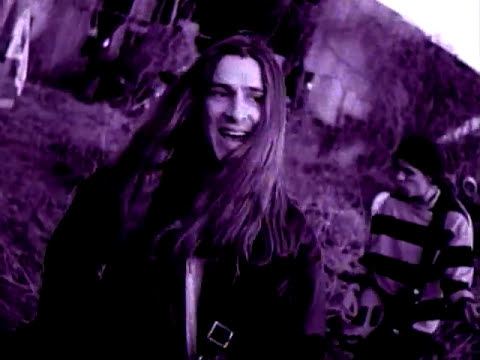
The Georgia band that went from a basement demo to "Shine," eight weeks at No. 1 on rock radio in 1994. Ed Roland sang its "yeah" into an empty toilet-paper tube, and the "heaven" in its chorus got them mistaken for a Christian band. "December," "The World I Know" and "Heavy" kept them on rock radio for the rest of the decade.
Ed Roland studied at Berklee College of Music and then produced and engineered local acts at a studio in Stockbridge, Georgia, while record labels kept turning him down. He recorded a batch of songs in a basement, meaning to sell them to a publishing company rather than start a band. The project's name came from a phrase in The Fountainhead: "we're not preaching Ayn Rand, objectivism, egoism, or anything...we just dug the name," he said. For "Shine" he tuned his one guitar, a 1990 Rickenbacker, to drop D-flat, played it through a Soldano amp into an eight-track recorder, and for the "yeah" before the chorus, "I just got a roll of toilet paper, took off all the paper and used the cardboard tube to record myself going 'Yeah.'"
The demo reached Georgia State University's student station, WRAS, where host Amy Staehling put "Shine" into rotation. Orlando's WJRR started playing it too, and it became the station's most-requested song. Roland put a band together with his brother Dean on rhythm guitar, Ross Childress on lead, Shane Evans on drums and David Neal on bass (Turpin soon replaced him). Atlantic signed them and in 1994 re-released the demo album, Hints Allegations and Things Left Unsaid, which reached No. 15 and went double platinum. "Shine" spent eight weeks at No. 1 on Billboard's album rock chart and reached No. 11 on the Hot 100. Because of "Heaven let your light shine down," they were often taken for a Christian band. Roland, whose father is a Southern Baptist minister, pushed back: Led Zeppelin had "heaven" in a song, and nobody called them one. Dean Roland called the chorus "basically a prayer."
Ed Roland considered the 1995 self-titled album the band's true debut. It went triple platinum, spent 76 weeks on the Billboard 200, and sent "December," "Where the River Flows" and "The World I Know" to No. 1 on the mainstream rock chart. 1997's Disciplined Breakdown, recorded in a cabin on a Stockbridge cow pasture during a legal fight with their former manager, added two more. "Heavy," from 1999's Dosage, held No. 1 for 15 weeks. In 2001 Dolly Parton recorded "Shine" with members of Nickel Creek for her album Little Sparrow, and her version won the Grammy for Best Female Country Vocal Performance.
Similar items

Gin Blossoms
The Tempe, Arizona band behind "Hey Jealousy" and "Found Out About You," chiming guitar pop that Rolling Stone said married "world-weary lyrics with ebullient melodies." Both of those hits were written by guitarist Doug Hopkins, who had been pushed out of the band before either one made it big.

Matchbox Twenty
The Orlando band behind "Push," "3AM," and "Real World," whose slow-building debut album was eventually certified diamond. Singer Rob Thomas then co-wrote and sang Santana's "Smooth," and the band's third album kept them on the radio into 2003.

Third Eye Blind
Stephan Jenkins' San Francisco hit machine: one self-titled 1997 debut that just would not stop producing singles — "Semi-Charmed Life," "Jumper," "How's It Going to Be," "Graduate" — all sunshine on the surface and something much darker underneath.

Hootie & the Blowfish
The band everyone owned, played to death, and then pretended never to like. Hootie & the Blowfish's Cracked Rear View was the best-selling album of 1995 — eventually certified 22× platinum — before total saturation curdled into backlash.