#Hip Hop Fashion

5 items

Video thumbnail — Puddy's 8-ball jacket — Seinfeld, "The Reverse Peephole" (1998)
Fashion 1990–1992

Eight-Ball Jacket

A color-blocked leather jacket with a giant black-and-white eight ball on the back, designed by Michael Hoban in 1990 and priced around $800. For two winters it was the status symbol of New York, worn by ballplayers and rappers, robbed off kids' backs, and then dropped so hard that Seinfeld put one on Puddy as a joke.

Video thumbnail — Marithé + François Girbaud TV commercial (New York spot)
Fashion 1989–1997 peak

Girbaud Jeans

The baggy, stone-washed French jeans with the loud "M+FG" tabs and straps on the leg. Marithé + François Girbaud were the designer denim of early-90s hip-hop, name-checked by Biggie and worn backwards by Kris Kross, before the brand slid from every mall to the thrift rack.

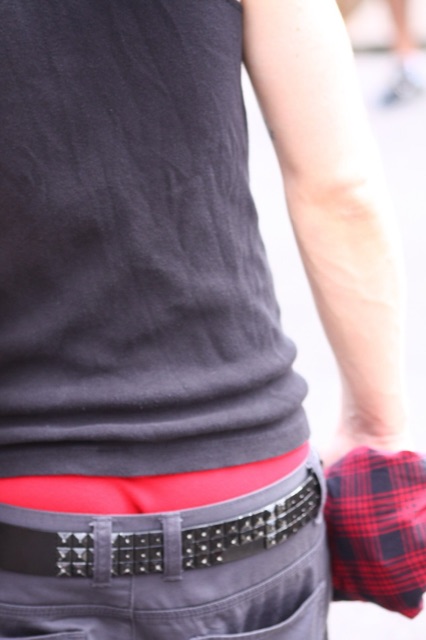
A man photographed from behind in New York in 2009, his grey trousers and studded belt sagging below red boxer shorts
Fashion 1990s–2000s peak

Sagging pants

Jeans worn low enough to show the boxers, the hip-hop look that parents, principals and eventually city councils spent two decades trying to legislate away. Everyone had a theory about where it came from; nobody could prove one.

Video thumbnail — The History Of Mitchell And Ness : The House That Built Throwback Culture
Fashion 1999–2005 peak

Throwback Jerseys

Mitchell & Ness's faithful remakes of old jerseys, a Jordan, a Dr. J, a Dale Murphy, adopted by hip-hop around the turn of the 2000s. The Philadelphia company's sales went from $2.2 million in 1999 to $36 million in 2003, then dropped after Jay-Z rapped that he didn't wear jerseys anymore.

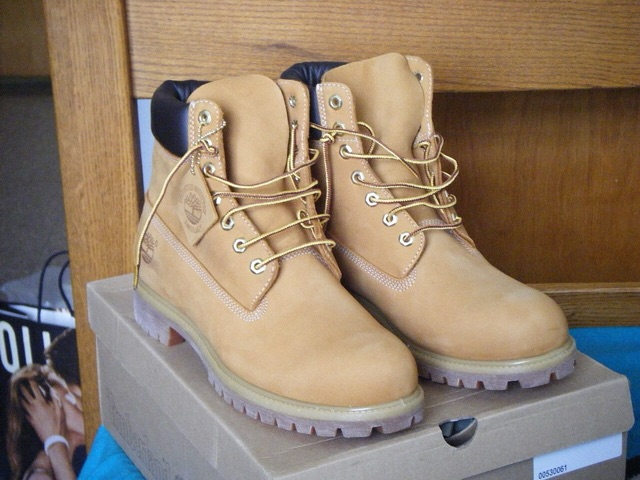
A pair of wheat-colored Timberland six-inch boots on their box
Fashion 1993–1999 peak

Timberland Boots (Timbs)

The wheat-colored, waterproof six-inch work boot from New Hampshire that New York hip-hop turned into a uniform. Unscuffed Timbs with baggy jeans and a Carhartt were the mid-90s look from Wu-Tang to Biggie, and the founder's grandson spent 1993 explaining that the company's customers were "honest working people."